
• Skip to main content
  • Skip to primary sidebar

Nexa Collections

  • Home
  • Serving
    • Medical
    • Dental
    • Small Business
    • Large Business
    • Commercial Collections
    • Government
    • Utilities
    • Fitness Clubs
    • Schools
    • Senior Care Facility
  • Contact Us
    • About us
    • Cost

money

What Causes Account Receivables in Banks?

Bank AR
Accounts receivables in banks typically arise from different types of transactions and services they provide. Here are some common causes for account receivables in banks:

  1. Interest and Fees: Banks earn interest on the loans and advances they provide to customers. The interest and associated fees that are earned but not yet received are recorded as account receivables.
  2. Loan Disbursements: When a bank disburses a loan, it expects to receive the principal amount along with interest in the future. The principal amount is also a part of accounts receivable till it is repaid.
  3. Trade Financing: When banks engage in trade financing, such as providing letters of credit or guarantees on behalf of their clients, they create receivables for the fees and charges that the clients owe.
  4. Credit Card Transactions: Banks that issue credit cards to customers create receivables for the amounts that customers charge on their cards. These receivables represent the amounts that customers owe to the bank for using the credit facility.
  5. Bank-Owned Leases: If a bank engages in leasing activities (e.g. vehicle leases), the bank will have receivables representing the amounts lessees are obligated to pay in the future under the terms of the leases.
  6. Overdraft Facilities: Banks offer overdraft facilities to their customers. When a customer uses this facility, the amount overdrawn becomes accounts receivable for the bank.
  7. Securities and Investments: When banks invest in securities or engage in trading activities, they might have receivables arising from dividends, interest or sales proceeds that are due but not yet received.
  8. Service Charges: Banks often provide services such as wealth management, consulting, or transaction processing to corporate customers. The fees and commissions related to these services are often recorded as accounts receivable.
  9. Interbank Transactions: When banks transact with other banks, either through lending or other agreements, they may have receivables representing amounts due from other banks.
  10. Foreign Exchange Transactions: Banks often engage in foreign exchange transactions. Differences in settlement dates may result in receivables due from either customers or other financial institutions involved in the trade.
  11. Mortgage Servicing Rights: When a bank services mortgages that are owned by other entities, it may be entitled to receive fees for the servicing. These fees are recorded as receivables.

It’s important to note that accounts receivable is an asset, representing amounts that are owed to the bank and expected to be collected in the future. Proper management of accounts receivable is crucial for banks to ensure liquidity and operational efficiency.
Filed Under: money

Credit Score & Credit Report: File a Dispute to Fix Errors

Why Is Good Credit Necessary?

The U.S. is known for its focus on data, metrics, and standardization. At any given point, we may have several credit scores based on our financial history, as measured by companies such as FICO or VantageScore Solutions, another credit analysis company. Borrowing money from a brick-and-mortar bank, an online lender, or a peer-to-peer marketplace and then paying it back has become a way of life for most Americans.

Credit history determines our eligibility for home and car loans, our ability to rent an apartment, obtain insurance, find a job, and even maintain long-term relationships. Forbes writes that the younger generations pay more attention to a potential partner’s credit score and history than their predecessors, and they factor that into their decision to continue the relationship or even marry. I’ve never done that myself, but given the multiple and complex ways credit scores affect our personal and financial lives, you can hardly blame them.

The Highest and the Lowest Credit Score

According to Experian, one of the three nationwide reporting companies alongside TransUnion and Equifax, “for a score with a range between 300-850, a credit score of 700 or above is generally considered good. A score of 800 or above on the same range is considered to be excellent”. Now we know what a good score is, but how bad can it get? Experian reports that the lowest FICO credit score is 300, but no one really stays at such a low score once some financial history has been established. And that’s encouraging to think about.

What about the ‘invisibles’? The National Credit Union Administration defines ‘credit-invisibles’ as “consumers whose documented credit history is so limited that they don’t have credit scores or their credit scores are not based on a complete history of debt repayment”. This doesn’t mean they have a bad credit history because some of them may pay all their bills on time. What it means in practical terms is they will have more difficulty getting approved for a credit card, auto loan or mortgage, insurance, and basically anything else that requires a credit history.

Where to Look for Your Credit Score

If you’re not an ‘invisible’ but rather someone who has a credit history and monitors it regularly, it’s good to keep in mind that you are entitled to a free credit report from all or any of the 3 national consumer reporting companies every 12 months from annualcreditreport.com. I check my credit score at least once every 6 months through my bank and even more often when I set my eyes on a big price item like a laptop I’d need to pay for in installments.

Lenders like Discover or Citibank indicate your credit score on their statements and their online portals provide breakdowns of how your credit score evolves over time. It’s important to remember that your score is calculated using positive and negative information on your credit reports. CreditKarma.com boasts of offering even more detailed information once you sign up for your credit score and credit updates on their portal, but they base their information only on TransUnion’s data:

fix credit report error

Source: https://www.creditkarma.com/

For FICO scores, the following 5 categories of information are the most important when assessing your individual rating:

  •   Payment history: 35%
  •   Amount you owe: 30%
  •   Length of credit history: 15%
  •   New credit opened: 10%
  •   Types of credit you have: 10%

If you can maintain a good score, all of this may not be very relevant to your day-to-day life. However, knowing this becomes a priority when your credit score drops below acceptable levels and you’re no longer approved for loans or unsecured credit cards.

How to Dispute and Remove a Negative Item on Your Credit Report

When should you worry? Being denied a new credit is a sign that something is wrong. Any fraud alerts from your bank, your credit card company, or a credit monitoring company should be taken seriously. If you’re not checking your credit score every month, you can hire a credit monitoring company to do the tracking for you. There are some reputable players in the industry, and some are mentioned here.

The first step is to identify what the problem is. To that end, the three consumer credit reporting companies, TransUnion, Equifax and Experian, offer extensive information and assistance to pinpoint the problem on their websites. Each of them has a dedicated page with instructions on how to file a dispute, what you need to present and how long you need to wait for a resolution:

  • Equifax dispute link
  • Experian dispute link
  • Transunion dispute link

How to file a dispute:

  • A sample letter that can be used to send your dispute letter to credit bureaus is here on FTC’s website.
    [Date]

    [Your Name]

    [Your Address][Your City, State, Zip Code]

    [Business Name]

    [Street Address][City, State, Zip Code]

    Subject: Disputing Information in Credit Report

    I am writing to dispute the following information that your company supplied to [give the name of the credit bureau whose report has incorrect information]. I have circled the items I dispute on the attached copy of my credit report(s).

    This item [for instance: retailer account at ABC Department Store and the account number] is inaccurate [or incomplete] because [describe in detail what is inaccurate or incomplete and why] I am requesting that [business name] have the item removed [or request another specific change to correct the information.]

    [Add list and description of other disputed items, if that applies.]

    Enclosed are copies of [my credit report and any other documents enclosed with a short description, for instance, your record of payments made] supporting my request. Please reinvestigate this matter and contact the nationwide credit bureaus to have them delete [or correct] the disputed item(s) as soon as possible.

    Sincerely,

    [Your name]

    Enclosures: [List what you are enclosing]

  • Along with it, mail the copies (not originals) of supporting documents and a copy of your credit report highlighting the errors.
  • Send your documents by certified mail.
  • Credit bureaus take about 30 days to investigate, after which they will mail the results of their investigation back to you.
  • If credit bureaus have made any corrections, they will also include a free copy of your latest credit report.
  • You can request an investigation if a collection agency has shut down but still appears on your credit report. Since no one will respond, it will likely be removed from your credit report.

Common Reasons for Credit Report Errors

Sometimes, there is no need to panic and think something nefarious is at play. Here are some common issues caused by human error which end up mixing the information from two or more people, creating what is rightfully called ‘mixed files’:

  •       During the data entry process, someone enters your information incorrectly by misspelling your name or accidentally switching around the digits in your Social Security number
  •       Some lenders may mistakenly report a financial transaction under your name instead of reporting it under the very similar name of the actual applicant.
  •       If your name changes or has variations, ensure you consistently use your official name and notify the three credit bureaus of any changes as soon as possible.
  •     You may have paid your debt to a collection agency, but they still reported it by mistake.
  •     Same debt is listed twice or incorrect balances.

Other items on your credit report require more attention and follow-up. Identity theft and negative items that are past the statute of limitations, meaning the deadline by which they could have been reported, are two of the more complex issues to bring to the attention of the credit bureaus. Fortunately, they see such issues often and have a standardized process to deal with disputes. The generally accepted approach is to submit a copy of your credit report with the disputed item highlighted, accompanied by supporting documentation showing or stating why that item should be removed from your credit report.

In the event of an identity theft, the Federal Trade Commission states that you can “block those charges from appearing on your credit report. Start at IdentityTheft.gov, an FTC website that will give you a personal recovery plan that walks through each step.  It will provide you with an Identity Theft Report that you can use only for debts resulting from identity theft”.

Like Margaritaville, Some Could Be Your Fault

The examples above show how your credit score can drop due to reasons out of your control and how to fix that. Below are some ways that your own actions can negatively affect your credit score:

  •       Late Payments
  •       Skipped payments
  •       Collection Accounts

A lender has the right to report unpaid debt to credit reporting agencies. Generally, utility companies don’t report when you pay a bill but they do report when you don’t pay it. Any unpaid debt that’s sent to the collections can, and most likely will, appear on your credit report. Experian’s website indicates that collections of unpaid debt “can stay on your credit report for up to 7 years from the date the debt first became delinquent and was not brought current”. If a dispute is unsuccessful in getting the debt removed from your credit report, then a written acknowledgment by the creditor that the debt has been paid will generally be accepted and reviewed by the credit bureaus to remove that debt from the report.

Improving Your Credit Score

Two well-known and dreaded causes of a falling credit score are bankruptcy and entering debt relief programs. FICO indicates that a person joining a debt settlement program will lose between 45 and 160 points, while a person applying for bankruptcy will lose between 130 and 240 points.

This looks catastrophic but don’t fret. There are ways to recover.

Even though you may not be able to apply for credit, you can always get added as a co-signer on someone else’s credit card. Be careful, since if that person is unreliable or you don’t intend to fulfill your obligations as a co-signer, it will lower your little credit. Paying non-bankruptcy accounts on time will look good on your credit history and keeping your balances low.

If you want to apply for new credit, you can try secured credit cards requiring a refundable deposit. You can find pros and cons of applying for secured credit cards at nerdwallet.com or simply googling “secured credit cards”.

Before doing all that, make sure you do some research on whether you can remove a record of bankruptcy from your credit history earlier than the standard 7-10 years. Such records are removed automatically once that time has passed, but why wait that long if you can do something about it? Lexington Law describes several ways of getting rid of that eyesore early.

Understanding your credit and how it can affect your life can be the difference between struggling to keep your financial situation from spiraling out of control and feeling empowered to improve it. If you want to stay in control, do the research, read more articles available online that indicate how and why your credit score increases or decreases, listen to advice and be proactive. Your credit score and credit history are a living thing: they fluctuate, following your choices in life, modeling your attitude and becoming an expression of your behavior. For that reason, your actions really can improve your credit record. Take care of it as you would your health, and then, just like your health, you will have maximized one of the factors determining how sweet life will be.


Filed Under: money

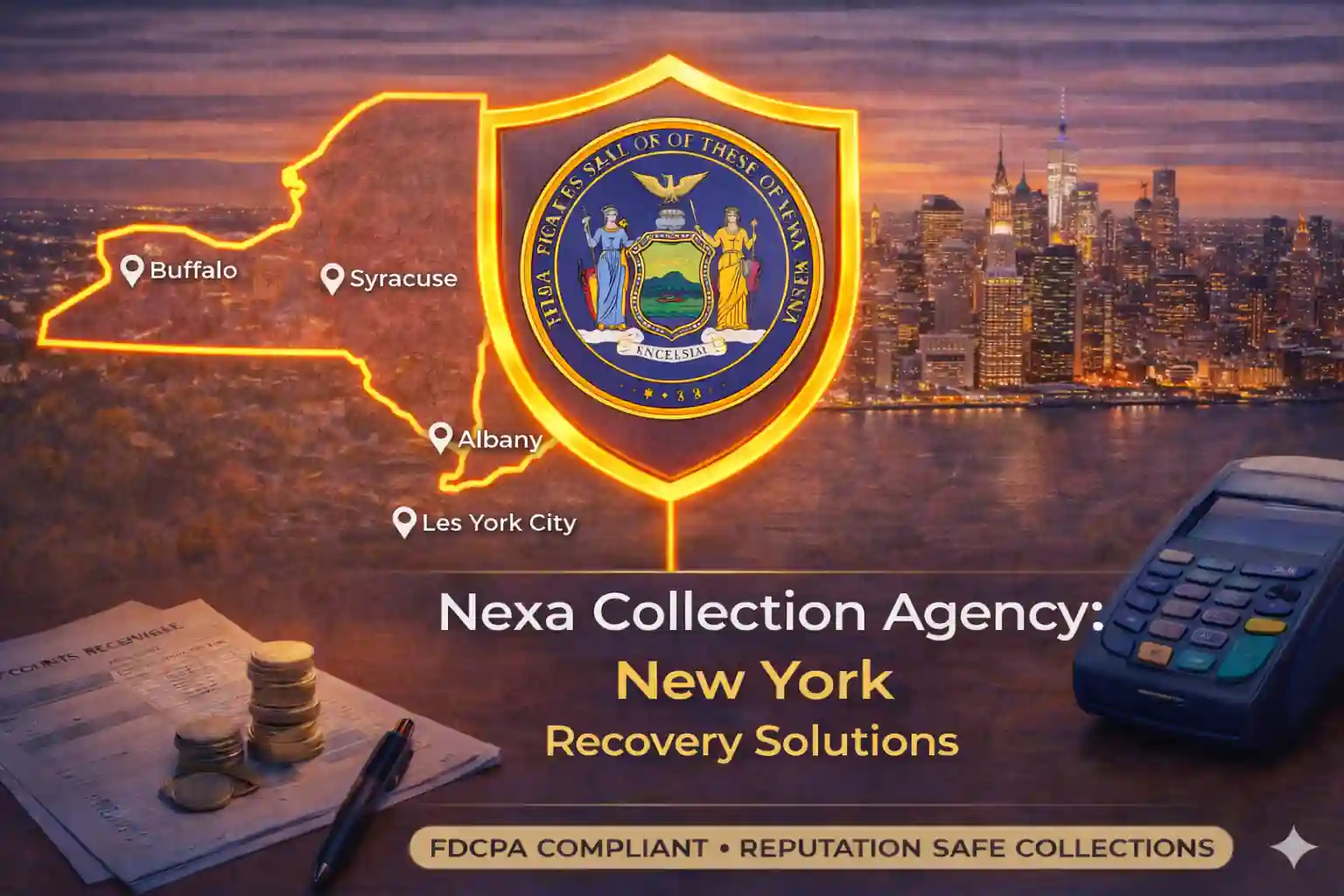
Why New York Medical Practices Are Rethinking Their Collection Partner

New York has completely reshaped how medical and dental debt can be collected. 😟

If your current collection partner is still threatening credit reporting, talking about wage garnishments, or dragging out lawsuits, they are working off an outdated playbook—and you are the one carrying the risk.

Over the last few years, New York has:

  • Cut the statute of limitations for most medical debts to three years instead of six.

  • Banned hospitals and many providers from garnishing wages or putting liens on primary homes for medical debt judgments.

  • Passed a Fair Medical Debt Reporting law that effectively prohibits medical providers from reporting medical debt to credit bureaus and blocks that debt from appearing on consumer credit reports.

  • Tightened rules on financial assistance, interest rates, and payment caps for eligible patients.

Add strict HIPAA requirements, state and city consumer-protection rules, and new disclosure obligations, and you get a simple reality:

Collecting medical and dental debt in New York is possible—but it is not easy, and bad agencies can create more legal and reputational risk than recovery. 

Need a Medical Collection Agency in New York/NYC: Contact us

Why Switch? The Hidden Cost of Using the Wrong Agency

Many New York providers are still partnered with agencies that were a decent fit ten years ago, but not today. Common warning signs:

  • They still talk about using credit reporting as leverage, even though New York now blocks most provider-reported medical debt from credit reports.

  • They push long, drawn-out lawsuits, ignoring that the statute of limitations on medical debt is now only three years, and that hospitals and many providers cannot enforce medical judgments with wage garnishments or home liens.

  • They don’t mention New York City licensing and disclosure rules, language access requirements, or the need for a city collector’s license to collect from NYC residents.

  • Their scripts clearly aren’t written for a state where medical debt can no longer be used to ruin a patient’s credit score.

If your agency is still operating as if New York were any other state, you may be:

  • Leaving recoverable dollars on the table because they don’t understand the new rules.

  • Carrying more legal risk than necessary.

  • Spending internal time cleaning up patient complaints, regulator inquiries, and lawyer letters.

Switching to a New York–savvy partner through Nexa’s network helps you keep your legal risk low while recovering more and protect your name on Google while still getting paid.

Note: Nexa is an information portal. We don’t collect or credit-report ourselves; we connect you with vetted, HIPAA-aware agencies that understand New York.


What Has Actually Changed? A Snapshot of New York Medical Debt Rules

Here are the big shifts every New York provider should know:

  • Credit reporting of medical debt is heavily restricted

    • New state law prevents most New York hospitals, health care professionals, and ambulance providers from reporting medical debt to credit agencies.

    • Medical and many dental debts from New York providers are not supposed to appear on consumer credit reports.

    • Medical charges buried inside a general credit card balance can still show up as part of that card debt—but that is fundamentally a card issue, not provider-reported medical debt.

  • Statute of limitations for medical debt is now three years

    • The period to sue on most medical debts has been shortened from six years to three years, which dramatically narrows the window for lawsuits.

  • No wage garnishments or home liens for many medical judgments

    • Hospitals and similar providers can no longer enforce many medical debt judgments through wage garnishment or liens on primary residences.

  • Stronger hospital financial assistance & consent rules

    • New York requires standardized financial assistance programs, limits what hospitals can bill certain low- and middle-income patients, and caps interest rates on medical judgments for qualifying patients.

  • New York City–specific collection rules

    • New York City requires collectors to be licensed, to provide clear language access disclosures, and, in many cases, to explain when a debt is time-barred and that medical debts cannot be reported to credit bureaus.

  • National trend away from medical credit reporting

    • Major credit bureaus have already stopped reporting paid medical collections and medical debts under a certain threshold, and extended the waiting period for reporting larger medical debts.

    • Federal regulators are pushing lenders to stop using medical bills in credit decisions, further reducing the value of “credit reporting pressure” as a tool.

All of this means: New York state policies deliberately make old-school, aggressive collection tactics less effective. The only sustainable path now is patient-centric, compliant recovery.


Recent Results: How New York–Savvy Agencies Operate

These are illustrative, fresh examples aligned with what New York–focused agencies are seeing today.

1) Manhattan Multi-Specialty Practice – Midtown, NYC
A multi-specialty group near Midtown had about $220,000 in patient balances between 90 and 180 days, with a heavy mix of high-deductible plans and self-pay accounts. Their legacy agency was still talking about “sending to credit” and filing suits four or five years after service, completely out of sync with New York’s shorter statute and credit-reporting rules.

After switching to a New York–focused partner through Nexa:

  • Accounts were re-aged and prioritized to stay within the three-year window.

  • Scripts were rewritten to emphasize financial assistance, realistic payment plans, and clear explanations, instead of threats.

  • Within nine months, about 41% of the assigned dollars were resolved through payments or structured plans, with noticeably fewer complaints bouncing back to the practice.

2) Brooklyn Dental Group – Family-Oriented Practice
A dental group in Brooklyn had roughly $135,000 in overdue balances, many under $1,200, from families juggling multiple visits and orthodontic treatments. Their previous agency kept hinting at credit damage, which was no longer realistic and only generated angry calls and poor reviews.

With a compliant, patient-friendly agency:

  • Messaging shifted to “let’s sort this out together” with flexible plans and clear breakdowns of insurance versus patient responsibility.

  • The agency used professional, multi-channel reminders instead of harsh threats.

  • Over seven months, the practice resolved about 48% of the dollars placed, saw far fewer reputation issues, and had staff spending less time apologizing for a vendor’s behavior.

These examples show that even with tight state policies, you can still recover a meaningful share of your AR—if you work with agencies that actually understand New York.


Q&A: New York Medical Collections – What Practice Managers Ask Most

Q: If medical debt can’t go on credit reports, is there any point sending accounts to collections?
A: Yes. Credit reporting was always just one tool—and often a blunt one. Recovery in New York now relies more on:

  • Thoughtful, timely patient outreach

  • Realistic payment plans and settlements

  • Early placement, well before the three-year mark

The right agency can still help you recover a large portion of overdue balances, even without credit reporting, while helping you keep legal risk low while recovering more.


Q: Are dental debts treated differently from medical debts?
A: In New York, most bills from licensed health-care professionals—including many dental providers—are treated similarly to medical debt for purposes of newer protections. In practical terms, that means many dental accounts are covered by the same credit-reporting bans and consumer protections as hospital bills.

Dental practices need agencies that understand how to:

  • Explain treatment plans and insurance gaps clearly

  • Segment small family balances from larger, elective or orthodontic cases

  • Stay firmly within HIPAA and New York consumer-protection rules


Q: What does HIPAA compliance really mean in the collection context?
A: Any agency handling your New York medical or dental accounts should:

  • Sign appropriate Business Associate Agreements (BAAs)

  • Use encrypted systems and restricted access for PHI

  • Train staff on “minimum necessary” disclosure when speaking with patients or authorized representatives

  • Avoid leaving detailed medical information in voicemails or letters

With New York regulators paying closer attention to billing and privacy, you want partners that treat HIPAA as non-negotiable, not optional.


Q: How do New York’s hospital financial assistance rules affect collections?
A: Recent laws require hospitals to have clear financial assistance programs, limit what they can bill eligible patients, and cap interest rates on many medical judgments.

Practically, this means:

  • More screening for assistance eligibility before and during collections

  • Tighter rules on what can be billed and when

  • More situations where a balance should be reduced, converted to charity care, or written off, instead of pursued aggressively

Agencies that don’t understand these obligations can push you into regulatory trouble very quickly.


Q: Does the shorter three-year statute of limitations really matter?
A: Absolutely. With a three-year limitation on most medical debts, waiting too long to place accounts can quietly erase your options.

A smarter approach is to:

  • Define clear placement triggers (for example, 90 or 120 days past due)

  • Ensure your agency tracks age of debt accurately

  • Have them flag time-barred accounts so you don’t threaten lawsuits you can’t legally file

This keeps you honest, reduces legal risk, and focuses effort where it still matters.


Q: What about lawsuits—are they still worth considering?
A: Lawsuits in New York are now more limited in value for medical debts:

  • The window to sue is shorter

  • Wage garnishments and home liens for many medical debts are restricted or banned

  • Courts and advocates are watching medical cases closely

That doesn’t mean legal action is never appropriate—but it should be rare, strategic, and well documented, not a default. A good agency will help you pick your spots instead of sending every file to an attorney.


Q: Where does Nexa fit into all of this?
A: Nexa is not a collection agency and doesn’t do any credit reporting. Instead, we:

  • Learn about your specialty, payer mix, and AR profile

  • Shortlist New York–licensed, HIPAA-compliant agencies that understand the state’s medical-debt reforms

  • Focus on partners who can stretch your internal team further without hiring extra staff, and protect your name on Google while still getting paid

You stay in control. You decide whether or not to work with the agencies we recommend.


Ready to Move On From an Agency That Hasn’t Kept Up With New York Law?

If your current vendor is still talking about old-school tactics—credit reporting threats, six-year timelines, aggressive lawsuits—you’re carrying their risk on your brand and balance sheet.

Consider switching to a partner that is built for New York’s new rules, helps you keep your legal risk low while recovering more, and protects your name on Google while still getting paid.

Filed Under: ai, business, credit, Debt Recovery, dental, education, law, lifestyle, Medical, money, off-beat, Press Release, Research, sales, shopping, Technology, Uncategorized

  • « Go to Previous Page
  • Page 1
  • Page 2
  • Page 3

Primary Sidebar


accounts receivable

Need a Collection Agency?
Kindly fill this form.
We’ll get in touch with you

    Please prove you are human by selecting the cup.

    Recent Posts

    • Federal Government Shutdown: Impact on Collections
    • 2025-2026 ROI & Opportunity Matrix for Collection Agencies
    • Collection Agency to Recover Timeshare Unpaid Bills
    • When Should I Send Dental Accounts to Collections? A Guide for a Healthy Practice
    • 10 Signs You Need to Hire a Medical Debt Collection Agency
    • Debt Collection for Telehealth Providers: Proven Strategies & Best Practices
    • The Rise of Mobile Payment Solutions in Debt Collection
    • Why Cybersecurity Matters for Collection Agencies

    Featured Posts

    • Debt collection for Plumbers and Contractors
    • Collection Tactics to Recover Unpaid Credit Card Debt
    • Jobs that Cannot be Replaced by AI
    Directory of collection agencies
    Collections

    Featured Agencies

    • Debt Recovery Solutions (DRS) – Debt Collection
    • Collection Agencies in St. Joseph, MO
    • Collection Agencies in Fremont, CA

    Copyright © 2025 NEXACOLLECT.COM | All information on this website is for general information only and is not an experts advice. We do not own any responsibility for correctness or authenticity of the information, or any loss or injury resulting from it. NexaCollect is not a collection agency.

    X
    Need a Collection Agency?
    Contact Us