A government collection agency recovers unpaid public-sector debts on behalf of municipal, county, state, and federal entities — including utility bills, EMS and ambulance transport fees, parking citations, business license fees, court fines, and permitting costs. Unlike private-sector collection, government debt recovery carries unique political and equity dimensions: every debtor is also a constituent and a voter. The most effective government collection agencies combine strict multi-regulation compliance (FDCPA, GLBA, HIPAA, TCPA), GSA-approved procurement credentials, and citizen-first hardship protocols that recover revenue without triggering public complaints or media attention.
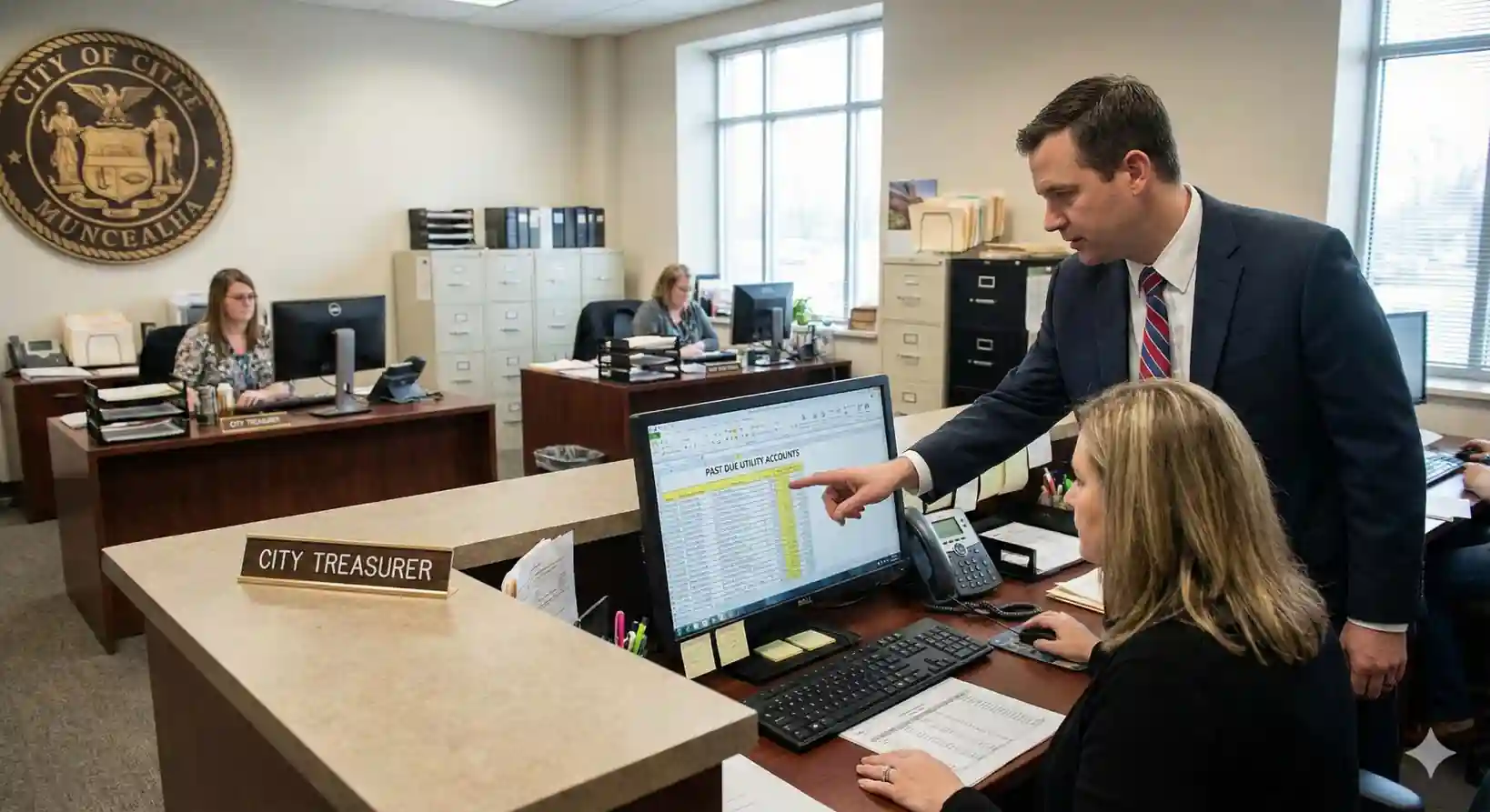
The Mayor’s Shield: Diplomatic Revenue Recovery for the Public Sector
Recover lost municipal revenue without burdening your taxpayers. We act as a respectful extension of your municipality, recovering utility bills, EMS fees, and miscellaneous public debts while preserving the trust of your community. Plus, we are widely considered the easiest collection agency to work with!
Managing public funds is more than a fiscal task; it is a political one. When utility bills, EMS fees, and municipal services go unpaid, the resulting “Revenue Gap” forces a choice between cutting essential services or raising taxes.
At Nexa, we offer a third way. We act as a seamless, diplomatic extension of your municipality, re-engaging citizens through a “Citizen-First” approach that protects your administration’s reputation while balancing your budget.
Protect Your Administration’s Reputation – Get a Quote
The Public Sector Standard: Revenue Without Taxation
Chasing non-compliant balances is the most ethical way to fund city services. Why ask your law-abiding, compliant taxpayers to foot the bill for those who don’t pay?
-
Near “Zero-Complaint” Guarantee: We understand that every person we call is a voter and a neighbor. Our mediators are trained in de-escalation, ensuring your office never receives a “harassment” complaint.
-
Budget-Neutral Recovery: Where state law permits, we help you structure ordinances so that the collection fee is added to the delinquent balance. This allows your municipality to retain 100% of the owed revenue.
-
GSA Certified & Vetted: As a GSA-contracted vendor, we have undergone rigorous federal vetting for financial stability, data security, and performance.
- Key Strength: Addresses municipal pain points directly by highlighting community goodwill, complete audit trails, zero-cost taxpayer structures, and schema-backed trust signals.
Specialized Recovery for Essential Services
We provide expert-level recovery across the unique landscape of public debt:
-
Public Utilities (Water, Sewer, Gas): We focus on “Utility Burnout” prevention. By acting as Financial Navigators, we set up payment plans that keep the lights on and the revenue flowing, avoiding the PR nightmare of service shut-offs.
-
EMS & Fire Transport: These are medical debts. We handle them with a “Clinical Heart and a Commercial Brain,” ensuring 100% HIPAA compliance and compassionate outreach.
-
Education & Universities: Respectful recovery of tuition, fees, and library dues for public institutions.
-
Miscellaneous Fees: Business licenses, parking citations, and permitting costs.
The Nexa “Dignity-First” Recovery Ladder
We separate “administrative confusion” from “bad debt” to maximize your recovery while protecting constituent relationships.
-
Step 1: The Account Reconciliation (Fixed Fee – $15)
Ideal for accounts 60–90 days past due. This is a soft, third-party “nudge” that identifies simple misunderstandings, insurance gaps, or missing paperwork before they escalate into legal disputes. It’s the most frictionless way to restore revenue—and you keep 100% of the money recovered. -
Step 2: Specialized Mediation (Contingency)
Designed for high-balance aged debt, unresponsive accounts, or complex estates. We perform deep-data bankruptcy and estate scrubs to find the most ethical path to payment. As always: No Recovery = No Fee.

Why Municipal Treasurers Trust Nexa
1. Data Security: The Bank-Level Vault
Whether handling Social Security numbers or health data (PHI), citizen privacy is sacred. Our systems utilize bank-level encryption and strict PCI-DSS compliance to ensure your municipality stays out of the data-breach headlines.
2. Seamless Software Integration
We integrate with almost all municipal billing and utility platforms. Our team handles bulk file uploads (CSV, Excel, XML) to make the hand-off process effortless for your clerks and treasurers.
3. Advanced Data Scrubbing
Before a single call is made, we perform NCOA (National Change of Address) and bankruptcy scrubs. We ensure we are contacting the right citizen at the right time, minimizing wasted resources and maximizing recovery.
Frequently Asked Questions: Government Debt Collection
Can a city or municipality legally use a collection agency?
Yes. Cities, counties, municipalities, and state agencies regularly engage third-party collection agencies to recover unpaid public debts — utility bills, EMS fees, parking citations, permit fees, and more. The collection agency acts on behalf of the government entity under a services contract. While the government entity itself may be exempt from the FDCPA when collecting its own debts, any third-party agency it engages must comply fully with the FDCPA and all applicable state debt collection laws.
What is a GSA Schedule collection agency and why does it matter?
A GSA (General Services Administration) Schedule collection agency has passed a federal vetting process covering financial stability, data security, regulatory compliance, and performance history. For government procurement officers, a GSA Schedule contract reduces vendor due diligence burden — in many cases, municipalities can contract directly with a GSA Schedule holder without issuing a full competitive RFP. Nexa is a GSA-contracted vendor, providing procurement documentation, pre-negotiated pricing schedules, and federal compliance attestations for your contracting office.
Is government debt collection covered by the FDCPA?
Government entities collecting their own debts directly are generally exempt from the FDCPA. However, when a government entity hires a third-party collection agency, that agency must comply with the FDCPA in full for all consumer (individual citizen) accounts. This is a common compliance misunderstanding that exposes municipalities to liability when they engage non-specialist agencies. Nexa maintains full FDCPA compliance on all government consumer accounts regardless of the originating entity’s exempt status.
How does GLBA apply to government collection agencies?
The Gramm-Leach-Bliley Act (GLBA) requires the protection of non-public personal financial information held by financial institutions and their service providers — including collection agencies handling citizen financial data on behalf of government financial functions. GLBA compliance requires data minimization, secure transfer protocols, access controls, and breach response planning. Any collection agency handling citizen account data for a government entity should be able to produce a GLBA compliance attestation as part of vendor due diligence.
How do you handle delinquent utility accounts without triggering service shutoffs?
Our approach prioritizes payment arrangement over disconnection. We identify and contact delinquent utility account holders with a clear choice: establish a payment plan and keep service active, or risk disconnection after a defined notice period per your entity’s policy. We also screen accounts for Low-Income Household Water Assistance Program (LIHWAP), LIHEAP, or local hardship fund eligibility before any disconnection recommendation — redirecting eligible citizens to assistance programs rather than escalating collection action.
Can you collect from citizens who have moved out of state?
Yes. Nexa is licensed to collect in all 50 states and operates nationwide skip tracing to locate debtors who have relocated. When a citizen with an unpaid municipal debt moves to another state, the debt does not expire — it remains collectible subject to the originating state’s statute of limitations on the debt type. We automatically apply the appropriate state-specific compliance rules based on the debtor’s current state of residence, not the originating jurisdiction.
What is the typical recovery rate for government utility accounts?
Recovery rates for government utility accounts vary significantly by account age, balance size, and local economic conditions. Accounts placed within 90 days of delinquency typically achieve recovery rates of 55–75% of total placed balances. Accounts aged 180+ days drop to 25–45%. Our fixed-fee first-party letter service resolves approximately 40–60% of utility accounts under 90 days without requiring contingency-based phone escalation — meaning your entity retains 100% of those recoveries at a cost of $15 per account.
How do you handle EMS and ambulance transport billing — isn’t that HIPAA-protected?
Yes — EMS transport billing involves Protected Health Information (PHI) and must be handled by HIPAA-compliant collection agencies under a signed Business Associate Agreement (BAA). Nexa executes a BAA with every government EMS client before any account data is transferred. Our EMS collectors are HIPAA-trained and share only the minimum necessary information — typically name, account number, date of service, and balance — for collection purposes. No clinical or diagnostic information is ever used in collection outreach.
Can parking citation debt and court fines be collected by a third-party agency?
Yes, subject to your state’s specific rules on civil debt collection. Parking citation and court fine collection is routine for municipal collection agencies. In many states, municipalities can add collection costs to the outstanding fine balance via local ordinance — meaning your entity recovers 100% of the original fine, and the debtor pays the collection cost as an additional charge. We help you structure your ordinance language to enable this where state law permits.
What reporting do you provide to satisfy government transparency requirements?
We provide monthly and quarterly performance reports covering: total accounts placed, dollars recovered, accounts closed (paid, uncollectable, recalled), complaint incidents, skip trace results, and bankruptcy/deceased flags. Reports are formatted for your internal audit requirements and can be structured to align with your government entity’s financial reporting cycles. Real-time account-level data is accessible 24/7 through our secure client portal. Annual performance summaries are available for public records requests or council/board reporting.
What happens to accounts where the citizen genuinely cannot pay?
Accounts where a citizen demonstrates genuine financial hardship are handled in three ways based on your entity’s policy: (1) referral to applicable assistance programs (LIHEAP, LIHWAP, local hardship funds) — removing the account from collection without a write-off; (2) extended payment plan with minimum monthly payments as low as $10–$25 per month to keep the account active and the citizen in good standing; or (3) hardship deferral — suspending collection activity for a defined period while the citizen’s situation stabilises. We document every hardship determination for your audit records.