Introduction: The Knot in Your Stomach
You know that feeling. The stack of unpaid invoices that feels less like paper and more like a pile of unanswered questions. How long should you wait? Should you send another reminder? What if you lose a patient you’ve cared for?
As a dental professional, you didn’t choose this field to become a bill collector. Your heart is in patient care. But at the same time, your practice is a business. Without steady cash flow, even the best care becomes hard to sustain.
This guide is here to help you remove the guesswork. I’ll walk you through the clear signals that it’s time to involve a collections partner—not as a last resort, but as a smart step to protect your practice’s health and restore your peace of mind.
Before You Pick Up the Phone: The Internal Collections Checklist
Before reaching out to an agency, it’s important to make sure your in-house process has been solid. That way, when you do send accounts to collections, you know you’ve done everything you reasonably could. Think of this as your pre-checklist:
-
Crystal-Clear Financial Policy
Did the patient know from the start what their insurance covered, what they were responsible for, and when payment was due? Transparency sets the tone. -
Consistent In-House Efforts
Best practices often look like this:-
Statement at 30 days
-
Friendly reminder call at 45 days
-
Direct letter at 60 days
-
Final notice around 75–90 days
-
-
Multiple Contact Attempts
Not everyone responds to a mailed statement. Try a mix: phone call, email, even a portal message. -
Offer of a Payment Plan
Flexibility matters. Sometimes, the willingness to break a balance into smaller payments is all it takes.
If you’ve checked all these boxes and the balance is still unpaid, it’s time to look for the red flags.
The Tipping Point: 5 Undeniable Signs It’s Time to Call a Partner
1. The 90/120-Day Wall
Here’s the truth: the longer a balance lingers, the less likely it is to be collected. After 90 days, the chances of recovery drop steeply. At 120 days, they plummet. Waiting longer doesn’t help—it only costs your practice more.
2. The Sound of Silence (Ghosting)
You’ve called. You’ve emailed. You’ve mailed. And still—nothing. No callbacks, no replies, no engagement. At this point, it’s not just forgetfulness; it’s avoidance.
3. A Pattern of Broken Promises
The patient agreed to a payment plan, but payments are missed again and again with no explanation. This isn’t a temporary hiccup—it’s a sign the intent to pay may not be there.
4. Invalid Disputes
You’ve provided proof. You’ve shown documentation. Yet the patient continues to dispute the bill with excuses you know don’t hold water. These stall tactics are a sign it’s time to escalate.
5. The Cost-Benefit Imbalance
Your staff is spending more time chasing an old $400 balance than supporting today’s patients. When the cost of effort outweighs the potential recovery, that’s a clear sign it’s time for help.
Why Waiting Too Long Hurts More Than It Helps
Let’s address the hesitation head-on.
-
The Fear: “If I send this account to collections, I’ll lose the patient or get a bad review.”
-
The Reality: By waiting too long, you risk something bigger—your practice’s financial stability, your staff’s morale, and your ability to focus on patients who are paying and present.
The Hidden Costs of Delay
-
Cash flow slows down
-
Staff frustration increases (“I didn’t go to dental school to be a collector”)
-
The debt itself loses value
The Right Agency Protects Your Reputation
Not all agencies are the same. A professional, HIPAA-compliant partner acts as an extension of your office. The right team uses respectful, compassionate communication that helps patients take responsibility—without tarnishing your reputation.
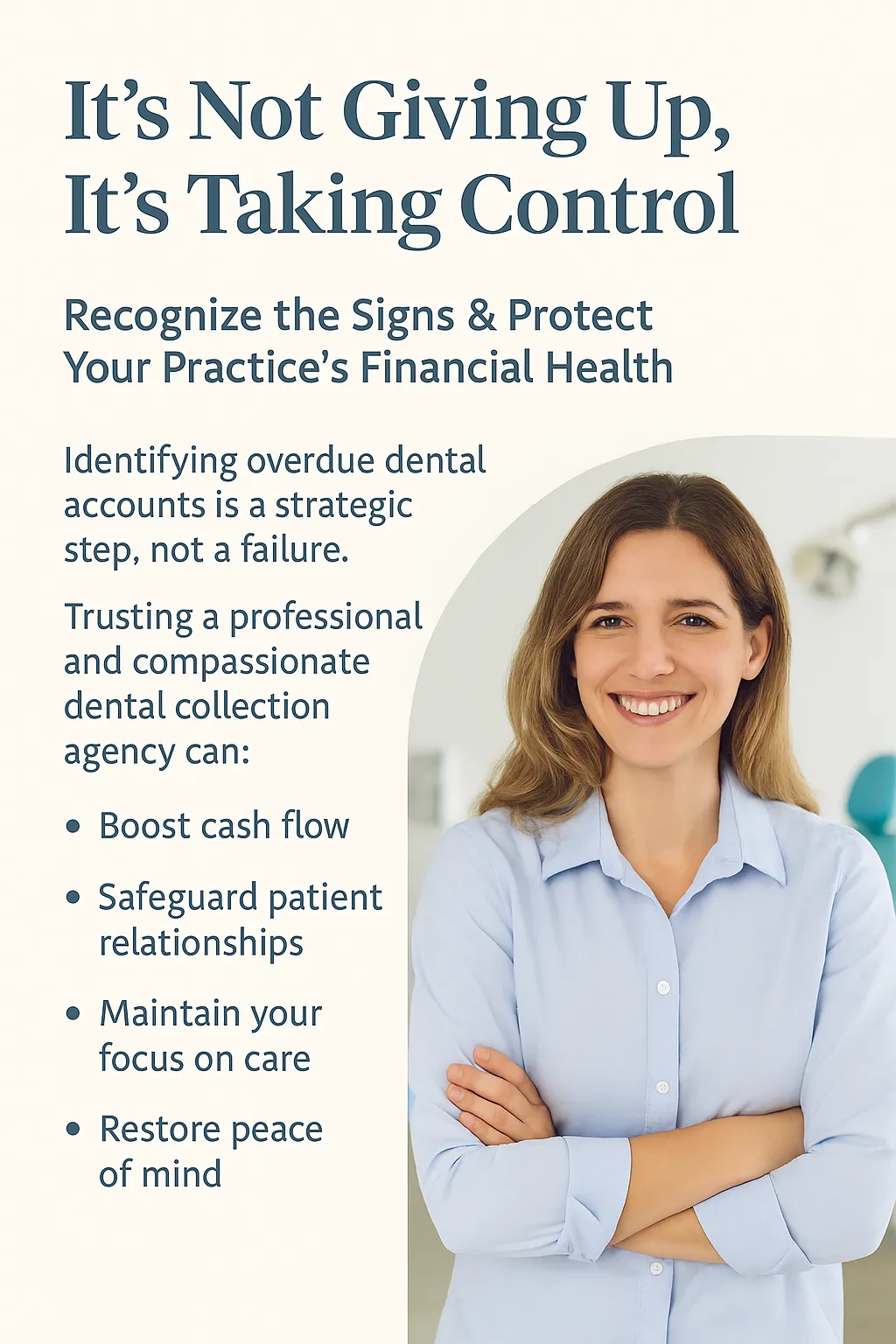
It’s Not Giving Up, It’s Taking Control
Sending an account to collections isn’t about failure. It’s about protecting your practice, your team, and your ability to serve patients for years to come.
If these signs feel all too familiar, maybe it’s time to have a conversation. Let’s talk about how a compassionate, professional partner can help you recover what you’re owed—while keeping your patient relationships and your peace of mind intact