• Skip to main content
  • Skip to primary sidebar

Nexa Collections

  • Home
  • Serving
    • Medical
    • Dental
    • Small Business
    • Large Business
    • Commercial Collections
    • Government
    • Utilities
    • Fitness Clubs
    • Schools
    • Senior Care Facility
  • Contact Us
    • About us
    • Cost

Debt Recovery

5 Ways Business Owners Can Collect on NSF/Bad Checks

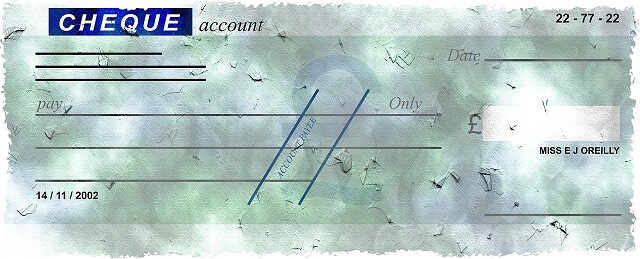
NSF bad check
If you’ve been in business for any appreciable amount of time it’s likely that you’ve encountered bad checks. These are checks you deposit that can’t be paid by the writer’s bank because the account drawn on has insufficient funds to cover the amount or the signature does not match. This is how they get the designation NSF  ( non-sufficient funds).

Not only do bad checks cause problems for your cash flow, but they also end up costing you extra money in fees. Thankfully, several methods are available to businesses to collect on these returned checks, and many of them can be reasonably quick and painless.

Need a Collection Agency to recover money due to Bad/Bounced Checks?

Contact us – Serving Nationwide

  • We can help you recover unpaid bills using a low-cost flat fee service, or a contingency-fee only service.
  • Most states will allow adding a $30 NSF fee. Did you know most collection agencies keep this whole fee? Only a handful of collection agencies will split this fee with their client.
  • Serving Grocery Stores, Convenience Stores, Girl Scouts, Boy Scouts, Pizza Chains, and Electric/Utility Companies.

When considering your approach, you should do whatever you can to avoid legal action. Lawsuits in small claims courts are costly and time-consuming. Also, because it’s your responsibility to collect any judgments you’re awarded, lawsuits are frequently ineffective, even when you win. Half of all judgments go uncollected, which means you may very well incur legal fees for no reason.

Here are five ways you can attempt to collect what’s owed you without resorting to court.

Call Your Customer’s Bank

The good news is that most people don’t write bad checks intentionally. More often than not they’re simply unaware that they don’t have the funds available. It could be that a check they’d written months ago was suddenly deposited. Or they miscalculated their account balance.

Whatever the case, it’s likely that the shortfall will be rectified once the check-writer is alerted to his or her mistake. So wait a few days and then ask the bank to check if funds are now available. If they are, you can redeposit the check.

The bank may also offer an enforced collection service. This will capture the needed funds from the next deposit your customer makes automatically.

Contact Your Customer

If you have your customer’s email address or phone number you can contact them to make them aware of the situation. This might feel pushy, but honest customers will usually welcome the alert. If they haven’t already gotten word from their bank your communication could help them avoid further bounced checks.

You can send your customer a certified letter if you don’t have immediate contact information. Not only does this alert them to the situation, but it also establishes a paper trail that could prove useful if your collection attempts prove unsuccessful.

Whichever way you make contact, politely and professionally ask for a payment, offering a number of alternative payment options.

Try a Check Recovery Service

Remembering to check in with your customer’s bank on a regular basis is difficult, and people frequently forget. This can be a problem because you only get three attempts to redeposit, and you don’t want to do that if you don’t know there are funds available. A better option is to use a check recovery service.

The provider of the service will monitor your customer’s account balance for you on a daily basis and then strategically redeposit the check when it’s most likely to be paid. This is a “set it and forget it” service, maximizing your chances of getting paid.

Best of all, you’ll get the full value of the check because check recovery services are nearly always free. Payment is taken as a fee charged to the bad check writer. Of course, the service can only work if the customer eventually deposits sufficient funds, and your check hits their account before those funds go elsewhere.

These are third-party services that guarantee payment on checks up to a certain amount. They can be beneficial but do come with a cost, so it’s essential to determine whether the benefits outweigh the expenses for your specific practice.

Your District Attorney’s Office May Be Able to Help

If you’ve exhausted friendlier options, you may find some relief through your local district attorney’s office. In some areas, they’ll send a letter on your behalf requesting an immediate satisfaction of the debt in order to avoid prosecution.

While this is generally an empty threat, the scare value alone is often enough to spur your customer into action.

Contact a Collection Agency

Contact a good collection agency if you’ve still found no relief after attempting everything listed previously. This is the most expensive option that doesn’t involve small claims, on average charging 40% of any amount collected, but it can help recover some portion of what’s owed you. Parting with 40% of something is always preferable to keeping the entirety of nothing.

The benefit of using a collection agency is that they’ll take over the entire collections process for you, freeing your time to focus on your business. Depending on the provider, it won’t cost you anything if they’re unsuccessful, so it’s certainly worth the attempt.

Remember that lawsuits are expensive, and any judgment you’re awarded could cost you considerably more when you attempt to collect it. It’s advisable to avoid court unless the amount owed is sufficiently high to warrant the cost and effort. As a method of last resort, a collection agency is a much better choice.
Filed Under: Debt Recovery

New Jersey Medical Collection Agency for Healthcare Providers: Local Experience Matters!

New Jersey medical debt collection has changed—and healthcare providers need a recovery strategy that has changed with it. From physician and dental practices in Newark and Jersey City to hospitals and urgent care centers in Hackensack and Edison, ophthalmologists, surgery centers, senior living communities, and healthcare groups across the state, unpaid patient balances can quickly become a serious revenue-cycle problem.

Under New Jersey’s Louisa Carman Medical Debt Relief Act, providers now face stricter rules on when medical debt can enter collections, how much interest may be charged, wage garnishment, payment plans, and credit reporting. That makes outdated, pressure-driven collection tactics both ineffective and risky.

Nexa helps New Jersey medical providers recover past-due patient accounts through compliant, patient-sensitive outreach, structured payment solutions, persistent follow-up, and appropriate escalation—protecting your cash flow without sacrificing the patient relationships and reputation you worked years to build.

Medical debt collection services for New Jersey doctors, dentists, hospitals, urgent care and senior living provider

Nexa provides 100% reputation-safe, equipped with all 50-state collections license, offering free credit reporting, free litigious debtor check, free bankruptcy scrub, and zero onboarding fees. Secure – SOC 2 Type II & HIPAA compliant. Over 2,000 online reviews rate us 4.85 out of 5. Easy to use and backed by a responsive client support team.

Need a Medical Collection Agency in New Jersey? Contact us


Deep Analysis: The 3 New Barriers to Revenue in NJ

The Louisa Carman Act introduced three specific “revenue blockers” that most national agencies are not prepared for.

1. The “600% FPL” Garnishment Ban

  • The Law: Effective July 2025, New Jersey prohibits wage garnishment for medical debt if the patient’s income is below 600% of the Federal Poverty Level.

  • The Risk: This is not just for “low income” patients. For a family of four, 600% of the FPL is nearly $187,000. This effectively removes the threat of garnishment for the vast majority of your middle-class patients.

  • Our Solution: We shift focus away from wage garnishment (which is now often impossible) and towards asset execution (bank levies) and voluntary settlement negotiation based on psychological urgency rather than legal threats.

2. The “Credit Reporting” Blackout

  • The Law: Medical debt can no longer be reported to credit bureaus if it is under $500 (regardless of date) or for any services provided after July 22, 2024. Any reported debt that violates this becomes legally void.

  • The Risk: The traditional agency tactic of “wrecking their credit score” to force payment is now illegal in New Jersey.

  • Our Solution: We rely on direct contact frequencies and attorney-backed demand letters. Since we can’t hurt their credit score, we use the “nuisance factor” of consistent, compliant professional follow-up to drive payment.

3. The Mandatory 120-Day “Freeze”

  • The Law: You cannot engage in any collection actions until 120 days after the first bill is sent. During this time, you must offer a reasonable payment plan (max 3% interest).

  • The Risk: Sending an account to collections at “Day 90” (the industry standard) is now a violation of state law.

  • Our Solution: We have adjusted our intake API to automatically reject NJ files younger than 120 days, protecting you from accidental “early placement” liability.


Our 4-Step “Garden State” Recovery System

We have calibrated our model to clear the hurdles of N.J.S.A. 2A:44 (Liens) and the new Medical Debt Relief Act.

Phase 1: The “Charity Care” Scrub (Pre-Collection)

  • The Strategy: New Jersey regulations (N.J.A.C. 10:52-11.5) strictly mandate that hospitals screen patients for the Charity Care Program before billing.

  • The Action: We audit your files to ensure this screening is documented. If a patient claims hardship, we pause collection and help facilitate the Charity Care application. This often results in you getting paid by the State rather than chasing a broke patient.

  • Cost: Included in service.

Phase 2: The “Safe Harbor” Outreach (Steps 1 & 2)

  • The Strategy: Once the 120-day freeze lifts, we send the legally required “30-Day Pre-Collection Notice” which includes the mandatory statement that the debt will not be reported to credit bureaus.

  • The Psychology: We use this notice to offer a “Final Amnesty” payment plan that complies with the state’s new 3% interest cap.

  • The Cost: Flat fee (approx. $15/account). You keep 100% of recoveries.

Phase 3: The “Lien & Levy” Escalation (Step 3)

  • The Strategy: Since wage garnishment is restricted for many, we look for other liquidity.

  • For Accident Cases: We utilize N.J.S.A. 2A:44-41 to file hospital liens with the county clerk. These liens attach specifically to personal injury settlements, ensuring you get paid before the patient receives their check.

  • The Cost: 40% contingency.

Phase 4: Strategic Litigation (Step 4)

  • The Strategy: For high-income debtors (above the 600% threshold) or those with significant assets, we file suit in the Superior Court of New Jersey. We target bank accounts and property liens, which are often more effective than wage garnishment in NJ anyway.

  • The Cost: 50% contingency.


Regional Strategy: One State, Two Markets

We adjust our approach based on the patient’s economic zone.

Region Economic Profile Collection Strategy
North Jersey (Bergen/Hudson) High Income / Commuter High usage of payment plans. We structure plans to fit the “3% interest” rule, making them attractive alternatives to ignoring the bill.
South Jersey (Camden/Gloucester) Philly Metro / Mixed Heavy focus on Insurance Cleanup. Many patients here cross state lines for care; we are experts at resolving “Out of Network” disputes with PA-based insurers (like Independence Blue Cross).
The Shore (Monmouth/Ocean) Seasonal / Retail We time our calls to align with seasonal cash flow for business owners and service workers.

FAQ: The Executive Summary

What is the Louisa Carman Medical Debt Relief Act in New Jersey?

The Louisa Carman Medical Debt Relief Act is a New Jersey law that significantly changed how healthcare providers and collection agencies can pursue unpaid medical bills. Among other protections, it limits medical-debt credit reporting, requires reasonable payment-plan options, restricts when collection actions may begin, caps interest, and limits wage garnishment for certain patients. As of July 22, 2025, the major collection protections of New Jersey’s Louisa Carman Medical Debt Relief Act are fully in effect.

How long must a New Jersey healthcare provider wait before taking collection action on an unpaid medical bill?

In New Jersey, a medical creditor or medical debt collector generally cannot take collection action until 120 days after the first medical bill was sent and the patient has been offered a reasonable payment plan. At least 30 days before collection action begins, the patient must also receive an additional bill and notice describing the intended collection action and deadline.

Can unpaid medical debt be reported to credit bureaus in New Jersey?

New Jersey prohibits medical creditors and medical debt collectors from reporting medical debt for healthcare services performed on or after July 22, 2024. The law also prohibits consumer reports from containing paid medical debt or medical debt below $500, regardless of when that debt was incurred.

What type of payment plan must be offered for medical debt in New Jersey?

A reasonable payment plan should be based on what the patient can afford and, when income is known, generally cannot require monthly payments exceeding 3% of the patient’s monthly income. The law provides for repayment periods that may range from six months to five years, requires at least a 60-day grace period for late payments, and caps interest at 3% per year.

Can wages be garnished for unpaid medical bills in New Jersey?

New Jersey restricts wage garnishment for medical debt. A medical creditor or debt collector cannot garnish the wages of a patient whose annual income is below 600% of the federal poverty level. Because poverty guidelines can change, eligibility should be evaluated using the applicable current threshold.

Can a medical bill be sent to collections while an insurance appeal is pending in New Jersey?

If a healthcare provider knows that an internal review, external review, or other health-insurance appeal related to the bill is pending, New Jersey law generally prohibits the provider from referring that unpaid charge to a medical debt collector. Collection communications and lawsuits regarding those charges are also restricted while the qualifying appeal is pending.


Need a NJ Collection Agency? Contact us

Filed Under: Debt Recovery

Michigan Medical & Hospital Debt Collection: Recover Patient Balances

Michigan medical debt collection requires more than standard patient follow-up—especially when No-Fault auto insurance, PIP claims, and state-specific collection rules are involved. Nexa helps Michigan hospitals, clinics, physicians, and other healthcare providers recover unpaid medical bills through patient-friendly, HIPAA- and FDCPA-compliant collection practices. Our options include a $15 fixed-fee service where you keep 100% of recoveries, plus contingency-based collections for harder accounts, helping improve cash flow while protecting patient relationships and your reputation.

blank

Quick Answer: A Michigan medical and hospital collection agency must balance HIPAA data security and LARA licensing under Michigan Occupational Code Article 9 with soft-touch patient outreach. Nexa Collections provides 50-state licensed, LARA and HIPAA-compliant medical debt collection starting at a $15 Fixed Fee Service per account. Backed by SOC 2 Type II security, signed Business Associate Agreements (BAAs), and a 4.85/5 rating across 2,000+ reviews, our soft Fixed Fee approach helps Michigan hospitals, health systems, and private practices recover unpaid co-pays, deductibles, and self-pay balances while retaining 100% of recovered principal.

🛡️ HIPAA & Signed BAA Compliant | ⚖️ LARA & MCL § 339.901 Licensed | 🏷️ $15 Fixed Fee Service | ⭐️ 4.85/5 Rated

Need a Medical Collection Agency in Michigan? Contact Us


Hospital & Health System Revenue Cycle

Financial Assistance Policy (FAP) Pre-Scrubbing. 
Every hospital account is pre-screened against the facility’s financial assistance guidelines before active collection begins, catching accounts that should be routed to charity care rather than pursued as a standard balance.

High-Deductible & Emergency Room Balances. 
Recovering patient-responsibility balances after insurance adjudication, exactly the kind of confusing post-EOB charge that generates disputes when it isn’t clearly explained upfront.

Enterprise Portal Integration. 
Bulk account uploads compatible with Epic, Cerner, and MEDITECH, so a health system’s billing team isn’t manually re-entering data that already lives in its EHR.

Two Michigan Laws, Two Different Jobs

Michigan layers two separate protections on top of the federal FDCPA, and they do different things. The Occupational Code, Article 9 (MCL 339.901 et seq.) is the licensing law, administered by LARA, that governs who’s even allowed to operate as a collection agency in the state. The Regulation of Collection Practices Act (MCL 445.251 et seq.) is a separate conduct law banning harassing, deceptive, or unfair collection practices.

The second one matters more than most billing departments realize: unlike the federal FDCPA, which only applies to third-party collectors, Michigan’s practices act also reaches original creditors collecting their own debts. That means a hospital’s own in-house billing office is held to a similar standard as an outside agency, not just Nexa. Outreach that would pass FDCPA muster can still violate Michigan’s own law if it’s misleading or harassing, regardless of who’s making the call.

Our Pricing

Nexa $15 Fixed Fee Service. 
$15 flat fee per account, 0% commission, practice or hospital retains 100% of recovered principal. Ideal for early-stage patient balances, 30–90 days past due.

Contingency Recovery (Late-Stage Defaults). 
Performance-based recovery for aged, uncontactable, or out-of-state patients, no fee unless funds are recovered. Contrast this against traditional agencies charging 40% contingency fees.


Nexa provides reputation-safe, equipped with all 50-state collections license, offering free credit reporting, free litigious debtor check, free bankruptcy scrub, and zero onboarding fees. Secure – SOC 2 Type II & HIPAA compliant. Over 2,000 online reviews rate us 4.85 out of 5. 

Need a Collection Agency? Contact us


What $50,000 in Delinquent Michigan Medical A/R Actually Nets You

A simple static example on a $50,000 delinquent portfolio, an 80% eventual recovery rate ($40,000 collected):

  Nexa $15 Fixed Fee Service Traditional 40% Contingency
Amount recovered $40,000 $40,000
Fee (50 accounts × $15) $750 $16,000 (40% of recovered)
Practice/hospital keeps $39,250 (98.1%) $24,000 (60%)

In-House Billing Staff vs. Traditional 40% Agency vs. Nexa $15 Fixed Fee Service

Factor In-House Billing Staff Traditional 40% Agency Nexa $15 Fixed Fee Service
Upfront cost Staff overtime, no direct cash outlay Often 40%+ contingency regardless of account age $15 flat fee, practice keeps 100% of what’s recovered
Michigan legal compliance (LARA/Article 9/MCL § 445.251) Bound by MCPA as an original creditor, but rarely tracks it separately from FDCPA Varies, generic scripts may miss Michigan’s broader original-creditor coverage Built around both Article 9 licensing and MCPA conduct rules from intake
HIPAA & BAA security alignment Depends on internal protocols Varies by agency SOC 2 Type II certified, signed BAA on every account
Hospital FAP & charity care screening integration Manual, dependent on staff catching it before placement Rarely built into the process at all Pre-scrubbed against FAP guidelines before any account is worked

Recent Recovery Results

Multi-Location Health System — Detroit / Ann Arbor, MI.
 Placed 220 past-due accounts totaling $94,000 in uncollected deductibles. Using Nexa’s $15 Fixed Fee Service, recovered $65,800 within 40 days while keeping 100% of recovered principal for under $3,300 in total fixed fees, saving over $23,000 compared to traditional 40% contingency agencies.

Community Hospital Facility — Grand Rapids, MI. 
Faced $112,000 in defaulted patient responsibility balances across 45 accounts. Nexa’s soft Fixed Fee diplomatic outreach resolved 31 accounts in under 45 days, recovering $78,400 with zero LARA complaints or negative online reviews.

Frequently Asked Questions

How does Nexa maintain licensing and compliance under the Michigan Occupational Code Article 9 (MCL § 339.901) and LARA rules?

Through active LARA licensing under Article 9, which governs who’s authorized to operate as a collection agency in Michigan, combined with separate adherence to the Regulation of Collection Practices Act’s conduct standards, both tracked as distinct compliance requirements rather than treated as one general rule.

Can a $15 Fixed Fee Service help hospitals recover high-deductible patient responsibility balances post-insurance adjudication?

Yes, this is one of the most common account types it’s used for. A professional, low-cost demand letter resolves many post-EOB balances, especially when the outreach clearly explains what insurance did and didn’t cover, without the hospital paying a percentage of the recovery.

How does Nexa handle hospital Financial Assistance Policies (FAPs) and charity care pre-scrubbing prior to collection outreach?

Every hospital account is checked against the facility’s financial assistance guidelines before active collection begins, so patients who should be routed to charity care aren’t pursued as a standard past-due balance.

How does Nexa guarantee HIPAA compliance and PHI protection with a signed Business Associate Agreement (BAA)?

Every medical account is processed under a signed BAA, with SOC 2 Type II certified data security governing storage and transmission. Outreach is limited to the balance owed, never the underlying clinical details.

How do soft diplomatic demand letters protect hospitals and medical groups from negative Google or Healthgrades reviews?

By resolving the balance through a calm, professional notice rather than an aggressive call, since most negative reviews stem from a confrontational interaction, not from receiving a formal letter. This matters even more for hospitals, where a single bad billing experience can affect a health system’s broader public reputation.


Click here for a Free Compliance Audit of Your Michigan Claims

Filed Under: Debt Recovery

Music Store Debt Collection & Musical Instrument Rental Recovery

Orchestrating Financial Harmony: Recovery for the Local Music Scene

Your store provides the soundtrack to our community, from the first screechy violin lesson to the local jazz trio’s Friday night set. We understand that when a high-end saxophone rental goes missing or a vintage amplifier repair bill goes unpaid, it’s not just a line item—it’s a disruption of your rhythm. Our Account Reconciliation Team ensures that your shop stays in tune while we handle the difficult conversations with the “Velvet Hammer” touch.

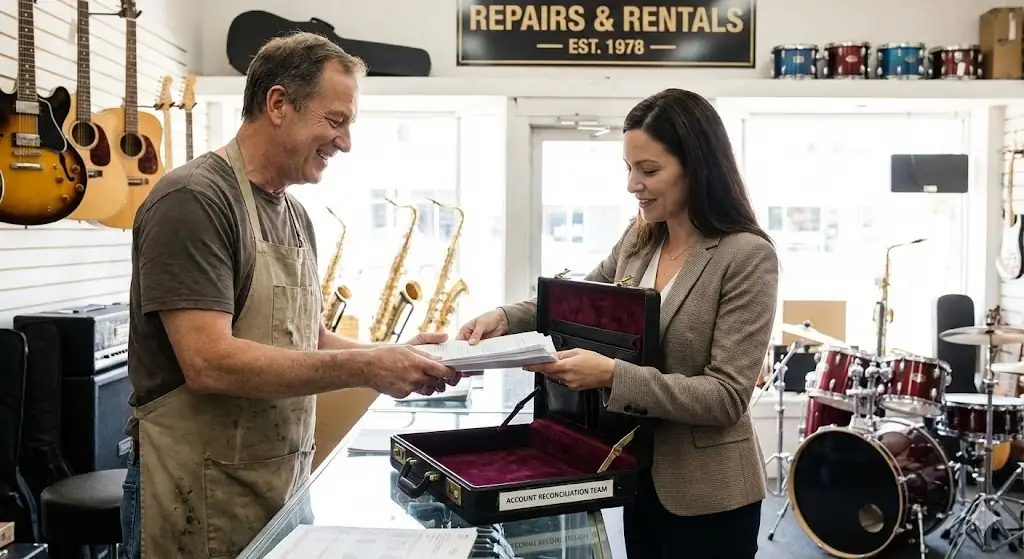
Music store sales counter and instrument rental display with brass, woodwinds, and guitars

Nexa provides a reputation-safe approach, equipped with all 50-state collections license, offering free credit reporting, free litigious debtor check, free bankruptcy scrub, and zero onboarding fees. Secure – SOC 2 Type II compliant. Over 2,000 online reviews rate us 4.85 out of 5.

We are serving over 50 music stores nationwide.

Need a Collection Agency? Contact us


Pricing Designed for Every Octave

We believe in transparent recovery that scales with your needs. Whether you are dealing with a bulk of small lesson fees or a single high-value instrument rental, our current rates remain consistent:

  • Fixed-Fee Option: Only $15 per account. You retain 100% of the recovered funds. This is ideal for early-stage delinquency where a firm, professional nudge is all that’s required.

  • Contingency Option: 40% fee—if we don’t recover your money, you don’t pay a cent.

  • Equipment Recovery Discount: We recognize that a returned instrument may have suffered wear and tear. If the customer returns the merchandise rather than paying the full balance, our contingency fee drops to 25% to account for the depreciation of the equipment.

blank

Money Saver Tip: Most of our partners effectively receive our fixed-fee service for free. By consulting your CPA, you can often declare these costs as a necessary Business Expense on your current tax filings, neutralizing the overhead.


🚩 Local Pitfalls: 3 Red Flags for Music Retailers

  1. The “Grace Period” Trap: Waiting until the end of a semester to chase unreturned school rentals often leads to “skip” situations where families move without notice.

  2. The Handshake Repair: Performing high-value repairs without a signed “authorization to work” that includes collection cost clauses makes recovery harder.

  3. Employee Outreach: Asking your master luthier or floor manager to make collection calls wastes their talent and often results in awkward, ineffective confrontations that damage your shop’s reputation.


A Note from the Account Reconciliation Team

We view ourselves as an extension of your front office. Our goal isn’t just to “get the money”—it’s to resolve the friction that stops a customer from coming back. We use empathetic, bilingual communication (Spanish and English) to navigate these sensitive waters. By the time an account reaches us, we know the “will to pay” is often buried under life’s distractions. We dig it back out without the noise.


Why Cooperative Mediation Wins: The Velvet Hammer

We recover more because we work with the debtor, not against them. Our “Velvet Hammer” approach is firm enough to secure a commitment but soft enough to protect your 5-star online reputation. By treating the customer with respect, we move your bill to the top of their priority list.

Before we ever dial a number, we perform a litigation scrub to ensure we aren’t chasing “judgment-proof” individuals or those with a history of litigious behavior. This protects you from risk and keeps our recovery rates significantly higher than the industry average. When appropriate, we leverage text and email to speed up responses, meeting customers on the platforms they actually use.


Recent Success Stories

Case 1: The “Vanished” Cello Rental
A customer stopped payments on a professional-grade cello and ceased all communication.

  • Step 1: We performed a skip trace and USPS address check, locating the debtor in a neighboring county.

  • Step 2: Our Spanish-speaking collector reached out, discovering a family medical emergency had caused the lapse.

  • Result: The cello was returned within 48 hours, and a settlement for the past-due rental fees was reached, billed at the 25% equipment recovery rate.

Case 2: The Studio Repair Bill
A local recording studio owner owed a significant balance for a console repair but was disputing the final labor hours.

  • Step 1: We acted as a neutral third party to review the invoice and the studio’s concerns.

  • Step 2: Using diplomatic mediation, we negotiated a three-part payment plan that secured the full balance without litigation.

  • Result: 100% recovery achieved within 30 days.


Comprehensive Debt Segmentation Checklist

  • Band & Orchestra Instrument Rentals: Unreturned or defaulted rent-to-own (RTO) contracts for flutes, trumpets, saxophones, clarinets, violins, and cellos rented for school music seasons.

  • Pro-Audio & Backline Gear: Outstanding balances or missing serialized equipment from event/studio rentals, including PA systems, powered mixers, tube amplifiers, drum kits, microphones, and DJ packages.

  • Luthier & Repair Invoices: Abandoned instruments or unpaid labor and parts invoices for guitar setups, brass chem-cleans, woodwind repads, and structural violin restorations.

  • Private Lesson Tuition: Past-due music academy, vocal coaching, and instrumental lesson tuition that fell behind payment schedules.


Compliance and Modern Logistics

We navigate the complexities of federal rules, including the Fair Debt Collection Practices Act (FDCPA), to ensure your business is never at legal risk. Our process includes:

  • Skip Tracing & USPS Checks: Finding customers who have moved.

  • Bankruptcy & Litigation Scrubs: Identifying risk before we engage.

  • Credit Reporting: Available where permitted and chosen by you.

  • Quality Control: All calls are recorded and randomly reviewed to prevent “rogue collector” behavior and protect you from review-bombing.


Frequently Asked Questions

1. Can a music store send an unpaid instrument rental account to a collection agency?

Yes. Music stores can refer legitimate past-due rental accounts for professional collection when the customer has stopped paying and normal reminders have failed, subject to the rental agreement and applicable state law. Nexa handles instrument rentals, repair balances, lesson fees, and other music-store receivables, with a $15 fixed-fee option for appropriate early-stage accounts and a 40% contingency option for full collections.

For the strongest account, provide the signed rental agreement, payment history, customer and parent/guardian information, instrument description and serial number, and copies of previous notices. Actual music-store rental contracts commonly document these details because they establish who rented the equipment and what obligations apply.

2. What happens if a customer stops paying and refuses to return the rented instrument?

This creates two potential recovery goals: the overdue balance and the merchandise itself. Depending on the rental contract and applicable law, the store may pursue payment, return of the instrument, or an appropriate combination of both.

Nexa specifically offers a lower rate when the merchandise is recovered. If an instrument is returned during Step 3 instead of the full balance being paid, the contingency rate is 25% rather than the standard 40%. Nexa’s current music-store page gives the example of a cello rental that was located through skip tracing and ultimately returned.

3. If a customer returns an instrument, do they still owe the past-due rental balance?

Often, yes. Returning the instrument generally stops future rental obligations according to the terms of the particular agreement, but it does not automatically erase rent, repair charges, late amounts, or other balances already due. Music-store agreements reviewed for this article commonly distinguish between returning the merchandise and paying amounts that accrued before the return.

Nexa can therefore work toward getting the instrument back while also resolving the legitimate outstanding balance. When merchandise is returned in Step 3, Nexa’s equipment-recovery contingency rate is 25% instead of 40%.

4. What if a parent says the rented instrument was returned to the school?

Do not automatically assume the rental has been closed. This is a surprisingly important issue in school-band rentals. Some music-store agreements specifically state that leaving an instrument with a school or music teacher does not end the customer’s responsibility until the store receives it or has authorized that return method.

Music stores should therefore document the instrument serial number, school, student, authorized return procedure, date received, and condition upon return. Clear documentation can prevent a “we returned it months ago” dispute from becoming an unresolvable collection problem.

5. Can a collection agency recover unpaid instrument repair bills and music lesson fees?

Yes. Nexa’s music-store collection service covers more than rental payments. It is designed for unpaid instrument and equipment repairs, lesson fees, and other legitimate music-business receivables as well. Nexa specifically identifies high-value repairs performed without signed work authorization as a common recovery problem.

For repair accounts, keep the signed estimate or authorization, parts and labor invoice, communications approving additional work, pickup records, and payment terms. Clear written authorization can make it much easier to resolve a later dispute over what work the customer agreed to pay for.

6. Can Nexa locate a music-store customer who moved while still owing money or holding an instrument?

Yes. This is particularly important for school-year instrument rentals, where families may move after a semester or school year while an account remains unpaid. Nexa specifically warns music retailers that waiting too long on unreturned school rentals can lead to customers becoming harder to locate.

Nexa uses skip tracing and USPS address checks to locate customers who have moved, along with English and Spanish outreach when appropriate. Once contact is re-established, the objective can be payment of the balance, return of the instrument, or an appropriate resolution of both.


Secure Your Revenue – Contact Nexa Today

Filed Under: Debt Recovery

Collection Agency for Plastic Surgeons: Recover Unpaid Bill

plastic surgery
Nearly 2 million Americans undergo plastic surgery every year. Unfortunately, thousands of these patients default on their payment obligations, and many of these receivables are eventually forwarded to a Collection Agency.

Since cosmetic surgery is considered an elective surgery, it is usually not covered by regular insurance. Even though most patients use their Cash Savings, Health Cards ( like Care Credit Card), PatientFi, and Personal Credit Cards to make payments, many patients make payment arrangements directly with the doctor’s office. These arrangements can vary in detail and scope.

Most popular plastic surgery procedures include: Breast augmentation, Liposuction, Eyelid surgery, Nose surgery, Tummy Tuck and Tumor removal. It is estimated that Americans spend over 16 billion dollars annually on cosmetic and plastic surgeries. Since the cost of these procedures run from $3,000 to upwards of $25,000, non-payment by just a few patients can have a huge impact on the cash flow and profitability of the doctor’s office.

The in-house staff at the plastic surgeon’s office is really not qualified or experienced to handle past-due bills beyond sending a few reminder letters and making phone calls. This is where a Debt Collection Agency comes in and attempts to recover the unpaid bill more persistently, diplomatically and (most important) legally. Collection agencies have tools and subscriptions to various services that assist in a successful recovery of the medical bill. They can even initiate legal action against the patient by taking him to court if nothing else works.

The moment a Collection Agency is involved, the whole equation changes. Frankly, no one wants to hear from a Collection Agency.

The patient knows that the case has been forwarded to a professional debt collector and all those excuses he has been giving to the plastic surgeon’s office so far will not work anymore. They will now have to face all possible recovery measures permissible under the law.

The fees charged by collection agencies are worth the investment. In-fact if a plastic surgeon wishes, the case can be directly assigned for contingency collections in which there are no fees unless a recovery is made.

A plastic surgeon should hire a collection agency carefully. It is important to know whether the agency has extensive experience with medical collections and if it is insured. Do not go for a collection agency simply because it is near you, go for the better one instead. Your collection agency should be licensed to collect in the state where your debtors are located.

Just a handful of collection agencies perform the Litigious Patient scrub to check if the patient has a history of filing lawsuits ( or frivolous lawsuits), in such cases, the collection agency will advise the doctor’s office to take an alternate approach just to be safe.

If you need a debt collection agency with extensive experience in medical collections: Contact Us

Filed Under: Debt Recovery

Collision Repair Debt: Recovering “Pocketed Checks” & Deficiency Balances

body shop

In the auto body industry, you aren’t just fighting rust and bent frames; you are fighting a payment system designed to fail you.

The most dangerous phrase in a shop owner’s life is: “The insurance company said they mailed the check to me, I’ll bring it in when it arrives.“

When that customer ghosts you, it isn’t just a late payment. In many jurisdictions, spending an insurance payout designated for repairs is a form of insurance fraud or theft by conversion. You need a collection partner who knows how to use that leverage.

Need a Collection Agency for your Automotive Workshop: Contact Us

The 3 Hidden Revenue Leaks in Body Shops

1. The “Direction to Pay” Violation

You had the customer sign a Direction to Pay. The insurer ignored it (or claimed “clerical error”) and mailed a $4,500 check to the vehicle owner. The owner cashed it and stopped answering your calls.

  • The Agency Fix: This requires a specialized “misappropriation of funds” demand. A standard “please pay us” letter is weak here. The debtor needs to understand that this is bordering on criminal liability.

2. The “Lien Sale” Deficiency

You have a car that has been racking up storage fees for 60 days. The bill is $8,000. The car is a totaled 2014 sedan worth only $2,000 at auction.

  • The Trap: Most shops think, “I’ll just do a lien sale.”

  • The Reality: The lien sale gets you $2,000. You are still out $6,000. This is called a Deficiency Balance.

  • The Solution: You can (and should) send that remaining $6,000 balance to collections. The lien sale does not wipe the debt clean; it only offsets it.

3. “Project Purgatory” (Restoration Stalls)

Restoration shops face a unique nightmare: The “open checkbook” client who suddenly snaps the wallet shut when the car is stripped to the frame.

  • The Risk: You have a bay occupied by a non-rolling chassis. You can’t put a lien on a pile of parts easily, and you can’t push it outside to rust.

  • The Fix: Aggressive contract enforcement to recover “lost bay time” and labor hours already sunk into the tear-down.

Recent Results: Real Recovery Scenarios

These are actual types of cases specialized automotive agencies are resolving in 2025.

  • Case Study #1: The ADAS Calibration Dispute

    • The Debt: $1,450.

    • The Story: A customer picked up their vehicle but refused to pay for the “Post-Scan” and “Radar Calibration,” claiming it was a “money grab” that the insurance adjuster initially hesitated to approve.

    • The Outcome: The agency utilized the OEM Repair Procedures documentation to prove the safety necessity of the charge. The customer paid in full once the agency clarified the liability of driving an uncalibrated vehicle.

  • Case Study #2: The “Pocketed” Supplement

    • The Debt: $4,200.

    • The Story: Shop released a truck after the primary repair. A hidden damage supplement was approved later. The insurer sent the supplement check to the vehicle owner, who used it to pay their mortgage.

    • The Outcome: The collection team treated this as a wrongful retention of funds. Facing a potential credit score collapse and legal escalation regarding the misappropriated funds, the debtor arranged a 3-month repayment plan.

Frequently Asked Questions

Q: Can a collection agency help if I didn’t get a signature on the final invoice?

A: It is harder, but yes. If you have the pre-authorization to repair and text messages/emails approving the work or acknowledging the completion, that is often enough evidence to validate the debt. Digital footprints count.

Q: Does sending a customer to collections void the warranty on their repair?

A: Generally, yes. Most standard repair contracts state that warranties are only valid on “paid in full” invoices. A collection agency can use this as leverage: “Mr. Smith, your lifetime paint warranty is void until this $500 deductible is settled.”

Q: I charged storage fees because they left the car for 3 weeks after it was ready. Can I collect that?

A: Only if your initial intake paperwork clearly lists your daily storage rate and the “grace period” (e.g., Storage charges of $75/day begin 48 hours after notice of completion). If this was posted clearly, it is a valid, collectible debt.


Stop acting as a free bank for your customers.

If you need a cost-effective Collection Agency to help you recover past-due bills: Contact Us


Filed Under: Debt Recovery

  • « Go to Previous Page
  • Page 1
  • Interim pages omitted …
  • Page 35
  • Page 36
  • Page 37
  • Page 38
  • Page 39
  • Interim pages omitted …
  • Page 55
  • Go to Next Page »

Primary Sidebar


accounts receivable

Need a Collection Agency?
Kindly fill this form.
We’ll get in touch with you

    Please prove you are human by selecting the key.

    Compliance & Security

    • SOC 2 Type II Certified: Third-party audited data security and strict privacy controls.

    • HIPAA Compliant: Secure, legal processing of medical and municipal EMS accounts.

    • PCI-DSS Level 1: Highest tier of data encryption for secure payment processing.

    • FDCPA & FCRA Aligned: Full legal adherence to federal consumer protection laws.

    Recent Posts

    • Nationwide Debt Collection Agency Serving U.S. Cities
    • Chula Vista Collection Agency for Medical, B2B, Schools & Business Debt
    • Corpus Christi Collection Agency: Itemized Bill Rules for Practices
    • Riverside Collection Agency | For Logistics, Medical, Schools & Business Recovery
    • Collection Agency for Large Balances: High-Value B2B Debt Recovery
    • Baltimore Collection Agency | Medical, Commercial, Schools & More
    • Commercial and B2B Collection Agency in Detroit
    • Boston Medical Collection Agency | Serving Hospitals, Physicians & Dentists

    Featured Posts

    • Tips to Raise Maximum Money on GoFundMe
    • Dental Billing Secrets: How to Collect More at Checkout
    • The Rise of Mobile Payment Solutions in Debt Collection

    Copyright © 2026 NEXACOLLECT.COM | This content is provided for general informational purposes only and should not be considered legal advice. Collection laws and requirements may vary by state, account type, documentation, debtor status, and specific facts. Please consult qualified legal counsel for guidance regarding your particular situation. Nexa and its authorized collection partners service accounts in accordance with applicable federal and state collection requirements. Visit our home page to know more about us.

    X
    Need a Collection Agency?
    Contact Us