• Skip to main content
  • Skip to primary sidebar

Nexa Collections

  • Home
  • Serving
    • Medical
    • Dental
    • Small Business
    • Large Business
    • Commercial Collections
    • Government
    • Utilities
    • Fitness Clubs
    • Schools
    • Senior Care Facility
  • Contact Us
    • About us
    • Cost

Debt Recovery

Collection Agency for Equipment Rental Companies

An unpaid equipment rental account is rarely just a billing problem. Somewhere on a job site, or in a driveway, or behind a locked gate, there’s a piece of equipment that still belongs to you, and the renter has both your money and your asset. Ordinary collections content treats this like any other unpaid invoice. It isn’t. Equipment leases carry legal remedies most receivables never touch.

Quick answer: Equipment rental debt is governed by UCC Article 2A, which gives lessors tools beyond an ordinary unpaid invoice: self-help repossession without a court order (limited by “breach of peace”), replevin as a court-ordered alternative, and a damages formula based on market rent differential rather than just the unpaid balance. Nexa recovers equipment rental accounts starting at a $15 fixed fee per account, with contingency options for older balances, alongside guidance on when repossession or replevin is the faster path to getting the actual equipment back.
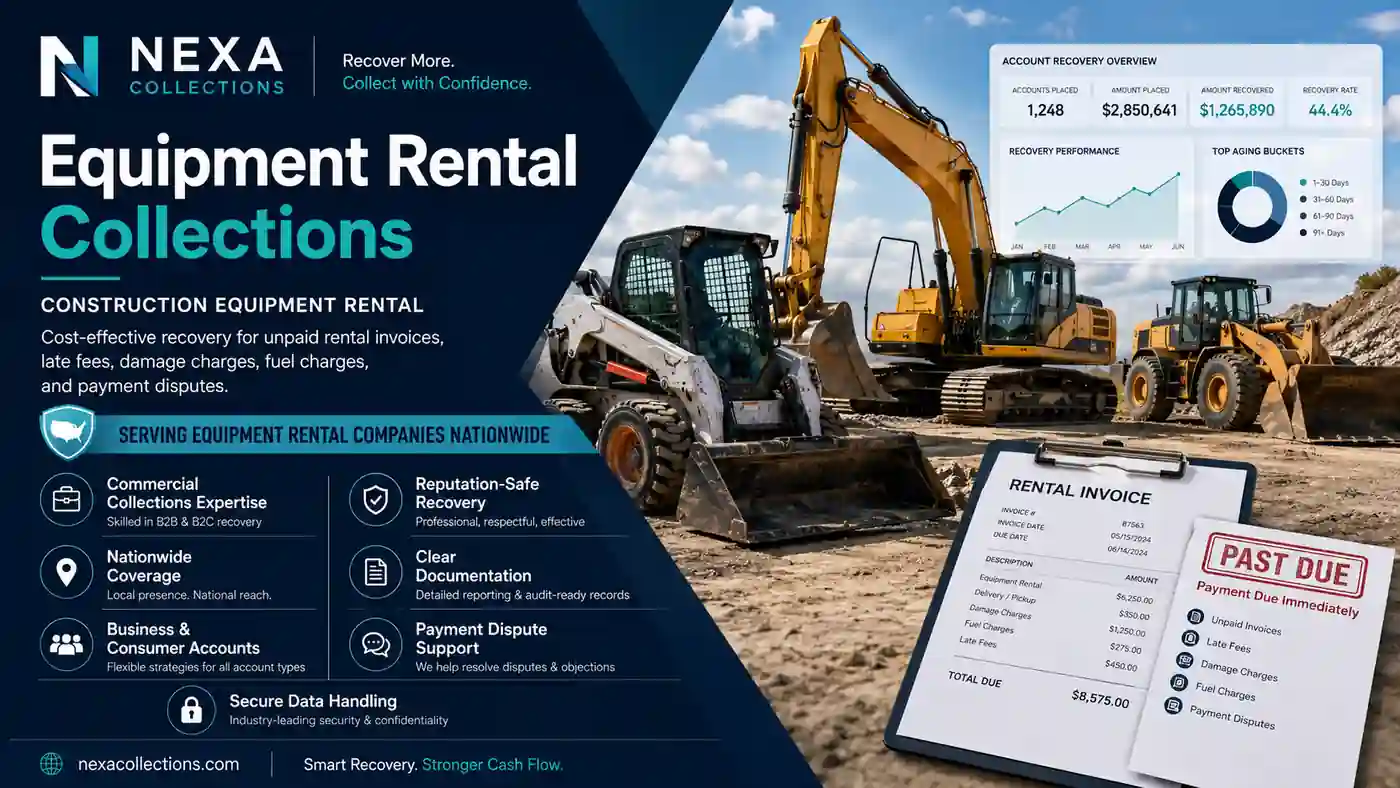
Equipment rental collections service for recovering unpaid rental invoices, late fees, damage charges, fuel charges, and disputed balances with nationwide, reputation-safe recovery.

Need a Collection Agency for Your Equipment Rental Business? Contact us


Why Equipment Rental Debt Isn’t an Ordinary Receivable

You may have a right to the equipment itself, not just the money. 
Under UCC Article 2A, a “substantial default” (non-payment, wrongful rejection, repudiation, or anything that substantially impairs the value of the lease to you) generally triggers a lessor’s statutory remedies, which can include recovering the equipment directly rather than only pursuing payment. Whether repossession is realistic depends heavily on where the equipment actually is and whether it can be recovered without confrontation.

Self-help repossession has a hard limit: no breach of peace. 
Where your lease agreement and state law permit it, equipment can often be recovered without going to court first, but only if it can be done without force, threats, or entering a locked or secured location without permission. Equipment sitting on an active job site behind a locked gate is a materially different situation than equipment parked in an open lot.

Replevin is the court-ordered fallback. 
When self-help repossession isn’t safe or the renter is actively obstructing recovery, replevin is the legal action to obtain a court order compelling return of the specific equipment. It’s slower than self-help repossession but doesn’t carry the same breach-of-peace risk.

Damages aren’t just “what’s owed on the invoice.” 
Article 2A’s default damages formula for a lessor is the present value of market rent for the remaining lease term, minus the present value of the original contracted rent for that same term, plus incidental and consequential damages, minus expenses saved because of the default. On a long-term equipment lease with meaningful time remaining, this can represent real value beyond the simple unpaid balance, worth factoring in before deciding an account isn’t worth pursuing.


What This Costs
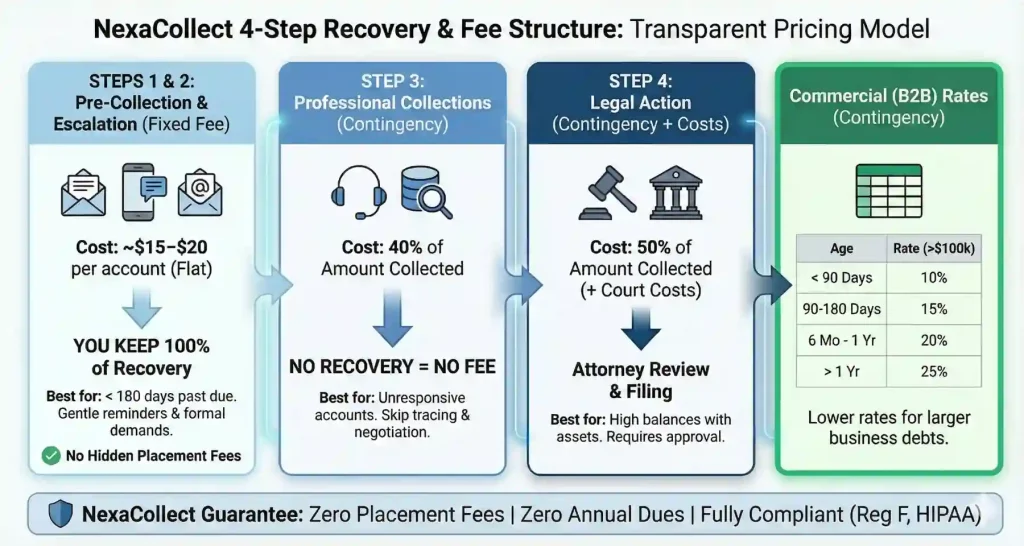
Nexa Collections fixed-fee and contingency pricing structure

Step 1 & 2: Fixed-Fee Recovery (~$15/account). Professional demand sequences for accounts under roughly 60 days. Payments go directly to you. See the full pricing breakdown.

Step 3: Contingency Collection (20-40%). For older or unresponsive accounts, no recovery, no fee.

Step 4: Legal Referral (client-approved, ~50%). For accounts where repossession, replevin, or a lawsuit for damages is genuinely warranted, filing fees reimbursed from the first recovery.


Nexa provides a reputation-safe approach, equipped with all 50-state collections license, offering free credit reporting, free litigious debtor check, free bankruptcy scrub, and zero onboarding fees. Secure – SOC 2 Type II & FDCPA compliant. Over 2,000 online reviews rate us 4.85 out of 5. 

Need a Collection Agency? Contact us


Common Billing Disputes in Equipment Rental (And How to Prevent Them)

Most equipment rental billing disputes fall into a handful of recurring categories:

  1. Incorrect Billing. Wrong rental rates, wrong equipment details, or billing for a longer period than actually rented. Keep meticulous records and review invoices carefully before sending.
  2. Late Fees and Penalties. A renter unaware of late-return fees is a common source of disputes. State these terms clearly in the rental agreement itself, not just verbally.
  3. Damage Charges. Disputes over equipment damage are common and often avoidable. Inspect and document equipment condition at both rental and return.
  4. Unauthorized Charges. Additional charges not agreed upon in advance create friction. A detailed contract outlining all possible charges prevents this.
  5. Billing Cycle Confusion. Long-term rentals especially benefit from clearly specifying whether billing is weekly, monthly, or otherwise.
  6. Lost or Delayed Invoices. Electronic invoicing with retained copies reduces disputes over timeliness.
  7. Payment Terms Disputes. Due dates, grace periods, and accepted payment methods should be explicit in the agreement, not assumed.
  8. Fuel Charges. Disputes over fuel level at return are common; a clear, transparent fuel policy prevents most of them.

To minimize these issues: maintain a detailed rental agreement, keep accurate records, communicate clearly with customers, use electronic invoicing, and periodically review your billing process for recurring problems. Where disputes do arise, having a defined resolution process, and knowing when to involve legal counsel, keeps a disagreement from becoming a write-off.

For general commercial collection methodology beyond equipment-specific remedies, see Nexa’s commercial collections services.


Frequently Asked Questions

Can we take back our equipment if a renter stops paying, or do we have to sue first?

Often you can, without going to court first, but only within limits. Under UCC Article 2A, self-help repossession is generally permitted where it can be accomplished without “breach of peace,” meaning no force, threats, or entering a locked or secured location without permission. Equipment on an open, accessible site is a very different situation from equipment behind a locked gate on an active job site, where self-help repossession is far riskier and replevin, a court-ordered recovery action, may be the safer path.

What is replevin, and when do we need it instead of just repossessing the equipment ourselves?

Replevin is a court proceeding to obtain a legal order compelling the return of specific property that’s being wrongfully withheld. It’s the right tool when self-help repossession isn’t safe or legally permissible, the equipment is on secured or locked premises, the renter is actively obstructing recovery, or there’s a real dispute about whether a default has actually occurred. It’s slower than self-help repossession but avoids the breach-of-peace risk entirely.

Is the damages we can claim just the unpaid rental invoices, or is there more?

Often more. Under UCC Article 2A’s default damages framework, a lessor is generally entitled to the present value of market rent for the remaining lease term, minus the present value of the original contracted rent for that period, plus incidental and consequential damages, minus any expenses saved because of the default. On a longer-term lease with significant time remaining, this can represent meaningful value beyond the simple unpaid balance on the books.

What counts as a “substantial default” that lets us actually use these remedies?

Generally non-payment, wrongful rejection or attempted revocation of the equipment, repudiation of the lease agreement, or any other default that substantially impairs the value of the lease to the lessor. Your specific lease agreement may also define what counts as a substantial default in more detail; reviewing that language before assuming a general default standard applies is worth doing on higher-value accounts.

Does it matter whether our rental agreement is a “true lease” versus something else?

Yes, significantly. UCC Article 2A distinguishes a true lease, where you retain title and a residual interest in the equipment while the renter has possession and use, from a lease intended as a security interest, which is treated more like a secured sale. The available remedies differ between the two, so how your agreement is actually structured affects which recovery tools are available on a given account.

At what point should an aging equipment rental account move from internal follow-up to a collection agency?

Generally once internal reminders and calls have stalled without resolution, commonly in the 60 to 90 day range, and especially once it becomes clear that resolving the account may require formal escalation like repossession, replevin, or a damages claim beyond a simple payment reminder. Waiting longer generally reduces both the odds of a straightforward payment and the practical condition of the equipment itself if it’s still out with the renter.

Damage Waiver Disputes: How do you handle accounts where the debtor refuses to pay because they claim the equipment malfunctioned during the rental period?

These accounts turn on documentation, not on who argues more persistently. We review the pre-rental and return inspection records, any signed damage waiver or condition acknowledgment, and maintenance logs before treating the claim as anything other than genuine, since a malfunction complaint that surfaces only after a payment demand looks very different from one raised at the time of return. Where the equipment was demonstrably in working condition at handoff and properly maintained, this documentation typically resolves the dispute quickly. Where records are thin, we flag that gap early so you know whether the account is a strong candidate for continued pursuit or better resolved through negotiation.

Insurance Subrogation: If a rented asset was lost or stolen, can Nexa help pursue payment through the debtor’s insurance?

Yes, where the rental agreement or applicable coverage makes this a realistic path. If a renter carried their own insurance, a loss damage waiver, or equipment-in-care-custody-control coverage, a lost or stolen asset may be recoverable through a claim against that policy rather than, or alongside, pursuing the renter directly. We help identify whether this option exists on a given account and coordinate the demand accordingly, which can be faster and less contentious than pursuing an individual renter who may not have the funds to pay for a lost asset outright.




Talk to Us About Your Equipment Rental Receivables

Filed Under: Debt Recovery

The Auction-Trap: Why Selling Their Stuff is Costing You Thousands

Storage warehouse units

If your delinquency strategy relies on cutting locks and hosting auctions, you are playing a losing game.

For decades, self-storage owners have been taught a simple workflow: Tenant doesn’t pay -> Lock the unit -> Auction the contents. But let’s look at the real math. When you auction a unit, you are usually selling used mattresses, old clothes, and broken furniture. You might get $40 for the contents, but the tenant owes you $800.

You just accepted 5 cents on the dollar and called it a “resolution.”

That isn’t a recovery; that’s a donation.

Smart operators know that auctions clear space, but collections clear debt. At NexaCollect, we help you pivot from relying on low-yield auctions to securing full cash payments. We use the leverage of credit reporting and professional demands to get your money before the lock has to be cut.

Why the Auction Process is a Revenue Killer

Relying solely on your state’s lien laws to recover revenue is financially dangerous for three reasons:

  • The “Junk” Factor: Industry stats show that over 80% of auctioned units sell for less than the outstanding debt. You are spending money on newspaper ads and certified mail to sell items that nobody wants.

  • The Leverage Gap: Many tenants actually want you to auction their unit. They left trash behind and are using you as a free dumpster service. They don’t care about the stuff—but they do care about their credit score.

  • The Opportunity Cost: Every day you wait for the legally mandated auction timeline (often 60-90 days), that debt gets older and harder to collect.

The Better Way: Don’t wait for the auction. Deploy a third-party collection agency early (Day 45-60). When a tenant realizes that non-payment will block them from renting an apartment or buying a car in the future, they find the money to pay you—often before the auction even happens.

Recover Dollars, Not Pennies: A Strategy That Works

We offer a recovery system that runs parallel to your lien process, maximizing your chance of getting paid in full.

1. The “Pre-Auction” Pressure (The Sweet Spot)

  • Timing: Days 30–60 (Before you cut the lock).

  • The Move: Use our Step 1 & 2 Flat-Fee Service ($15/account).

  • The Logic: We send official demands warning the tenant that this is now a “Collection Account.” This is far scarier than a lien notice.

  • The Result: The tenant rushes to pay the full balance to avoid credit damage. You get 100% of the cash and don’t have to waste time hosting an auction.

2. The “Deficiency” Cleanup (If You Must Auction)

  • Timing: Post-Auction.

  • The Move: Use our Step 3 Contingency Service (40% fee).

  • The Logic: If you do have to sell the unit to clear the space, don’t write off the remaining balance. We pursue the tenant for the difference.

  • The Result: You clear the unit for a new renter and we chase the old tenant for the cash they still owe.

Serving Some of the largest Self-Storage Companies!

Need a collection agency? Contact us

Real Scenarios: Auction vs. Collection

See the difference in how these scenarios play out for your bottom line:

Scenario A: The “Traditional” Auction Route

  • Debt: $1,200 (3 months rent + late fees).

  • Action: You wait 90 days. You follow lien laws. You auction the unit.

  • Sale Price: The unit sells for $110.

  • Net Result: You recover $110. You lose $1,090.

Scenario B: The NexaCollect Route (Columbus, OH Client)

  • Debt: $1,200.

  • Action: On Day 45, the facility manager submitted the account to our Step 2 service.

  • The Leverage: We sent a formal demand letter noting the intent to report the debt to credit bureaus. The tenant was applying for a mortgage and couldn’t risk a collection record.

  • Net Result: The tenant paid the full $1,200 immediately. The facility paid us a $15 flat fee. Net recovery: $1,185.

FAQ: Rethinking Storage Collections

Q: Can I send a tenant to collections before I auction their unit?

A: Yes! In fact, you should. Your lease agreement is a financial contract. Once they are in default (usually Day 5-30 depending on your lease), you have the right to demand payment through a third party. You do not have to wait for the lien process to finish.

Q: Won’t the auction satisfy the debt?

A: Rarely. Unless they are storing gold bars, the auction proceeds almost never cover the rent, late fees, and legal costs. Relying on the auction to make you whole is a gamble with terrible odds.

Q: If they pay the collection agency, what happens to the unit?

A: If they pay in full, the default is cured! You unlock the unit, and they are an active tenant again (or they can move out properly). You saved the customer relationship and avoided the hassle of a sale.

Q: Do you report to tenant screening databases?

A: We report to the major credit bureaus (Equifax, Experian, TransUnion). This feeds into the tenant screening reports that other landlords use. A tenant who stiffed you will find it very hard to rent an apartment next month.

Recent Results: Real Numbers from the Industry

The RV & Boat Storage Case (Texas)

  • The Situation: A specialized facility had 3 high-value parking spots abandoned. The vehicles were towed/auctioned, but the remaining balance for back rent was $18,500.

  • The Challenge: The owners had moved out of state and thought they were untouchable.

  • The Result: Our skip-tracing team located all three debtors. We negotiated settlements totaling $14,200 within 60 days. The facility owner recovered nearly 77% of “lost” revenue without lifting a finger.

The Multi-Unit “Hoarder” Cleanup (Ohio)

  • The Situation: A facility manager dealt with a tenant who rented 4 large units, filled them with trash, and stopped paying. The cleanup cost alone was $3,500 on top of $6,000 in back rent.

  • The Challenge: The auctions netted a combined total of only $200.

  • The Result: We pursued the tenant for the full deficiency plus lease-specified cleaning fees. Fa

Stop Trading Valuable Rent for Cheap Junk

Your units are real estate, not flea market booths. Enforce your lease and get paid what you are owed.

Click here to Contact Us and upgrade your recovery strategy.

Filed Under: Debt Recovery

Collection Agency to Recover Employee Overpayment or Company Laptop

blank

Have you mistakenly overpaid your employee or a contractor who refuses to return that money? Did you sponsor higher education for your employee with a commitment to work with you for a few years, but he resigned right after completing the degree? Did they sign a contract stating they would pay back the training fees if they didn’t work for a specific duration? Other circumstances where an employee can owe money to his employer include overpaid salary, excessive travel expenses, misuse of company credit card,  or excessive reimbursement claimed. With more employees working remotely, unreturned company equipment—like laptops—has become a growing issue for businesses.

Need a Collection Agency? Contact us

While federal guidelines provide a baseline, specific legal rules and limitations for recovering employee overages vary significantly from state to state.


The Velvet Hammer: A Specialized Recovery Mandate

Recovering capital from former staff requires a specialized touch. Our Account Reconciliation Team utilizes the “Velvet Hammer” approach: a firm, results-oriented methodology that remains reputation-safe and empathetic. We move your bill to the top of their priority list by creating a genuine “will to pay” before other creditors.

Our current fee structure is built for performance:

  • Contingency Recovery: 40% fee—no recovery, no fee.

  • Equipment/Instrument Return: We understand that returned equipment is often depreciated. If a laptop or specialized tool is recovered in lieu of cash, our contingency fee drops to 25%.


Expert Recommendations for Internal Resolution

Before escalating to our team, we suggest following these best practices to strengthen your recovery position:

  • Document the Overpayment: Create a clear record of the overage, including the specific amount, the reason for the error, and any internal policies that were breached.

  • Listen to the Employee’s Perspective: Allow them to share their side. There may be extenuating circumstances or information you are missing that could lead to an amicable internal settlement.

  • Final Internal Communication: Send a formal, final notice outlining the outstanding debt and your intent to involve a third-party agency if not resolved by a specific date.

  • Provide Full Documentation to Us: Once you assign the account, supply our team with all relevant contracts, emails, and policy agreements to ensure a swift, legally-grounded recovery.


Why Working with Debtors Wins

Arguing often leads to defensive stalls. We work with the debtor to find a path to payment, using a diplomatic style that protects your 5-star online reputation. We also perform a rigorous litigation scrub to protect you from attempting collection on high-risk or litigious individuals. Involvement of an agency significantly improves recovery rates—the earlier you assign the debt, the better the results.


Recent Success Stories

Scenario A: The Relocation Refund

A mid-level manager received a $5,000 relocation stipend but resigned within four months, violating their one-year stay agreement.

  • Step 1: We utilized skip tracing to locate the former employee at their new firm.

  • Step 2: Our bilingual collectors mediated a settlement, identifying a payroll error at the new company that was stalling the refund.

  • Result: 100% of the principal was recovered via a structured two-payment plan.

Scenario B: The Unreturned Tech Suite

A remote contractor vanished with a company-issued high-end workstation and multiple peripherals.

  • Step 1: We performed a USPS address check to verify their current residence.

  • Step 2: We leveraged the 25% equipment return fee to incentivize the return of the hardware over a cash battle.

  • Result: All equipment was returned in working order within 72 hours.


Compliance and Modern Logistics

We navigate the complexities of current federal rules to keep your business safe. Our toolkit includes USPS address checks, skip tracing, and bankruptcy scrubs. We offer credit reporting where permitted and requested. All calls are recorded and reviewed to prevent rogue collector behavior and protect against review-bombing risks. When appropriate, we use email and text to speed up response times.


Frequently Asked Questions

Can we just take the money from their final paycheck?
Federal laws (FLSA) are very strict regarding final check deductions. If a deduction brings an employee below the minimum wage, you could face heavy penalties. Professional collection is often the safer legal route.

What if the former employee speaks Spanish?
We have professional Spanish-speaking collectors on board. This ensures clear, respectful communication and a higher likelihood of recovery without misunderstandings.

Does this service apply to contractors too?
Yes. Whether it’s a 1099 contractor or a W2 employee, our strategies for recovering overpayments and unreturned equipment remain highly effective.

Why should I use an agency instead of my HR team?
HR teams are built for culture and growth, not collections. Forcing them into an adversarial role can damage morale and distract them from their core functions.

How do you handle an unreturned company laptop from an ex-employee?
We’ll formally instruct the ex-employee to return the laptop immediately—or reimburse the full replacement cost if they don’t. Our preference is always to recover the actual device, since it may contain important business information. Other items for which you can put a claim include company provided Monitors, Docking station, Company phone, Printer, Hard drives, Ergonomic chair, etc.

Can an ex-employee be prosecuted or fined for misusing an unreturned laptop with company proprietary information?
Yes—misuse or theft of company proprietary data can expose an ex-employee to serious civil liability and even criminal charges in some cases, depending on what was accessed and how it was used. However, if you want to pursue legal action, you should consult an attorney—not a collection agency—to evaluate your options and next steps.

Recover Staff Overages – Contact us

Filed Under: Debt Recovery

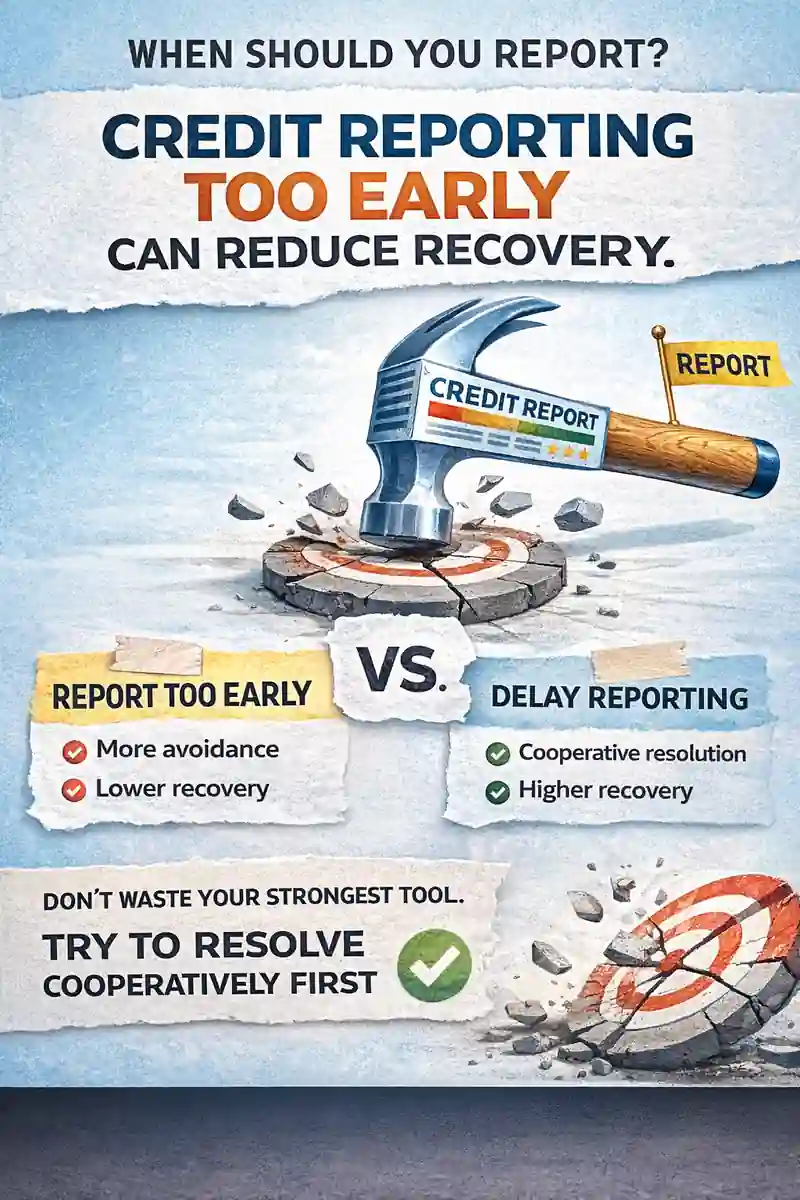
Credit Reporting Too Early Can Reduce Recovery

blank

Credit reporting is powerful. That’s exactly why you shouldn’t waste it too soon.
If you report an unpaid balance immediately, you may accidentally kill the best reason the account holder had to resolve it quickly.

The Simple Truth

When an unpaid account hits a credit report, the situation “feels final” to the person on the other side.
And once something feels final, urgency drops.

Most people don’t think: “I should fix this right now.”
They think: “It already happened… so what’s the point?”

That’s why timing matters more than anger.


Why “Delayed Reporting” Often Collects More

Credit reporting is not just a punishment mechanism.
It’s a late-stage lever.

If you use it first, you have fewer tools left later.

Delayed reporting keeps pressure in reserve—while you attempt higher-yield recovery methods first:

  • professional outreach

  • structured negotiation

  • email + text follow-ups

  • settlement options

  • payment plans where appropriate

This approach protects your recovery rate and your reputation.


The Better Order of Operations (What Works in the Real World)

Here’s the sequence that typically produces the most money:

Step 1: Resolve with calm pressure
Reach out professionally. Create urgency without hostility.
Make it easy to say “yes” before people get defensive.

Step 2: Escalate structure, not emotion
More documentation. More firmness. Clear deadlines.
Still respectful. Still controlled.

Step 3: Credit reporting (only if needed)
When the account holder refuses to cooperate, reporting becomes the final non-legal lever.

That’s the win: you don’t spend your strongest tool on the weakest moment.


“But Isn’t Credit Reporting the Fastest Way?”

It’s fast.
But speed isn’t the same as recovery.

If your goal is to collect, reporting too early can backfire.

It turns a negotiation into a locked room.

And once the other side mentally checks out, you’re left with fewer options:

  • legal escalation (often not practical for smaller balances)

  • months of no response

  • “pay only if you delete it” behavior

You want the opposite:
A clear path to resolution that feels fair, doable, and final.


The One Thing You Should Never Do

Never use credit reporting like revenge.
It makes your process look emotional, not professional.

Credit reporting works best when it’s positioned as:
✅ a documented business step
✅ used after attempts to resolve
✅ based on verified account accuracy

That’s how you keep credibility—and keep recoveries high.


“Pay for Delete” Sounds Tempting (But It’s a Trap)

Some agencies push a “pay and we’ll remove it” style deal.
That strategy causes problems because it trains the account holder to think:

“I’ll pay only if I get something special.”

And it can create disputes, complaints, and reputation risk.

In many industries, credit bureaus expect accurate reporting to remain accurate—not used as a bargaining chip.

Better approach:
Delay reporting until reconciliation fails.

Then use reporting as the last lever—not the first threat.


The Exception: Medical Debt Rules Are Different

Medical debt is treated differently by the major credit reporting agencies in multiple ways, including timing and removal rules once paid.
That’s exactly why medical accounts require a more careful strategy from day one.

(If you’re collecting medical balances, you should be using a patient-friendly approach first anyway.)


What You Should Do Instead (If You Want Higher Recovery)

If the account is unpaid and you want maximum recovery:

✅ Start with structured outreach
Short messages. Clear amounts. Clear options.

✅ Use professional negotiation
Payment plan options can outperform pressure when the person is cooperative.

✅ Document everything
Bad documentation kills leverage. Clean documentation closes accounts.

✅ Hold credit reporting as the final lever
That’s where it does the most damage to avoidance—not to your recovery rate.


Quick Takeaway

Credit reporting works best when it’s delayed—not rushed.
Use professional reconciliation first.
Save reporting for the moment when the account holder is choosing avoidance over resolution.

Reconcile → Negotiate → Final Notice → Credit Reporting → Legal Review


FAQs

Should I report every unpaid balance to credit bureaus?
Not always. Many accounts resolve faster through structured outreach before reporting is used.

When does reporting make sense?
When the account holder stops cooperating, ignores notice, or repeatedly breaks resolution commitments.

Does reporting guarantee payment?
No. It increases leverage, but recovery is highest when you use it at the correct stage—not on day one.

Filed Under: Debt Recovery

Debt Collection Now and Post-Covid

The debt collection industry has been through one of its most difficult periods in modern history, and the recovery looks slow and prolonged. A national and, at the same time, a global recession has been caused, not by financial crises, but rather by an unexpectedly devastating health issue. This is a time to show resilience and learn what we can in order to protect ourselves in the future.

Performance of Collection Agencies during Covid-19 Pandemic

Economic downturns create a huge opportunity for the debt collection industry. A large number of creditors are stuck with unpaid invoices, and as their own efforts fail they tend to submit more accounts to collection agencies. However, during the recession, even the collection agencies find it hard to recover money as people have no funds to pay off their bills. However, as the economy starts to turn around, collection agencies are able to perfectly time their recovery efforts to maximize the chances of successful debt collection to ensure that their clients are the first ones to be paid.

During peak Covid-19 duration (May-Nov 2020) many states prohibited debt collection for several months. Recoveries dropped to a mere 50% of the normal levels. It was the worst time for collection agencies in decades. Many agencies had to shut down during this period.

The turnaround came the following year, during tax refund season as the debt recovery levels went up substantially ( March/April 2020). Additionally, the government-assisted stimulus packages resulted in recovery rates jumping by almost 1.5 times than normal, because people wanted to pay off their debts with this extra cash.

Collection levels will stabilize to normal levels only after the Covid-19 problem completely subsides.

Given its unprecedented scope, how can we access the resources at our disposal and organize our industry’s practices and decisions in a way that would enable us to survive and recover sooner rather than later? Looking at the two major crises in the last century, the Great Depression and the Great Recession, we can use the traditional route of analyzing both pre-and in-crisis data, to identify which receivables can be collected with a higher success rate and focus our efforts there.

Reporting information to build a reliable database

One of the difficulties in accessing that data is the reporting of consumer information by creditors and by debt collection agencies, themselves. The number of those actually furnishing payment information to the consumer reporting agencies has decreased in the last 10 years. A report released by the Consumer Financial Protection Bureau placed the number of reported payments on credit card accounts at 40% in 2020. In 2013, it was at 88%. The Bureau estimates that, as of 2020, ‘only about half of issuers with recent payments furnish these data’.

There may be several factors driving this decline, but what it boils down to for us is the unavailability of reliable information in terms of assessing the number of consumers that made payments, the number of accounts being paid and the speed at which their outstanding debts were being paid. Given this problem, we have to look elsewhere.

A boom in unchecked credit precedes economic crises

It’s generally accepted that ‘the more credit intense the expansion years preceding a crisis, the more severe the recession and the slower the recovery’ (Household Debt and Economic Recovery Evidence from the U.S. Great Depression, EHES Working Papers in Economic History | No. 36, p.4, March 2013). Now we know that before the Great Depression, there was a credit boom accompanying the economic expansion of the 1920s, where banks and financial intermediaries competed to extend credit for consumption and investments. As everyone tried to get a piece of the pie, investments became riskier and regulators turned more of a blind eye, caught in the euphoria of the boom, until the economic bubble began to contract due to non-viable financial choices that were economically unsupported long-term. The widespread, large volume of those financial decisions dragged down a vulnerable system, where consumer and commercial credit had been offered with no restraint.

The Great Recession of 2008 follows a similar pattern, where the domestic credit and subsequent debt in the financial and non-financial sectors increased significantly before and during the crisis. Financial institutions and regulators seem to have still a hard time establishing preemptive policies and controls to prevent recessions, from minor to devastating, from occurring.

What’s also interesting about financial and economic crises is which industries seem to recover time and again, where innovation is coupled with bold investment choices or sweeping reforms that draw from the strengths of previous solutions. The automotive industry is a fascinating example of stubborn efforts and reliable reinvention decade after decade.

US economy before and during Covid

Before the Covid epidemic, US credit levels had been increasing for several years, accompanied by an increase in delinquencies. Excessive borrowing and already vulnerable sectors of the economy might have led to another man-made financial crisis eventually, but the virus cut that transition short quite violently, sending shockwaves through the entire world. Even industries that were doing well, such as commercial construction, transportation, biopharmaceutical research and development, found themselves forced to overhaul their operations at an unprecedented cost. In November of 2020, some Harvard economists calculated that the pandemic would cost the US at least $16 trillion, provided it ended by the fall of 2021.

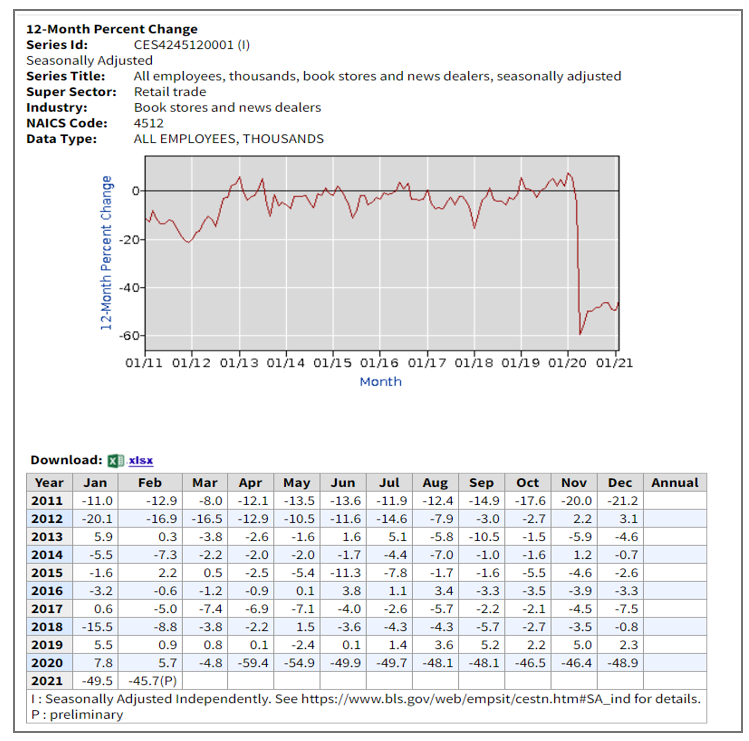
The levels of employment started spinning down at the beginning of 2020 with some industries hit so badly, it’s hard to believe they’ll take less than a few years to recover. For example, consider leisure and hospitality workers, whose employment fell by over 20% compared to 2019, or book retailers and news dealers, who recorded a 48.9% drop from 2019.

Covid Unemployment
Source: US Bureau of Labor Statistics

These are industries where debtors will be hard-pressed to find money to pay debts for no other reason than that they are unemployed. They are, by no means, exceptions. The reports of the US Bureau of Labor Statistics provide a discouraging image of the levels of employment in 2020. There are a few industries that recorded positive percentages when compared to 2019, but they are rare: warehousing and storage, gardening and residential construction, software publishers and credit card issuers, and a few others.

It’s worth noting that credit card issuers and real estate credit maintained or increased their employment levels, due to continued demand for credit, but commercial banking and consumer lending decreased their payrolls.

A focused approach to keep costs down and maximize receipts

The next 6 to 12 months are going to be an uphill battle for creditors. As the economy improves, following vaccinations and easing of restrictions, recoveries for creditors will start going up as well. Until then, the focus of collection efforts needs to be on those consumers who are in the least-impacted industries. The important factors to look at are: ratio of debt to income, a history of debt repayment, occupation, likelihood that they’ll file bankruptcy (see bankruptcy demographics), family size, and employment status.

It’s good to remember that these are not infallible guides, but they help make sorely-needed predictions. Income, for instance, is not a totally reliable indicator of a consumer’s willingness to pay debt. In some cases, consumers with higher expendable income may maintain debt for longer periods of time specifically because it takes up a smaller percentage of that income. Those whose monthly credit card payments are only 20% of their income might be more comfortable with that debt. On the other hand, consumers with lower income, whose monthly credit card payment bites painfully into their short-term individual or household income, at around 30%-40%, may feel more inclined to resolve their debt situation, even if it means taking out a loan, or making low, but consistent, payments every month. Obtaining current information about a given consumer will help a collector evaluate and compare them to other collection opportunities.

In addition, debt collection rates vary widely from state to state. The population of the Southern states seem to have the hardest time paying off their debt, according to this interactive map about debt in America, last updated in March of 2021.

With many debt collection agencies having shut down and others operating with fewer staff and less financial resources, wasting time and money on chasing random debtors may be the last nail in the coffin for some agencies’ profit margins. Breaking down your portfolio of delinquent debts into categories based on the information here may help optimize your collection efforts and accelerate cash inflow.

Filed Under: Debt Recovery

Agencia de Cobros en Puerto Rico | ¡Cobramos lo suyo, protegemos su marca!

En Puerto Rico—desde los hoteles de lujo en Isla Verde y Condado hasta las farmacéuticas de Barceloneta y los comercios de la Milla de Oro—sabemos lo que es “bregar” duro para echar hacia adelante. Pero en 2026, el que no se pone al día con el nuevo Código Civil, pierde. Con la fiscalización de DACO más fuerte que nunca y la prescripción de deudas a los 5 años, usted no puede darse el lujo de esperar. No deje que sus facturas se vuelvan sal y agua; en Nexa hablamos su idioma y sabemos cómo recuperar sus biles sin que usted pierda el sueño ni la reputación.

blank

Nexa ofrece servicios de cobro que protegen su reputación, con licencias de cobranza en los 50 estados y Puerto Rico. Incluye reportes de crédito sin costo, verificaciones gratuitas de litigios y bancarrota, y cero cargos de incorporación. Seguro y confiable: cumplimiento con SOC 2 Tipo II, DACO e HIPAA.

¿Necesita una agencia de cobro? Contáctenos


El Paisaje Legal en la Isla 

Puerto Rico se rige por el Derecho Civil, lo que significa que las reglas aquí son distintas a las del “Mainland”. Si usted piensa que tiene 10 años para cobrar, su deuda podría estar ya “muerta”.

Tipo de Deuda Tiempo para Cobrar (Prescripción) Base Legal
Acciones Personales (Deuda General) 5 Años Código Civil Art. 1201
Pagarés / Notas Promisorias 3 Años Código de Comercio Art. 946
Servicios Médicos / Salud 3 Años Código Civil Art. 1203
Embargo de Salario Solo el 25% (75% protegido) Regla 56.4 Proc. Civil
Sentencias Judiciales 15 Años (Renovable) Código Civil Art. 1201

Reglas Críticas para el 2026 en P.R.:

  • El “Barranco” de los 5 Años: Con el nuevo Código Civil, su tiempo se redujo drásticamente. Nexa audita sus cuentas para identificar cuáles están a punto de “vencerse” y las activa de inmediato.

  • Reglamento 9037 de DACO: El Departamento de Asuntos del Consumidor prohíbe el hostigamiento. Nexa utiliza mediación bilingüe profesional que cumple 100% con DACO para evitarle multas a su negocio.

  • Interrupción Extrajudicial: En P.R., una carta certificada bien redactada puede reiniciar el reloj de la prescripción. Nosotros nos encargamos de enviar estas reclamaciones para que su derecho al cobro no expire.

  • Protección Salarial: Aquí se protege el 75% del salario. Por eso, Nexa se enfoca en identificar activos, cuentas bancarias y otras propiedades para asegurar que el recobro sea real.


Costo-Efectividad: La Ventaja de Nexa

blank

  • Servicio de Tarifa Fija ($15 por cuenta): Ideal para cuentas nuevas. El deudor le paga el 100% directamente a usted. Sin comisiones de por medio.

  • Servicio de Contingencia (20%–40%): Cobro basado en resultados. Si no recobramos sus chavos, usted no paga ni un centavo.


Industrias que Servimos en Puerto Rico

  • Turismo y Hospitalidad: Atendiendo la “Economía del Visitante”. Recuperamos facturas de eventos, cancelaciones y deudas de huéspedes en hoteles y paradores de San Juan hasta Rincón. Sabemos cómo cobrarle al turista que ya se fue de la isla.

  • Farmacéuticas y Manufactura: Cobro B2B especializado para el sector industrial de Pharma-Coast. Manejamos disputas de logística y suplidores con precisión bilingüe.

  • Salud y Servicios Médicos: 100% cumplimiento con HIPAA. Navegamos la prescripción de 3 años en servicios médicos, usando una mediación empática para que su oficina médica no pierda pacientes ni dinero.

  • Universidades y Colegios: Manejamos el recobro de matrículas y cuotas de vivienda con un enfoque diplomático que respeta los ciclos de becas y el “Bono de Navidad” local.

  • Contadores y Firmas de CPA: Recobro de honorarios profesionales. Entendemos los ciclos de planillas de Hacienda y cobramos lo suyo sin dañar la confianza con sus clientes.

  • Bancos y Cooperativas de Ahorro y Crédito: Expertos en préstamos personales y comerciales atrasados, utilizando las leyes de hipotecas y sentencias de la isla.

  • Construcción y Contratistas: Recuperación de pagos para HVAC, eléctricos y contratistas generales. Expertos en gravámenes (Liens) bajo el Código Civil.

  • Comercio B2B, Restauración y Logística: Recuperación rápida para empresas que no pueden permitirse tener el dinero “estancao” mientras los costos de operación suben.


Resultados de Recobro Recientes en P.R.

Caso 1: Resort de Lujo en el Área Metro (Turismo)

  • El Problema: $95,000 en facturas de eventos corporativos de una empresa de EE.UU. que no quería pagar.

  • El Resultado: Nexa utilizó su red interestatal y mediación bilingüe para recuperar los $95,000 completos en 45 días, sin tener que pisar el tribunal.

Caso 2: Centro de Especialistas en Bayamón (Médico)

  • The Problem: $120,000 en deudas de pacientes que estaban a punto de cumplir los 3 años de prescripción.

  • El Resultado: Implementamos un plan de “Reclamación Extrajudicial” y recuperamos $82,000 en 70 días, salvando legalmente el resto de las cuentas.


Preguntas Frecuentes (FAQ)

1. ¿Cuánto tiempo tiene un negocio para cobrar una deuda en Puerto Rico?

En Puerto Rico, las acciones personales generalmente prescriben a los 4 años, salvo que una ley establezca un término diferente. El Código Civil de 2020 redujo el término general y también pueden aplicar reglas distintas según el tipo de obligación y la fecha en que nació la reclamación.

2. ¿Una carta de cobro puede interrumpir el término de prescripción en Puerto Rico?

Sí. Una reclamación extrajudicial válida del acreedor dirigida al deudor puede interrumpir la prescripción. El Artículo 1197 del Código Civil también reconoce la interrupción mediante una reclamación judicial, administrativa o arbitral, o cuando el deudor reconoce la obligación. Una vez interrumpido el término, comienza nuevamente su cómputo.

3. ¿Una agencia de cobros necesita licencia para cobrar deudas en Puerto Rico?

Sí. Las agencias de cobro que realizan actividades cubiertas en Puerto Rico están sujetas a los requisitos de licencia de DACO. Puerto Rico cuenta con un proceso específico de licencia para agencias de cobro, además de requisitos regulatorios aplicables a sus operaciones.

4. ¿Qué reglas debe seguir una agencia de cobros en Puerto Rico?

Las agencias de cobro en Puerto Rico deben cumplir con el Reglamento sobre Agencias de Cobro de DACO, además de las leyes federales que resulten aplicables. El Reglamento 6451 establece requisitos sobre procedimientos de cobro, comunicaciones con consumidores, licencias y prácticas prohibidas.

5. ¿Puede una empresa en Puerto Rico cobrar una deuda si el cliente se mudó a Estados Unidos?

Sí, en muchos casos una deuda puede continuar gestionándose aunque el deudor se haya mudado fuera de Puerto Rico. Sin embargo, las comunicaciones, licencias y cualquier acción legal deben cumplir con los requisitos aplicables en la jurisdicción donde se encuentra el deudor. Una agencia con capacidad de cobro a nivel nacional puede facilitar este proceso.

6. ¿Cuánto cuesta contratar una agencia de cobros en Puerto Rico?

NexaCollect ofrece una opción de tarifa fija de $15 por cuenta para cuentas elegibles, donde el cliente conserva el 100% de lo recuperado, y una opción de cobro por contingencia para cuentas que requieren esfuerzos más intensivos. El programa y la tarifa aplicable dependen del tipo, antigüedad y características de la cuenta.

Importante para esta página: yo corregiría antes de publicar el dato de “5 años” que aparece actualmente. El Código Civil de Puerto Rico de 2020 establece como regla general 4 años para las acciones personales, salvo que exista un término distinto fijado por ley.

Nosotros cobramos sus cuentas morosas

Need a Collection Agency (Agencia de cobros) in PR? Contact us


Filed Under: Debt Recovery

  • « Go to Previous Page
  • Page 1
  • Interim pages omitted …
  • Page 22
  • Page 23
  • Page 24
  • Page 25
  • Page 26
  • Interim pages omitted …
  • Page 55
  • Go to Next Page »

Primary Sidebar


accounts receivable

Need a Collection Agency?
Kindly fill this form.
We’ll get in touch with you

    Please prove you are human by selecting the house.

    Compliance & Security

    • SOC 2 Type II Certified: Third-party audited data security and strict privacy controls.

    • HIPAA Compliant: Secure, legal processing of medical and municipal EMS accounts.

    • PCI-DSS Level 1: Highest tier of data encryption for secure payment processing.

    • FDCPA & FCRA Aligned: Full legal adherence to federal consumer protection laws.

    Recent Posts

    • Collection Agency for Large Balances: High-Value B2B Debt Recovery
    • Baltimore Collection Agency | Medical, Commercial, Schools & More
    • Commercial and B2B Collection Agency in Detroit
    • Boston Medical Collection Agency | Serving Hospitals, Physicians & Dentists
    • Collection Agency in El Paso, TX | Compliant, Cost Effective & Reputation Safe
    • Collection Agency in Washington DC | Medical, Schools, Businesses & Contractors
    • The Collection Agency School Districts Trust With Their Reputation
    • How Dental Insurance Denials Turn Into Patient Debt (And How to Stop It)

    Featured Posts

    • Tailored Debt Collection for Baby Boomers, Gen X, Millennials and Gen Z
    • Statute of Limitations in Debt Collection
    • Minimizing Inaccurate Credit Reporting by Credit Unions

    Copyright © 2026 NEXACOLLECT.COM | This content is provided for general informational purposes only and should not be considered legal advice. Collection laws and requirements may vary by state, account type, documentation, debtor status, and specific facts. Please consult qualified legal counsel for guidance regarding your particular situation. Nexa and its authorized collection partners service accounts in accordance with applicable federal and state collection requirements. Visit our home page to know more about us.

    X
    Need a Collection Agency?
    Contact Us