• Skip to main content
  • Skip to primary sidebar

Nexa Collections

  • Home
  • Serving
    • Medical
    • Dental
    • Small Business
    • Large Business
    • Commercial Collections
    • Government
    • Utilities
    • Fitness Clubs
    • Schools
    • Senior Care Facility
  • Contact Us
    • About us
    • Cost

Debt Recovery

Dentrix Features That Actually Improve Collections

Using Dentrix alongside a collection agency means keeping Dentrix or Dentrix Ascend exactly as they are for scheduling, charting, claims, and patient billing, while routing a narrow slice of the aging report, the patient balances that have stopped responding to statements and reminders, typically 90-plus days out, to a dedicated collections process. This isn’t a live software plug-in inside Dentrix; it’s a secure export workflow, where an aging report feeds placement rules that decide which accounts move to collections and which stay in-house. Dentrix has led dental practice management for more than 35 years and is used by over 35,000 practices, but even the best software can’t make a non-responsive patient pay. That still takes a dedicated recovery process on top of it.

QuickBooks Online accounts receivable aging report ready for collections placement

Dentrix is powerful — but it’s not your collections department

Dentrix has been around for over 35 years and is used by more than 35,000 dental practices. It connects scheduling, charts, imaging, billing, and analytics into one ecosystem.

That scale is impressive, but it doesn’t guarantee low A/R days, consistently high collection ratios, or minimal write-offs on old patient balances. Dentrix gives you tools. How you use them, and what you do when accounts age out, is what really determines your cash flow.

Need a Collection Agency? Contact us


The Dentrix features that matter most for getting paid

Instead of thinking about every menu, focus on the features that directly affect A/R and collections.

Insurance eligibility and estimates. Accurate eligibility checks and chairside estimates reduce surprises. When patients know their likely out-of-pocket cost, you collect more up front and see fewer “I’ll pay later” promises.

Electronic claims and attachments. Cleaner claims and faster submissions mean fewer denials and less money sitting in insurance A/R. Use Dentrix to send claims daily, not in sporadic batches.

Patient billing, statements, and online payments. Automated statements, email and text reminders, and easy payment links are where Dentrix earns its keep. If you’re still relying on one paper statement a month, you’re under-using the platform.

A/R and aging reports. Dentrix can show you exactly where money is stuck, by aging bucket, provider, and insurance versus patient. These reports should drive decisions, not just be printed and filed.

Analytics and KPIs. Dashboards and reports help you track trends: A/R days, collection ratio, and percentage of receivables in the 90-plus day bucket. If nobody is reviewing these numbers monthly, you’re flying blind.

What your Dentrix A/R should look like

You don’t need perfect numbers; you need clear targets. Use your Dentrix reports to monitor:

  • Days in A/R: solid practices aim for about 30-45 days. If you’re routinely above 45-50 days, it’s a warning sign.
  • A/R aging distribution: 0-30 days should hold the majority of your receivables. When more than 20-25% of your A/R is in the 90-plus day bucket, you’re heading into bad-debt territory.
  • Collections versus production: many healthy practices collect around 98% of net production over time. If you’re consistently well below that, Dentrix is showing you a problem that needs action.

A simple test: open your Dentrix A/R report. If you wouldn’t be comfortable showing those numbers to a banker or buyer, your collections process needs tightening, even if Dentrix is fully installed.

Using Dentrix to decide what goes to a collection agency

Dentrix gives you the data to build simple, written rules for escalation. For example:

By aging: 0-30 days gets normal statements and soft reminders; 31-60 days gets an extra reminder plus one phone call; 61-90 days gets a firm reminder, a payment plan offer, and a final internal notice; 90-plus days, with no arrangement, is eligible for third-party collections.

By balance size: small balances, under $50-$100, get limited internal follow-up before write-off or batch placement. Medium balances, $100-$500, follow the full internal sequence before moving to collections at 90-plus days. Large balances, $500-plus, get extra attention at 30-60 days, since they shouldn’t be allowed to quietly age out.

By patient type: chronic late-payers get faster escalation, while VIP or long-term families get more conversation before placement, but still a clear limit.

The important part: make these rules explicit, use Dentrix to identify accounts that fit them, and follow the process every month.

Dentrix is your engine. A collection agency is the safety net.

Dentrix and Dentrix Ascend can help you prevent and reduce A/R through fewer claim errors, better estimates, stronger patient communication, and clear, timely reporting.

But Dentrix will not call seriously delinquent patients over and over, negotiate with someone juggling multiple debts, track down moved patients, or file lawsuits and handle legal escalation. Once a balance is 90-120-plus days old and unresponsive, you’re outside the normal office workflow. That’s where a dental-savvy collection agency comes in, working from Dentrix exports, using compliant scripts, and focusing on realistic payment solutions.

How your Dentrix data is handled

Every Dentrix or Dentrix Ascend export Nexa receives moves through a secure, encrypted channel, never email attachments or unsecured file sharing. A signed Business Associate Agreement is in place before any protected health information is shared, consistent with HIPAA requirements. All patient contact and collection activity follows FDCPA guidelines alongside applicable state debt collection laws. Your export is used only for the accounts you’ve placed, not shared or repurposed beyond that.

Where Nexa fits in

To be direct about what this actually is: Nexa does not have a live, embedded software integration inside Dentrix. What we offer is a secure export workflow — your practice pulls an aging or A/R report from Dentrix using your own placement rules, and sends it to us through a secure, HIPAA-compliant channel. Nexa Collections is a full-service collection agency, not a referral service or an information hub. Once we receive that export, we take it from there.

What we do:

  • Work your Dentrix aging or A/R export directly, using the age, balance, and exception rules your practice sets.
  • Contact patients directly across mail, phone, and email, inside FDCPA and HIPAA guidelines, using a tone built for practices that want to protect long-term patient relationships.
  • Sign a Business Associate Agreement (BAA) before any protected health information changes hands, and handle every account under that agreement.
  • Handle payment plans, disputes, and negotiation so your front-desk team isn’t stuck chasing 90-plus day balances between patients.
  • Return recovered payments and account status updates so they post back into Dentrix cleanly.

Pricing is straightforward, and you choose the model per account:

  • Fixed-Fee Recovery ($15/account): ideal for early-stage receivables. Patients pay 100% directly to you, with no commission taken out.
  • Contingency Service (20%-40%): performance-based recovery for older or harder accounts. No recovery, no fee.

You’re not replacing Dentrix. You’re adding a dedicated recovery layer, connected by a secure export rather than a technical integration, for the balances that have already aged past what statements, reminders, and internal follow-up can close. This same approach applies whether your practice runs on Eaglesoft instead or on Compulink. For more on dental-specific collection strategies and how Nexa’s medical collections process works for patient balances, or for exact rates, see the full breakdown of Nexa’s fixed-fee and contingency pricing.

FAQ

Does Dentrix include a built-in collection agency?

No. Dentrix provides billing and A/R tools, but it is not a contingency collection agency. It won’t chase old debts or pursue legal remedies on your behalf.

What’s a good A/R benchmark for a Dentrix office?

Many practices aim for 30-45 days in A/R, with less than 20-25% of receivables in the 90+ day bucket and a collection ratio near 98% of net production.

How do I use Dentrix with a collection agency?

Typically, your team exports aging reports and account details from Dentrix and securely transmits them to a collection agency. The agency works the accounts, then reports back recoveries that your staff posts in Dentrix.

Is this a live, technical integration with Dentrix?

No. Nexa doesn’t have an embedded plug-in or API connection inside Dentrix. The workflow is a secure export: your practice pulls an aging or A/R report using your own placement rules and sends it to Nexa through an encrypted channel.

Will Nexa sign a Business Associate Agreement (BAA)?

Yes. A BAA is signed before any protected health information is shared, and every account is handled under that agreement, consistent with HIPAA requirements.

What’s the difference between the fixed-fee and contingency pricing options?

Fixed-Fee Recovery, at $15 per account, suits early-stage receivables; patients pay 100% directly to you with no commission. Contingency Service, at 20-40%, is performance-based for older or harder accounts, with no recovery meaning no fee.

Does sending accounts to Nexa mean I’m replacing Dentrix?

No. Dentrix continues handling scheduling, charting, claims, and billing as usual. Nexa only takes over specific accounts a practice has already decided are past the point of in-house recovery, typically 90-plus days with no payment.

Will using a collection agency upset our patients?

Handled poorly, it can. A good dental-focused agency uses respectful language, offers payment plans, and knows when to back off. Most patients placed have already ignored multiple statements and calls.

Is Nexa’s process HIPAA compliant for Dentrix-based practices?

Yes. Account handling, communication, and data transfer all follow HIPAA requirements alongside FDCPA and applicable state collection rules.

Filed Under: Debt Recovery

Enterprise Collection Agency for Large Business: B2B & B2C Recovery

An enterprise collection agency provides outsourced accounts receivable recovery for mid-size and large corporations managing high-volume or high-value debt portfolios across both business clients (B2B) and individual consumers (B2C).

Unlike small business collection, enterprise recovery requires ERP system integration, portfolio segmentation by risk tier, multi-jurisdiction compliance architecture (FDCPA, TCPA, HIPAA, CCPA), and dedicated account management for relationship-critical debtors. The right enterprise collection partner functions as a seamless extension of your internal AR team — reducing DSO, cutting staff overhead, and protecting your corporate brand simultaneously.

Enterprise collection agency managing large-scale B2B and B2C debt recovery portfolios for corporations and mid-size businesses

Nexa acts as a surgical extension of your A/R department. We understand that while a B2B client requires a “white-glove mediation” to save a million-dollar contract, a B2C portfolio requires an automated, high-velocity system that resolves thousands of small balances without triggering a single regulatory red flag.

Nexa provides 100% reputation-safe, equipped with all 50-state collections license, offering free credit reporting, free litigious debtor check, free bankruptcy scrub, and zero onboarding fees. Secure – SOC 2 Type II & HIPAA compliant. Over 2,000 online reviews rate us 4.85 out of 5. 

Need a Collection Agency? Contact us


Enterprise AR Benchmarks: B2B vs B2C at Scale

Understanding how commercial and consumer debt performs at enterprise volume is the first step in building an effective outsourced recovery strategy:

Metric B2B (Commercial) B2C (Consumer)
Average invoice / balance value $6,420 (global average) $132 (consumer average)
Typical overdue rate 10.5% of total AR 15–22% depending on sector
Industry average DSO 45–65 days (varies by sector) 30–45 days (varies by sector)
DSO improvement with outsourced collections 8–15 day reduction typical Up to 40% reduction in 90-day bucket
Bad debt write-off rate (benchmark) <1% of revenue (healthy) <2% of revenue (healthy)
Recovery lift with AI-assisted outreach 15–25% improvement Up to 40% reduction in OPEX
Primary regulatory framework UCC, contract law (fewer debtor protections) FDCPA, TCPA, HIPAA, Regulation F, state laws
Relationship preservation priority Critical — a recovered B2B client may represent 7-figure future revenue Moderate — brand reputation and online review risk

How Enterprise Collections Reduces Your DSO

Days Sales Outstanding (DSO) is the primary KPI every CFO uses to measure AR health. It measures the average number of days it takes to collect revenue after a sale is made. The formula is simple:

DSO = (Total Accounts Receivable ÷ Total Credit Sales) × Number of Days

A DSO of 45 days in a Net-30 environment means your customers are paying 15 days late on average — a 50% payment delay that compounds across every invoice in your portfolio.

DSO benchmarks by industry (for context)

  • Manufacturing: 45–60 days average DSO
  • Wholesale & Distribution: 35–50 days
  • Technology & SaaS: 40–55 days
  • Healthcare (B2C): 50–75 days
  • Construction & Trades: 60–80 days
  • Retail & E-commerce (B2B wholesale): 30–45 days

If your DSO is more than 15 days above your payment terms, your AR process has a measurable revenue drag — and outsourced collections is typically the fastest lever to pull.

How Nexa reduces DSO in practice

  • Earlier intervention: Our Step 1 fixed-fee service ($15/account) deploys at the 30–60 day mark — before most internal AR teams escalate. Earlier contact means faster resolution and a shorter average collection cycle.
  • Omnichannel automation for B2C portfolios: AI-driven SMS, email, and IVR outreach resolves small consumer balances at scale without manual staff time — cutting the 90-day delinquency bucket without adding headcount.
  • White-glove mediation for B2B: Relationship-tier accounts are handled by dedicated mediators who find the underlying paperwork issue (missing PO, disputed delivery, AP routing error) and resolve it in days, not weeks.
  • Real-time ERP sync: Payment updates flow directly back into your SAP, Oracle, or NetSuite ledger — eliminating the 3–5 day reporting lag that inflates your reported DSO artificially.

The Nexa Dual-Track Ladder

1. B2B Strategy: Professional Mediation

Commercial debt is rarely about “no money.” It’s usually about a missing PO, a “punch list” dispute, or a slow-moving AP department.

  • The Step 1 Approach: We use Fixed-Fee ($15) white-label notices that act as a neutral third-party “reconciliation request.” This preserves the relationship while signaling that the grace period is over.

  • The Mediation Phase: For aged B2B debt, our mediators act as resolution specialists. We find the person with the “check-cutting authority” and solve the underlying paperwork issue.

2. B2C Strategy: High-Velocity Automation

When dealing with thousands of individual consumers, every manual “touch” by your staff costs you profit.

  • Digital-First Recovery: We use AI-driven omnichannel triggers (SMS, Email, and IVR) to resolve small balances before they hit the 90-day mark.

  • Compliance by Design: Our systems are hard-coded with the latest 2026 consumer protection rules, ensuring that your corporate brand is never associated with “strong-arm” tactics or legal non-compliance.

Enterprise collection agency pricing — $15 fixed fee for first-party recovery, 20–40% contingency for third-party collections, 50% for legal escalation


Enterprise AR Portfolio Segmentation: How Nexa Triages Your Accounts

Enterprise AR is not a uniform portfolio — and treating every delinquent account with the same approach is both expensive and relationship-damaging. Nexa segments every enterprise portfolio into three tiers before a single outreach attempt is made:

Tier 1 — Relationship-critical accounts (white-glove mediation)

These are B2B accounts where the debtor is an active, ongoing customer relationship — a supplier, a key distributor, a multi-year service contract client. Standard collection pressure would risk a relationship worth far more than the outstanding balance.

Our approach: Dedicated account mediators who understand your industry context. Outreach is framed as an “account reconciliation” — identifying the underlying cause (missing PO approval, disputed delivery, AP routing error, budget freeze) and resolving the paperwork friction rather than applying payment pressure. Escalation never happens without your explicit sign-off.

Tier 2 — Standard commercial accounts (structured automation + human escalation)

B2B accounts with no ongoing relationship risk, or B2C accounts with balances above $1,000. These receive structured outreach: Step 1 fixed-fee demand letters, followed by phone and digital escalation if unresolved within 30 days.

Our approach: Semi-automated outreach with human review at each escalation decision point. Skip tracing and bankruptcy scrubs run at placement. Credit bureau reporting (D&B, Experian Business for B2B; Equifax, Experian, TransUnion for B2C) deployed at the appropriate stage.

Tier 3 — High-volume tail accounts (AI-driven high-velocity resolution)

Large consumer portfolios of small balances ($50–$500) where manual outreach costs more than the balance recovered. These require automation at scale — not human collectors.

Our approach: AI-driven omnichannel triggers across SMS, email, and IVR. Self-service payment portal available 24/7. FDCPA/TCPA compliance hard-coded into every outreach sequence, with automatic adjustment for state-specific rules (California Rosenthal Act, New York frequency limits, Texas TDCA). Resolution target: 90% of resolvable accounts closed within 60 days without a single human touch.


Compliance Architecture: What Enterprise Legal Teams Need to See

Enterprise procurement and legal teams evaluate collection partners against a compliance checklist before vendor approval. Here is how Nexa addresses each requirement:

Regulation Who It Covers How Nexa Complies
FDCPA All B2C consumer debt collection 50-state licensed. All collectors trained and tested annually. Call recording and audit trail on every account.
TCPA + Regulation F (CFPB 2021) Phone, SMS, and digital outreach to consumers Consent-verified contact lists. 7-call-in-7-days limit enforced systemically. Email channel added per Reg F. Opt-out honored within 24 hours.
HIPAA B2C healthcare, dental, and insurance portfolios BAA executed before any PHI is shared. Minimum necessary information only. SOC 2 Type II certified data environment.
CCPA / State Privacy Laws California consumers (and expanding state equivalents) Consumer data requests processed within 45-day statutory window. Data minimization applied at account intake. No data sold or shared with third parties.
UCC (B2B) Commercial accounts, secured creditor claims UCC-1 lien eligibility screened on high-value B2B accounts. Affiliated commercial attorneys in all 50 states for legal escalation.
SOC 2 Type II Data security (all clients) Annual third-party audit. Covers security, availability, processing integrity, confidentiality, and privacy trust service criteria.

Full compliance documentation — including our SOC 2 Type II report summary, HIPAA BAA template, and state licensing certificates — is available upon request during the enterprise evaluation process.


Enterprise Brand Protection: The “Zero-Complaint” Goal

For a big business, the PR damage from a single mishandled collection can exceed the value of the entire portfolio.

  • The Reputation Shield: We maintain a 4.85 Google rating because we treat people as your customers, not just debtors.

  • Legal Liability Transfer: By moving your recovery to Nexa, you transfer the immense regulatory risk of consumer contact to our fully licensed and insured team.


Recent Enterprise Results

  • National Logistics (B2B Focus): A global carrier had $1.4M in commercial “micro-balances” (under $500) deemed too expensive to chase. Nexa’s Step 1 service recovered $640,000 in 90 days for a total cost of $12,000.

  • Utility/Telecom (B2C Focus): A national service provider reduced their 90-day delinquency bucket by 32% in one quarter using our automated digital triggers, saving an estimated $400k in staff labor costs.


Enterprise Collection FAQ

What is the difference between enterprise collections and standard debt collection?

Enterprise collections involves recovering debt at scale — typically thousands of accounts per month — across complex portfolio types (B2B and B2C), multiple jurisdictions, and diverse regulatory frameworks. It requires ERP integration, tiered account segmentation, multi-channel automated outreach, dedicated compliance architecture, and often dedicated account management for high-value relationships. Standard collection is account-by-account manual recovery. Enterprise collection is a managed AR function.

How does outsourcing collections affect our Days Sales Outstanding (DSO)?

When implemented correctly, outsourced collections typically reduces DSO by 8–20 days within the first two quarters. The mechanism is earlier intervention — accounts placed at 30–60 days resolve significantly faster than those placed at 90+ days. Real-time ERP payment sync also eliminates the reporting lag that artificially inflates DSO figures in systems that update on batch cycles.

What happens to accounts that involve ongoing customer contracts?

These are handled as Tier 1 relationship accounts under our white-glove mediation protocol. Outreach is framed as an “account reconciliation” — we identify the underlying cause (missing PO, billing dispute, AP routing error, temporary budget freeze) and resolve the friction without confrontational collection language. No escalation to third-party status without your explicit written approval. The goal is to recover the balance while keeping the contract intact.

How do you handle multi-state consumer portfolios with different state laws?

Our outreach system is hard-coded with state-specific compliance rules that automatically adjust based on the debtor’s state of residence. This covers: contact frequency limits (New York’s stricter rules, California’s Rosenthal Act protections), required disclosures, time-of-contact restrictions, and Regulation F email channel requirements. All of this is handled systemically — your team does not need to manage state-level compliance manually.

Can you handle both B2B and B2C portfolios simultaneously for the same client?

Yes — this is a core enterprise capability. We run completely separate compliance protocols, outreach strategies, and reporting tracks for B2B and B2C portfolios. Your AR director sees consolidated reporting across both tracks in our real-time portal, but the collection logic, regulatory framework, and account handling are entirely distinct. This prevents consumer protection rules from being accidentally applied to commercial accounts (and vice versa), which is a common compliance failure at agencies that don’t specialise in mixed portfolios.

What security certifications does Nexa hold for enterprise data handling?

Nexa is SOC 2 Type II certified — audited annually by an independent third party against the AICPA Trust Service Criteria for security, availability, processing integrity, confidentiality, and privacy. We are also HIPAA-compliant for healthcare portfolio clients, with BAA execution as a standard contract requirement. All data is encrypted in transit (TLS 1.3) and at rest (AES-256). Full security documentation is available on request during the enterprise evaluation process.

What is your process for high-value B2B accounts over $100,000?

High-value B2B accounts receive dedicated mediator assignment from day one — not a queue-based system. Before any outreach, we conduct a debtor asset profile (business credit pull, litigation history, UCC lien search, bankruptcy check) to understand the recovery landscape. The outreach strategy is customised to the specific debtor relationship and dispute type. Legal escalation via our affiliated commercial attorney network is available for accounts with verified assets and no engagement after diplomatic channels are exhausted.

How does the reporting and portal work for enterprise clients?

Enterprise clients access a real-time, 24/7 secure portal with: account-level status tracking, payment receipt confirmation, dispute flag visibility, collector notes, and portfolio-level analytics (recovery rate, DSO impact, accounts by stage). Reports can be exported in formats compatible with SAP, Oracle, and NetSuite. For clients with API integration, reporting data can be pushed directly to your data warehouse or BI tool on a scheduled basis.

Do you report to business credit bureaus for B2B accounts?

Yes — Nexa reports to Dun & Bradstreet (D&B) and Experian Business for commercial B2B accounts where reporting is appropriate and legally permissible. Business credit reporting is a powerful leverage tool for commercial accounts — a delinquency report on a company’s D&B file affects their vendor credit terms across their entire supply chain, which creates strong motivation to resolve the balance. We discuss reporting strategy with you before deploying it, as the decision can affect the debtor relationship.

What is your minimum volume requirement for enterprise accounts?

There is no minimum volume requirement to start — even enterprise clients with a single high-value account can place it through our portal. For clients with ongoing high-volume portfolios (500+ accounts per month), we offer dedicated account management, custom integration setup, and volume-tiered pricing. Contact our enterprise team for a custom quote based on your portfolio profile, average balance, and account mix.

Stop Risking Your Brand. Start Recovering Your Revenue.

Let us show you a more intelligent, effective, and professional approach to your accounts receivable.

Schedule Your Enterprise Consultation Today

Filed Under: Debt Recovery

Nursing Home & SNF Collection Agency: Private Pay, Patient Liability & Estate Recovery

A resident’s designated Responsible Party spends down the monthly Patient Liability meant for the facility, then stops answering the phone the moment a Medicaid application stalls — one of the most common, most avoidable revenue leaks in skilled nursing.
Engaging Nexa early, at around 90 days past due, can greatly reduce this problem. Consider making our low-cost fixed-fee collection notices a standard part of your accounts receivable process before balances become harder to recover.

Nexa recovers these balances, along with delicate probate and estate claims, using outreach trained specifically in elder-care sensitivity rather than a generic collections script. The process is easy to place an account into, highly rated by the facilities that use it, and backed by responsive support, secure HIPAA-compliant handling, and licensing across all 50 states — worked at a flat $15 fixed fee for fresh balances or 40% contingency for aged and estate claims, with no fee unless something is actually recovered.

Nursing home staff member reviewing patient liability and estate billing for a skilled nursing facility

Trusted by some of the largest LTC providers in the country, covering over 200 senior care locations. We balance aggressive financial recovery with the compassionate care your reputation demands. HIPAA compliant.

Need a Collection Agency? Contact us


Why Senior Care Centers Choose Nexa

Managing the revenue cycle in a skilled nursing facility or long-term care setting is uniquely complex. Unlike standard medical debt, this means private pay balances, Patient Liability (PL) amounts, and the sensitive nature of estate claims — a regulatory landscape most collection agencies aren’t built to navigate without risking resident dignity or federal compliance.

DSO Reduction

Facilities working with Nexa often see a 10-15 day reduction in Days Sales Outstanding within the first 90 days of partnership — a meaningful shift for an industry where cash flow is tightly tied to census and staffing.

Applied Income Experts

Recovering “Patient Liability” funds that families sometimes treat as their own money while waiting on Medicaid approval is a specific, recurring problem — one that requires understanding both the Medicaid rules and the family dynamics involved, not just a standard demand letter.

A Contingency-First Model for Aged and Estate Accounts

Most estate and aged-balance work runs on contingency — payment only when something is actually recovered — so a facility isn’t paying to chase debt that never gets collected.

When Prevention Fails: Recovery Solutions for SNFs and LTC Facilities

While internal financial counseling is vital, bad debt is inevitable. When families go quiet or assets sit tied up in probate, this is where a specialized partner earns its place.

Private Pay & Patient Liability Recovery

The most common loss for SNFs is the Patient Liability or Applied Income portion that Medicaid doesn’t cover. Recovery here focuses on educating the responsible party on their legal obligation to remit these funds to the facility — recovering monthly co-pays that internal teams often write off rather than chase.

Probate & Estate Collections

When a resident passes away, collecting the final balance is uncomfortable for facility staff but necessary for the books. This means filing claims against the estate and ensuring the facility is paid before assets are distributed to heirs — handled with compassion alongside strict legal compliance.

Illustrative Example: The Power of Attorney Who Went Quiet

Consider a composite scenario: a resident’s daughter holds power of attorney at a mid-sized SNF outside Milwaukee, and had been managing her mother’s monthly Social Security deposit — the exact amount owed to the facility as Patient Liability. Three months into a Medicaid application delay, the deposits stop showing up in the facility’s payments, though the daughter’s own bank statements would show they never stopped arriving. A documented request for an accounting, framed around the family’s legal obligation rather than an accusation, tends to resolve situations like this faster than escalating straight to legal action.

The “Medicaid Pending” Trap

“Medicaid Pending” is a dangerous status. If a resident is denied Medicaid after months of care, the facility is left with a private pay balance the family often can’t pay in full. Identifying this risk early — and, where families have simply failed to submit required documentation, helping coach them back into compliance — is often what gets retroactive pay released before it becomes a write-off.

Illustrative Example: The Six-Month Gamble

Picture a composite scenario: a rural Iowa facility admits a resident under “Medicaid Pending” status, assuming approval is a formality. Six months later, the state denies the application over a missing asset disclosure the family never submitted. What looked like a routine admission is now a five-figure private-pay balance with a family that has no way to pay it in one lump sum. Catching a documentation gap like this at month two, rather than month six, is usually the difference between a resolvable balance and a write-off.

The “$50,000 Failure”: Why Admissions Matter

In our experience, a $50,000 bad debt account usually starts as a $500 mistake at admission. The majority of uncollectible nursing home debt traces back to incomplete financial intake, not a family that never intended to pay.

What Your Admissions Team Should Gather

  • Copies of all insurance and Medicare cards, front and back
  • Social Security and bank statements — essential groundwork for a later Medicaid application
  • A signed Responsible Party agreement that explicitly holds the signer liable for handling the resident’s assets and income, not just the resident themselves

Legal Compliance: The Nursing Home Reform Act of 1987

Every account is worked in alignment with the Nursing Home Reform Act of 1987 and the FDCPA. A facility can’t simply discharge a resident for non-payment without following complex, legally mandated discharge procedures — so collection efforts focus on financial guarantors and assets, not resident care decisions, keeping the facility compliant with state survey requirements.

FDCPA Boundaries Around Discharge and Care

Collection activity and care decisions have to stay separate as a matter of law, not just good practice — a facility’s discharge process runs on its own strict rules regardless of an unpaid balance, and conflating the two creates real regulatory exposure.

HIPAA & BAA Coverage for Resident Financial Records

Resident financial records are frequently intertwined with protected health information — a Patient Liability calculation, for instance, often references care level and Medicaid status directly. Nexa maintains HIPAA-aligned handling procedures for these accounts and executes a Business Associate Agreement (BAA) with facilities that require one.

Facility Types We Serve

Skilled Nursing Facilities (SNF)

Private pay, Patient Liability, and estate recovery built around the specific Medicaid mechanics SNFs deal with daily.

Long-Term Care & Assisted Living

Recovery for facilities where a resident’s stay — and their family’s financial involvement — often runs for years rather than weeks, calling for a relationship-conscious approach.

Memory Care Communities

Particularly sensitive recovery work, given the added layer of family stress and decision-making on behalf of a resident who may be unable to manage their own affairs.

Continuing Care Retirement Communities (CCRCs)

Recovery spanning independent living, assisted living, and skilled nursing balances that can exist within the same resident’s account history.

Rehabilitation & Post-Acute Care

Shorter-stay private pay and co-pay balances, where fast, professional follow-up tends to outperform waiting until a balance ages into estate territory.

Recent Recovery Successes

The scenarios below are illustrative composites drawn from the kinds of situations that come up repeatedly across senior care receivables, not verified individual case results, but they reflect the actual mechanics of how each type of recovery tends to get resolved.

The Wisconsin SNF’s Applied Income Backlog

Problem: A 90-bed skilled nursing facility outside Madison had a backlog of Patient Liability shortfalls where responsible parties had stopped remitting monthly Social Security deposits during Medicaid redeterminations.
Approach: Outreach focused on documenting the legal obligation to remit those specific funds, rather than treating the accounts as standard consumer debt.
Outcome: A majority of the backlog resolved within a couple of billing cycles, with several families resuming regular remittance going forward.

The Arizona CCRC’s Estate Claim Portfolio

Problem: A continuing care retirement community near Scottsdale had a growing number of final-balance estate claims sitting unfiled while staff focused on resident care rather than probate paperwork.
Approach: Claims were filed against each estate in the proper order and timeline, with documentation prepared to withstand scrutiny from estate representatives.
Outcome: A meaningful share of the portfolio was resolved before asset distribution to heirs was finalized.

The North Carolina Facility’s Medicaid Pending Reversal

Problem: A facility in the Piedmont region had a resident’s Medicaid application denied after six months under “Pending” status, due to a missing asset disclosure the family hadn’t realized was required.
Approach: The family was coached through resubmitting the missing documentation rather than immediately treated as a collections target.
Outcome: Medicaid approval came through retroactively, releasing payment that would otherwise have become an uncollectible private-pay balance.

Trust, Security & Compliance

HIPAA & BAA Coverage for Resident Accounts

Resident financial and care-adjacent records carry protected health information regardless of facility size. Nexa maintains HIPAA-aligned handling procedures for all senior care accounts and executes a Business Associate Agreement (BAA) with facilities that require one.

FDCPA Alignment

Every account is worked in alignment with the federal Fair Debt Collection Practices Act, layered with the Nursing Home Reform Act’s discharge and resident-rights protections rather than a generic consumer-collections script.

SOC 2 Type II & PCI-DSS Data Security

Data handling is SOC 2 Type II certified — meaning security and privacy controls have been independently audited, not self-reported — and payment processing runs at PCI-DSS Level 1, a high tier of card data encryption.

Secure Client Portal for Documentation & Account Tracking

Responsible Party agreements, Medicaid correspondence, and estate documentation are exactly the kind of sensitive records that shouldn’t move through email. A secure client portal lets facility staff upload documentation, track account status, and monitor recovery progress without exposing resident or family data to unnecessary risk.

Transparent Pricing

Fixed-Fee Recovery ($15/account)

Ideal for early-stage receivables — think unpaid incidental fees or bed-hold charges. Debtors pay 100% directly to you. No commissions.

Contingency Service (40%)

For aged debt or estate claims, where skip-tracing and legal review are advanced on your behalf. Performance-based recovery. No Recovery, No Fee.

Nexa Collections fixed-fee and contingency pricing for nursing home and long-term care debt recovery

See the full breakdown on the collection agency fee schedule page.


Frequently Asked Questions

Can we sue a resident’s children for the debt?

Generally, no — unless they voluntarily signed as a guarantor or Responsible Party and mishandled the resident’s assets, such as keeping a Social Security check meant for the facility. A review of the admission contract determines exactly who is legally liable.

How do you handle reputation management?

A single negative review from an angry family member can hurt census. Outreach is trained in elder-care sensitivity, positioned as firm problem-solving rather than aggressive collection.

Do you serve multi-state chains?

Yes, with centralized reporting for corporate offices alongside local handling for individual facilities.

What happens if the Responsible Party dies before a balance is resolved?

The claim generally shifts to their own estate, following the same probate process used for a resident’s estate — though this depends on the specific guarantee language in the original contract, which is worth reviewing early rather than after the fact.

Can a facility discharge a resident for non-payment while collection is underway?

Not simply for non-payment. The Nursing Home Reform Act requires specific, legally mandated discharge procedures regardless of an outstanding balance — collection activity and discharge decisions have to stay on separate tracks.

If Medicaid retroactively approves coverage, does that erase a private-pay balance already sent to collection?

Often, yes, in whole or in part — retroactive Medicaid approval typically covers the period in question, which is exactly why coaching a family through a stalled application can resolve a balance faster than escalating it.

Does reporting a resident’s unpaid balance to a credit bureau risk violating the Nursing Home Reform Act?

The Reform Act itself is primarily about care and discharge protections, not credit reporting directly — but any reporting still has to meet standard FCRA accuracy and documentation requirements, and a facility should confirm an account actually qualifies before reporting it.

Can a family member be pursued for a balance just because they were involved in care decisions, without ever signing as Responsible Party?

No. Involvement in care decisions — visiting often, being listed as an emergency contact, or holding informal power of attorney — doesn’t create financial liability on its own. Liability generally requires a signed guarantee or documented misuse of the resident’s own funds.

What happens to a Patient Liability balance if a resident is discharged to hospice or another facility mid-month?

The balance is typically prorated to the resident’s actual length of stay that month, which makes accurate discharge-date documentation important for both the facility and the family working out the final accounting.

Protect Your Census & Your Cash Flow

Don’t let uncollected private pay balances limit your ability to provide quality care. Recovery here has to work within federal resident-rights protections, not around them — that’s the whole difference between a partner built for senior care and a generic collections vendor.

Get a Nursing Home Collection Quote

Filed Under: Debt Recovery

Swimming Pool Debt Recovery: Why “Do-It-Yourself” Collections Sink Profits

Swimming Pool Cleaning

In the swimming pool industry, you sell two things: your labor and your chemicals. When a client doesn’t pay, you aren’t just losing profit; you are physically paying out of pocket to keep their water blue.

Many pool business owners fall into the trap of trying to be their own debt collectors. They send awkward texts, leave polite voicemails, and hope for the best.

Here is the hard truth: If you are scrubbing tiles, you shouldn’t be scrubbing your aging report. Here is why handing accounts over to a professional agency is the smartest move for your bottom line.

  Serving Pool Companies Nationwide

Need a Collection Agency? Contact Us

The “Neighborhood Reputation” Trap

Pool service is a hyper-local business. You rely on referrals from neighbors.

  • The Problem: Aggressively chasing a client for $300 can lead to them bad-mouthing you on Nextdoor or local Facebook groups.

  • The Agency Solution: A third-party agency acts as a professional buffer. They play the “bad cop,” allowing you to remain the “good cop” who just wants to provide great service. You can truthfully say, “I’m sorry, our accounting system automatically forwards accounts at 90 days, it’s out of my hands.” This preserves your reputation while still applying pressure.

blank

Service Routes vs. Construction: Where Agencies Shine

1. The Maintenance Route (Unsecured Debt)

For weekly cleaning, chemical stops, and minor repairs ($200 – $1,000), you generally cannot file a Mechanic’s Lien. The legal costs to sue in small claims court often exceed the debt itself.

  • Why DIY fails: A homeowner knows you won’t sue them for $250. They prioritize their mortgage and car payment over you.

  • Why Agencies win: A collection agency can report the debt to the Credit Bureaus. Suddenly, that “ignorable” $250 bill threatens their credit score. This is often the only leverage that works for service debts.

2. The “Missed Window” Construction Debt

For builders and plasterers, the Mechanic’s Lien is powerful, but the window to file is tight (often 60-90 days).

  • The Reality: Many builders wait too long because the client keeps promising “the check is in the mail.” Once that lien deadline passes, you have zero leverage.

  • The Fix: When the lien window closes, a collection agency is your safety net. They have the tools to trace assets and demand payment even after your lien rights are gone.

The Hidden Power: Skip Tracing

A common scenario in the pool industry: The “Sold Home” Vanishing Act. A client runs up a bill getting the pool ready to sell, sells the house, and moves out of state without paying you.

  • You: Send invoices to an empty house.

  • The Agency: Uses “Skip Tracing” technology to locate the debtor’s new address, new phone number, and sometimes even their new place of employment. They find the people who are trying to hide.

The 90-Day “Hand-Off” Rule

When should you stop asking and start assigning? The industry standard is 90 days.

  • Days 1-60: This is your job. Send the invoice, send the reminder, pause service.

  • Day 90: If they haven’t paid after three months, they aren’t “forgetting.” They are ignoring.

  • The Cost of Waiting: Research shows that once a debt is 6 months old, the chance of collecting it drops to 50%. Hand it off while the debt is still “fresh” to maximize your recovery rate.

Focus on Blue Water, Not Red Tape

Your expertise is hydraulics, chemistry, and construction. A collection agency’s expertise is the FDCPA (Fair Debt Collection Practices Act).

  • If you call a debtor at the wrong time or threaten the wrong thing, you can be sued.

  • Agencies are licensed to apply maximum legal pressure without crossing the line.

Stop funding your clients’ swimming pools. Get a Collection Agency Specialized in the Pool Industry.

Contact Us


Filed Under: Debt Recovery

Urgent Care Clinics Collection Agency: Unpaid Patient Bills

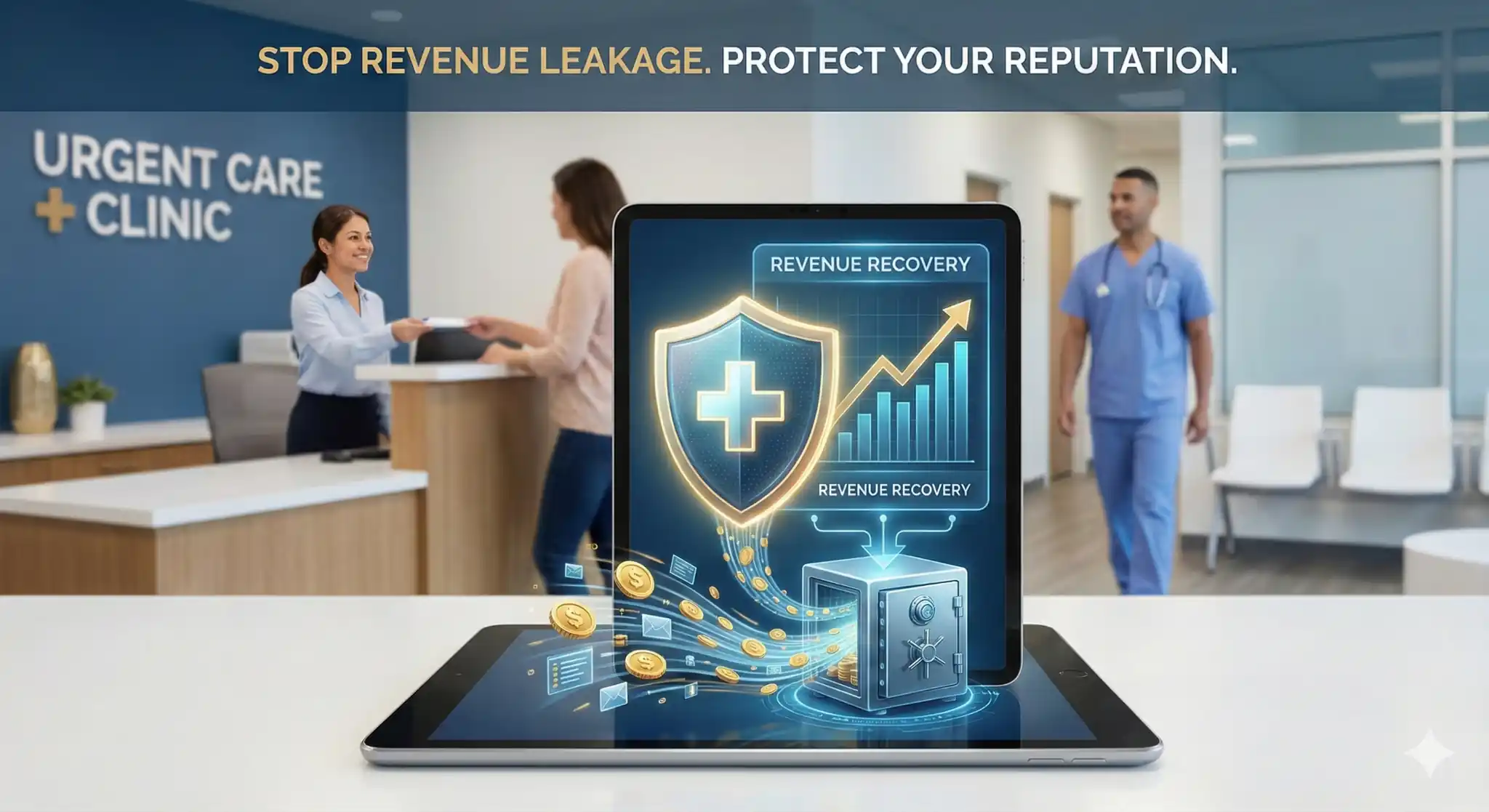
Nexa helps urgent care clinics recover unpaid patient balances — especially the sub-$2,000 copay and deductible gaps that don’t always reach a credit bureau but still drain cash flow — without turning a routine follow-up into the kind of aggressive contact that costs a clinic its local reputation. Using HIPAA-aligned, FDCPA-compliant mediation instead of hard-sell tactics, accounts are typically resolved through a soft-touch fixed-fee sequence before ever needing contingency-based collection.

blank

Key Takeaways

  • Preserve Patient Relationships: Diplomatic, healthcare-tailored recovery strategies collect past-due balances while protecting your clinic’s local reputation and patient trust.

  • HIPAA & SOC 2 Compliant: Enterprise-grade security and strict legal adherence ensure full data privacy and zero regulatory risk for your practice.

  • High-Volume & Small Balance Solutions: Cost-effective $15 fixed-fee and contingency options make recovering small self-pay balances and HDHP copays financially viable.

  • Seamless Practice Management Integration: Streamlined account placement frees up your front-desk staff to focus on immediate patient care rather than chasing old bills.

Nexa provides reputation-safe, equipped with all 50-state collections license, offering free credit reporting, free litigious debtor check, free bankruptcy scrub, and zero onboarding fees. Secure – SOC 2 Type II & HIPAA compliant. Over 2,000 online reviews rate us 4.85 out of 5. 

Need an Urgent Care Collection Agency? Contact us


Stop the Bleed Without Killing the Patient Experience

For many urgent care operators, “Days in AR” has become a secondary metric to the “Zero-Touch Rate”—the percentage of claims paid without human intervention. Currently, the industry average for zero-touch claims is only about 40%. Every extra “touch” from your staff adds labor costs and delays cash flow.

When a patient with a $2,000+ deductible leaves your clinic with an unsettled balance, they aren’t just a patient anymore; they are your largest payer segment.

Nexa bridges the gap between providing compassionate “neighborhood” care and maintaining a professional revenue cycle. We don’t just chase checks; we resolve the friction that stops them from being written.


The Urgent Care Reality 

  • 56%: The average Time-of-Service (TOS) copay collection rate—down from 90% pre-pandemic.

  • 11%: The average increase in operating costs for medical groups over the last 12 months, tightening the tolerance for slow-moving patient AR.

  • 32%: The percentage of patients now enrolled in plans with deductibles exceeding $2,000, shifting the primary financial burden from the insurer to the individual.

  • 40%: The “Zero-Touch” industry benchmark. If your staff is touching more than 60% of your claims, your cost-to-collect is likely eating your profit margin.


The Nexa “Reputation Shield” Methodology

We understand that an urgent care clinic lives or dies by its local reputation.

blank

A single aggressive collection call can trigger a viral 1-star review. Our 4-step approach is hard-coded for Amicable Mediation:

  1. Early-Out Fixed Fee (Step 1): We trigger professional, soft-touch demands under your brand or ours. This reminds patients of their responsibility while the “thank you for choosing us” sentiment is still fresh.

  2. Full Mediation (Steps 2-4): For older debt, our contingency team uses professional negotiation. We identify why the bill isn’t paid—often an insurance glitch—and solve the root problem to get the check cut.

  3. Strict Compliance: We are 100% compliant with the Fair Debt Collection Practices Act (FDCPA), HIPAA, and the Telephone Consumer Protection Act (TCPA). We assume the regulatory risk so you don’t have to.


Legal Landscape: What Urgent Care Owners Must Know

The “Credit Score Threat” is largely dead. As of 2023, major credit bureaus have voluntarily removed most medical and dental debts under $500 from reports, and many states are moving toward total bans on medical debt credit reporting.

  • The No Surprises Act: We ensure all collection efforts respect federal “Surprise Billing” protections, especially for out-of-network emergency services.

  • State-Specific Thresholds: From Virginia‘s Medical Debt Protection Act to California’s strict reporting laws, we navigate the patchwork of local rules that often trip up internal billing departments.


Recent Recovery Wins

  • Medical (Multi-Site Urgent Care): A regional group with $420,000 in “micro-balances” (averaging $180) saw a 52% recovery rate within 90 days using our Step 1 Fixed-Fee system, restoring over $218,000 in cash flow.

  • Business (Occ-Health Services): A clinic was owed $45,000 by a local manufacturer for drug screenings and physicals. Nexa’s B2B mediators cleared the “corporate red tape” and secured the full $45,000 payment in 22 days.


Frequently Asked Questions (FAQ)

1. Will using an agency drive patients to my competitors?

Actually, the opposite is often true. Patients often avoid returning to a clinic where they know they have an “awkward” unpaid balance. By resolving the debt professionally through a third party, you clear the path for the patient to return for their next urgent need.

2. Why focus on debt under $500 if it’s not reported to credit bureaus?

Because $500 is the new “sweet spot” for revenue leakage. While it doesn’t hit a credit report, it does hit your bottom line. We use mediation and easy-pay digital triggers to get these balances paid without needing the “threat” of a credit score drop.

3. Do you handle Occupational Medicine (B2B) accounts?

Yes. We have a dedicated division for Worker’s Comp and Employer-Paid services. These are often high-value and require a different negotiation style than consumer patient debt.

4. Do you work with urgent care clinics nationwide?

Yes. We serve urgent care clinics across the country, from single-location practices to multi-site regional groups, adapting our approach to each clinic’s local patient base and payer mix rather than running one script everywhere.

5.How do you handle high-deductible health plan (HDHP) balances specifically?

An HDHP balance is usually a question of a patient’s cash flow, not their willingness to pay — a $2,000+ deductible often gets set aside rather than refused outright. We prioritize structured payment plans and digital-first reminders for these accounts over aggressive tactics that tend not to work any better.

6. How fast can we expect to see recovered revenue?

Fixed-fee, early-out accounts (typically 30–60 days past due) often resolve within 45–60 days of being placed. Older, contingency-stage accounts usually take longer, since they typically need more investigation and negotiation.

7. Do you integrate with urgent care billing or EMR platforms?

Integration options are available for many urgent-care-specific EMR and billing platforms, so placed accounts and payment updates can move without manual data entry on your end.

8. Do you handle patient copay debt and occupational medicine accounts the same way?

No, and they shouldn’t be. Patient copay and deductible balances are consumer debt handled under HIPAA and FDCPA rules; occupational medicine accounts (drug screens, physicals, workers’ comp referrals) are typically employer-paid B2B debt, which runs on a different negotiation style and isn’t subject to the same consumer-debt regulations.

9. Is there a minimum balance worth sending to collections for a small clinic?

Generally no. A flat-fee, early-out option can make even smaller balances worth pursuing, since there’s no upfront cost and no commission taken if the patient pays directly.

Recover Your Urgent Care Revenue Today

Filed Under: Debt Recovery

Ways to Improve Healthcare Revenue Cycle Management

The healthcare industry is unlike any other. In other businesses, you provide a product or service and the customer puts cash in your hand (more or less). However, the healthcare industry is very different. With multiple providers, claims to manage and reimbursements to deal with, getting money in the door in a timely manner can be difficult. Where healthcare businesses do not differ from other industries is that it is just important to manage revenue and cash flow as it is anywhere else. To help your healthcare business deal with this complicated receivables issues, here are a few ways to improve healthcare revenue cycle management.

Track and Analyze the Revenue Cycle

Maybe this is something you are already doing. If you are, there are always ways to get better at understanding your revenue cycle. If you are not, it is the number one way to improve revenue cycle management and you should start now. The simplest way to explain why this is so important is with an old business cliché that goes, “you can’t manage what you don’t measure”.

The first thing an organization must do is to set strategic goals and benchmarks. After you know what your ideal financial situation should and could be, you then need to take all the data, from patients and payers and start to see how you are doing in each category. The good news is, there is a lot of data in the healthcare industry to collect and learn from. There are also a host of software programs you can implement to easily help you pull together the data and draw conclusions from it.

Examine Denials and Claims Scrubs 

One of the biggest challenges for healthcare providers is not getting paid, or only getting partially reimbursed from insurance companies. To improve your revenue cycle management, you need to understand why this is happening and take steps to improve your payment rates. To do this, you really need to stay on top of the claims that are not fully paid and either go back to the payer to get what they really owe you or do better with your own processes and procedures in the future.

The most common reasons for claim denials are:

  • patient ineligibility
  • incomplete patient or plan information
  • missing supplemental attachments
  • incomplete service information
  • duplicate claims
  • claims submitted to the wrong payer
  • coding error

What do you notice on this list? How about the fact that most of these are avoidable oversites on the provider’s end. When you start to see patterns emerge as to why you are getting claims denied, you can start implementing better practices with both your front-end and back-end staff.

Examine Your Contracts with Payers

The other common reason your healthcare organization is not seeing the reimbursements from claims it should is that the payer is not paying in line with what your contract states. This is a very common problem. Some of the discrepancies might only be a few dollars. It is probably not worth it to do a time-consuming contract review for every small item payment but the problem is, those small numbers add up over time and can cost your business a lot in the long run.

The best solution is to do a contract review for big-ticket reimbursements to make sure you get paid in full on large bills. If you find a certain company is not sticking to the contract with large items, it is worth reviewing smaller items as well on that specific contract. On all others, just make sure you are reviewing somewhat regularly (Annually? Biannually? Quarterly?) to make sure everything is being paid to spec.

Implement Stricter Front-End Process

Healthcare revenue cycle management is not just a function of the back-end of your organization. The front-end has very important responsibilities as well. The more you streamline and improve their processes, the less pressure you put on your back-end to carry the revenue cycle load.

Studies show that more than half of medical bills under $500 are not fully paid. This is particularly prevalent among younger adult patients. By optimizing your point-of-service payments, you can start the revenue cycle on a better foot. By putting in place a strict point-of-service or pre-service payment plan, you can ensure you get the revenue cycle started correctly.

One great way to help do this is to offer pre-service cost estimates so patients know that they are getting into. Data suggests that almost half of Millennial patients say they would be more likely to pay upfront if they received an estimate in advance. Another way is to offer card on file payments. While credit and debit cards are by far the most popular form of payment, many practices do not keep these cards on file for easy payment.

Debt 90 days past due? Hire Recovery Agents !

Hiring a debt collection agency is one of the best things you can do to minimize your losses due to ballooning accounts receivables. Unpaid bills can cause serious cash flow issues for the healthcare industry since they are unable to reduce their operating expenses as quickly as other industries. We can help you if you want to hire a good collection agency.

Conclusion 

In addition to delivering the best patient care possible and striving to provide the best patient outcomes you can, healthcare businesses still need to keep a close eye on their bottom line. The healthcare revenue cycle is unlike any other and, as such, needs to be constantly monitored and tweaked to make sure it is running efficiently for your business. By collecting and analyzing data and improving processes in your organization’s back-end and front-end, you should be able to create a noticeable improvement in managing your revenue cycle. The most important reason to do this is that the less you and your business have to worry about revenue, the more you can focus on providing the best care possible.

Filed Under: Debt Recovery

  • « Go to Previous Page
  • Page 1
  • Interim pages omitted …
  • Page 30
  • Page 31
  • Page 32
  • Page 33
  • Page 34
  • Interim pages omitted …
  • Page 55
  • Go to Next Page »

Primary Sidebar


accounts receivable

Need a Collection Agency?
Kindly fill this form.
We’ll get in touch with you

    Please prove you are human by selecting the house.

    Compliance & Security

    • SOC 2 Type II Certified: Third-party audited data security and strict privacy controls.

    • HIPAA Compliant: Secure, legal processing of medical and municipal EMS accounts.

    • PCI-DSS Level 1: Highest tier of data encryption for secure payment processing.

    • FDCPA & FCRA Aligned: Full legal adherence to federal consumer protection laws.

    Recent Posts

    • Collection Agency for Large Balances: High-Value B2B Debt Recovery
    • Baltimore Collection Agency | Medical, Commercial, Schools & More
    • Commercial and B2B Collection Agency in Detroit
    • Boston Medical Collection Agency | Serving Hospitals, Physicians & Dentists
    • Collection Agency in El Paso, TX | Compliant, Cost Effective & Reputation Safe
    • Collection Agency in Washington DC | Medical, Schools, Businesses & Contractors
    • The Collection Agency School Districts Trust With Their Reputation
    • How Dental Insurance Denials Turn Into Patient Debt (And How to Stop It)

    Featured Posts

    • Collection Agency for Semen Distributors & Breeders
    • Collection Agency in Dayton, OH | Compliant & Effective
    • Effective Dental Insurance Management in Dental Offices

    Copyright © 2026 NEXACOLLECT.COM | This content is provided for general informational purposes only and should not be considered legal advice. Collection laws and requirements may vary by state, account type, documentation, debtor status, and specific facts. Please consult qualified legal counsel for guidance regarding your particular situation. Nexa and its authorized collection partners service accounts in accordance with applicable federal and state collection requirements. Visit our home page to know more about us.

    X
    Need a Collection Agency?
    Contact Us