• Skip to main content
  • Skip to primary sidebar

Nexa Collections

  • Home
  • Serving
    • Medical
    • Dental
    • Small Business
    • Large Business
    • Commercial Collections
    • Government
    • Utilities
    • Fitness Clubs
    • Schools
    • Senior Care Facility
  • Contact Us
    • About us
    • Cost

Debt Recovery

How Outsourcing Debt Recovery Slashes Your Staffing and Overhead Costs

Is your in-house team spending more time chasing old invoices than growing your business? Managing accounts receivable (AR) internally often hides a massive drain on your resources. By partnering with a specialized collection agency, you don’t just recover money—you fundamentally transform your cost structure.

The Real Cost: In-House vs. Outsourced Recovery

Expense Category In-House Collections Team Outsourced Agency (Contingency)
Direct Compensation High (Salaries, Benefits, Payroll Tax) Zero (You only pay if they collect)
Training & Compliance Ongoing (FDCPA, Reg F, State Laws) Included (Agency assumes legal risk)
Technology & Tools High (Dialers, CRM, Skip-Tracing fees) Included (Advanced tech at no cost)
Office Overhead Space, Utilities, Equipment Zero
Scalability Rigid (Requires hiring/firing) Flexible (Scales with your volume)

The Math of Efficiency: Savings by the Numbers

When you keep collections in-house, you aren’t just paying a salary; you are paying for inefficiency. Here is how the numbers break down for a typical mid-sized business:

  • 30% Reduction in Labor Costs: Outsourcing allows companies to reduce their internal AR headcount or reassign staff to revenue-generating roles, saving an average of $45,000–$65,000 per year per collector in salary and benefits.

  • 15+ Hours Saved Weekly: A specialized agency uses automated dialers and “Skip-Tracing” tools that can process accounts 10x faster than a manual in-house caller. This saves your administrative team roughly 60 hours per month.

  • Higher Recovery Rates: Internal teams typically see a recovery rate of 10%–20% on aged debt (90+ days). Professional agencies often double this to 30%–50% due to specialized psychology and advanced data tools.

  • Zero Capital Expenditure: Setting up a professional collection desk costs roughly $5,000–$10,000 in software and hardware. Outsourcing eliminates this upfront cost entirely.


1. Financial Efficiency & Direct Savings

  • Contingency-Based Model: Most agencies work on a “No Recovery, No Fee” basis. This replaces fixed salary costs with a predictable, performance-based expense.

  • Reduced Overhead: Eliminate the need for extra office space, workstations, and high-cost phone systems required for high-volume calling.

  • Technology Savings: Access enterprise-level skip-tracing and data analytics tools without the monthly subscription fees.

2. Operational Productivity

  • Focus on Core Competencies: When your staff isn’t bogged down by awkward collection calls, they can focus on revenue-generating activities like sales and customer service.

  • Scalability on Demand: Whether you have 10 overdue accounts this month or 1,000 next month, an agency handles the surge without you needing to post a single job ad.

  • Multilingual & Global Reach: Professional agencies provide support in multiple languages and understand international debt laws, saving you from hiring specialized niche staff.

3. Risk Mitigation & Compliance

  • Legal Protection: Collection agencies stay 100% current on FDCPA, TCPA, and HIPAA (for medical) regulations. This shields your business from predatory lawsuits triggered by well-meaning but untrained employees.

  • Decreased Employee Turnover: Debt collection is a high-stress role with high burnout rates. Outsourcing this “friction-filled” task improves overall employee morale and retention in your primary departments.


The “Hidden Cost” Audit: Is Your Team Overextended?

  • Is your AR staff spending more than 20% of their day on accounts older than 60 days? (Yes/No)

  • Have you ever paid a fine or legal settlement due to a billing/collection error? (Yes/No)

  • Is your staff turnover in the billing department higher than in sales? (Yes/No)

Result: If you answered “Yes” to any of these, your current staffing model is likely leaking profit every single month.


The Bottom Line

Hiring a collection agency isn’t just about recovering “lost” money—it’s about lean management. By shifting the burden of recovery to specialized experts, you reduce your fixed costs, eliminate legal liabilities, and allow your team to do what they do best: grow your business.

Nexa provides a reputation-safe approach, equipped with all 50-state collections license, offering free credit reporting, free litigation, free bankruptcy scrubs, and zero onboarding fees. Secure – SOC 2 Type II & HIPAA compliant. Over 2,000 online reviews rate us 4.85 out of 5. 

Need a Collection Agency? Contact us

Filed Under: Debt Recovery

Similarities between Debt Collection and Baseball Game

While debt collection and baseball may seem unrelated at first glance, there are some conceptual parallels and commonalities one can draw between the two. Here are some ways in which debt collection shares similarities or connections with a baseball game:

  1. Teams and Strategy: Both involve teams (or groups) with a strategy in place. In baseball, the team strategizes to win the game, while in debt collection, a team strategizes to recover as much debt as possible.
  2. Data Analysis: Baseball teams often use statistics and data analysis to make informed decisions about player lineups, game strategies, etc. Similarly, debt collection agencies utilize data analysis to understand debtor behavior and optimize collection strategies.
  3. Rules and Regulations: Both baseball games and debt collection activities are governed by rules. While baseball follows game rules and league regulations, debt collection is regulated by laws like the Fair Debt Collection Practices Act (FDCPA) in the U.S.
  4. Training: Baseball players undergo rigorous training to enhance their skills. Similarly, debt collectors receive training in negotiation techniques, legal guidelines, and communication.
  5. Keeping Score: In baseball, the score determines the progress and outcome of the game. In debt collection, agencies “keep score” by tracking the amount of debt recovered, the efficiency of various strategies, and the effectiveness of individual collectors.
  6. Timing is Crucial: Just as timing a swing is vital for hitting a baseball, timing in debt collection (like when to contact a debtor) can influence the success of the collection effort.
  7. Positional Roles: In baseball, different players have specific roles (pitcher, catcher, infielder, outfielder). In a debt collection agency, there are different roles as well: those who make the initial contact, those who negotiate payment plans, those who handle disputes, etc.
  8. Consistency: Consistency is key in both arenas. A baseball player needs to be consistent in his performance, and a debt collector needs to be consistently professional and compliant with regulations.
  9. Facing Challenges: In baseball, teams face challenges like injuries or unfavorable umpire decisions. Debt collectors might face challenges such as unresponsive debtors, disputes, or changes in laws.
  10. Adjusting Tactics: Depending on the situation in a baseball game, teams might change their tactics – for instance, deciding to bunt or steal a base. Similarly, debt collectors might change their approach based on debtor response or feedback.
  11. End Goal: The primary objective in a baseball game is to score more runs than the opposing team. In debt collection, the objective is to recover as much outstanding debt as possible.
  12. Staying Cool Under Pressure: Baseball players often face high-pressure situations, like playing in a tight game. Debt collectors must also stay calm and composed, especially when dealing with difficult or aggressive debtors.

While these are conceptual parallels, it’s important to remember that baseball is a sport played for enjoyment, competition, and passion, whereas debt collection is a professional activity with significant financial and legal implications

Filed Under: Debt Recovery

Common Debt Collection Mistakes

Collecting unpaid bills is a crucial function for most businesses, especially for those in the credit, utilities, and medical sectors. However, there are common mistakes that employees make during the collection process which can impact the effectiveness of the recovery and even lead to legal issues. Here’s a list of such mistakes:

  1. Not Verifying Details: Before initiating any collection activity, it’s vital to ensure that the debt details are correct. Mistakes in the amount, identity of the debtor, or the details of the transaction can lead to disputes.
  2. Lack of Documentation: Not maintaining proper and detailed records of all communications with the debtor can be problematic, especially if there are disputes or if legal action becomes necessary.
  3. Harassment: Some collectors may become aggressive or overly persistent. This can not only damage the reputation of the company but also be illegal in many jurisdictions.
  4. Ignoring Disputes: Sometimes, the debtor may have genuine reasons to dispute the debt. Not addressing these disputes or not providing evidence can jeopardize the recovery process.
  5. Violating Laws: Different countries and states have specific laws related to debt collection. Examples include the Fair Debt Collection Practices Act (FDCPA) in the United States. Ignorance or violation of these laws can lead to penalties.
  6. Not Offering Payment Plans: Sometimes, debtors might be willing to pay but are unable to pay the full amount at once. Not offering flexible payment options can make collection more challenging.
  7. Poor Communication Skills: Being rude, confrontational, or not listening can make the debtor less cooperative.
  8. Not Keeping Updated on Account Status: Trying to collect on an account that has already been paid or settled due to an oversight can frustrate debtors and harm credibility.
  9. Neglecting to Follow Up: If a debtor promises to pay by a certain date or in a certain manner and then doesn’t, timely follow-up is essential.
  10. Using Unclear Language: When communicating, it’s crucial to be transparent and clear about what is owed, the consequences of non-payment, and any potential solutions.
  11. Not Protecting Personal Data: Confidentiality is crucial. Sharing or mishandling a debtor’s personal information can lead to breaches of privacy laws.
  12. Relying Solely on Phone Calls: In today’s digital age, there are multiple ways to reach out, including emails, texts, and more. Not diversifying the methods of communication might reduce the effectiveness of the collection efforts.
  13. Not Recognizing When to Write Off or Escalate: Sometimes, the cost of pursuing a debt may exceed the amount to be recovered. Recognizing when to write off a debt or escalate it to a collection agency or legal team is essential for effective debt management.
  1. Lack of Training: Collection is not just about demanding payment. Proper training on communication techniques, negotiation skills, and the legalities involved is crucial. Without this, employees might be ill-equipped to handle complex scenarios.
  2. Not Prioritizing Debts: Not all debts are of the same value or have the same likelihood of recovery. Not segmenting and prioritizing them can lead to misallocation of resources.
  3. Inflexibility: While it’s essential to be firm, there are situations where a bit of flexibility can lead to better outcomes. For instance, understanding a debtor’s genuine hardships and offering temporary leniencies can sometimes facilitate future payments.
  1. Ignoring the Root Cause: Instead of only focusing on the unpaid bills, it’s helpful to understand why the customer hasn’t paid. This can offer insights for the business on areas of improvement.
  2. Failure to Use Technology: Automated systems, reminder setups, CRM tools, and analytics can significantly aid the collection process. Not leveraging technology can make the process inefficient.
  3. Not Documenting Promises: When a debtor commits to a payment date or a plan, it’s crucial to document this. This not only acts as evidence but also as a reference for future communications.
  4. Neglecting to Build Relationships: While the primary goal is to collect unpaid bills, building a positive rapport with debtors can be beneficial. A good relationship can lead to easier negotiations and even future business opportunities.
  5. Using Misleading Tactics: Some collectors may use deceptive practices, like misrepresenting the amount owed or falsely claiming legal actions will be taken. Such tactics can backfire and lead to legal complications.
  6. Not Reviewing Feedback: Sometimes, debtors provide feedback on the billing system, communication clarity, or even product or service dissatisfaction. Ignoring this feedback can mean missed opportunities for improvement.
  7. Setting Unrealistic Targets: Setting overly aggressive collection targets can pressure employees to use shortcuts or unapproved tactics. It’s crucial to balance between recovery objectives and ethical practices.
  8. Lack of Regular Audits: Regular internal audits of the collection process can help identify weaknesses, potential violations, or areas of improvement. Skipping these can lead to persistent issues.
  9. Ignoring Soft Skills: Empathy, active listening, and patience are as important as knowing the collection procedures. Disregarding the significance of these soft skills can lead to strained debtor relationships.

By avoiding these mistakes and focusing on clear communication, empathy, and understanding, collectors can enhance their effectiveness and maintain a positive relationship with their customers.

Filed Under: Debt Recovery

Debt Recovery Strategies for Utility Companies

Biggest Recovery Challenges of Utility Companies

Utility companies face a myriad of challenges when trying to recover unpaid bills. Addressing these challenges requires strategic planning, understanding of customer behavior, and regulatory adherence. Here are some of the most prominent challenges:

  1. Economic and Financial Challenges:
    • Recessionary Periods: During economic downturns, many customers might face financial hardships, leading to a surge in unpaid bills.
    • Rising Costs: As operational and resource costs increase, utilities might need to increase their tariffs, leading to customer resistance and potential non-payment.
  2. Regulatory and Compliance Issues:
    • Legal Restrictions: There might be legal limits on actions utility companies can take, such as disconnection limitations.
    • Consumer Protection Laws: These can limit aggressive recovery tactics, ensuring that consumers are not unduly harassed or treated unfairly.
  3. Operational Constraints:
    • Inadequate Systems: Outdated billing and customer management systems might not be efficient in tracking unpaid bills or setting up timely alerts.
    • Limited Staffing: Recovery departments might be understaffed, affecting their efficiency.
  4. Customer Behavior and Perceptions:
    • Unintentional Oversights: Sometimes, customers might simply forget or overlook a bill.
    • Willful Defaults: Some customers intentionally avoid paying, either due to disagreements or hoping to exploit system inefficiencies.
    • Perceived Injustice: If customers feel that they’re being charged unfairly or erroneously, they might resist payment.
  5. Communication Barriers:
    • Ineffective Communication: Bills, reminders, or warnings that are not clearly communicated can result in non-payment.
    • Language and Cultural Differences: Especially in diverse regions, language or cultural barriers might hinder effective communication.
  6. Infrastructure Challenges:
    • Outdated Infrastructure: Aging infrastructure might lead to inaccuracies in meter readings or bill calculations.
    • Remote Areas: Inaccessible or remote locations might hinder meter reading or bill delivery, leading to delays or disputes.
  7. Fraud and Tampering:
    • Customers might tamper with meters or employ other fraudulent methods to reduce or eliminate their bills, leading to revenue losses.
  8. Alternative Energy Sources:
    • With the rise of decentralized and renewable energy sources like solar panels, some customers might rely less on the grid, complicating billing and recovery processes.
  9. Data Privacy and Security Concerns:
    • Utility companies need to ensure that customer data is protected, especially when engaging third-party collection agencies, to avoid potential breaches and legal consequences.
  10. Negative Publicity and Reputation Damage:
    • Aggressive recovery measures or perceived unfairness can lead to negative publicity, affecting a company’s reputation and customer trust.

Need a Collection Agency? Contact Us

Addressing these challenges requires a multi-faceted approach, including updating infrastructure, refining communication strategies, enhancing customer service, and ensuring compliance with all regulatory requirements.

Best Debt Recovery Strategies for Utility Companies

Ensuring effective debt recovery is crucial for utility companies to maintain a healthy cash flow and ensure continued provision of essential services. Achieving this requires striking a balance between firmness and understanding, and ensuring consistent compliance with regulatory requirements. Below are strategies that utility companies can implement to improve compliance and optimize recovery rates during the debt recovery process:

  1. Enhanced Data Management and Analytics:
    • Utilize sophisticated data management systems to maintain accurate records of customers’ payment histories.
    • Implement predictive analytics to identify potential defaulters in advance and customize recovery approaches accordingly.
  2. Transparent Communication:
    • Clearly communicate payment terms, due dates, and consequences of non-payment to customers from the outset.
    • Establish regular reminders through various communication channels, such as SMS, email, and phone calls, as due dates approach.
  3. Flexible Payment Options:
    • Offer various payment methods such as direct debits, online transfers, mobile payments, and payment plans to accommodate customers’ preferences and financial situations.
    • Consider implementing installment plans or deferred payment options for customers facing genuine financial difficulties.
  4. Empathy and Customer-Centricity:
    • Train recovery agents to approach customers with empathy, understanding that some may be facing genuine financial hardships.
    • Encourage agents to listen to customers’ concerns, offering solutions that can help them meet their obligations without further distress.
  5. Regular Training and Skill Enhancement:
    • Continually train recovery staff on best practices, regulatory compliance, and soft skills.
    • Ensure that staff understands the legal and regulatory frameworks governing debt recovery in the utility sector.
  6. Strengthening Feedback Mechanisms:
    • Create avenues for customers to provide feedback on the recovery process.
    • Use feedback to refine and improve recovery strategies and to ensure fair treatment of all customers.
  7. Collaboration with External Entities:
    • Partner with credit bureaus to get a comprehensive understanding of a customer’s creditworthiness.
    • Engage reputable third-party collection agencies when internal recovery efforts are unsuccessful. Ensure these agencies uphold the company’s values and adhere to regulatory standards.
  8. Regular Compliance Audits:
    • Periodically review and audit the recovery processes to ensure they are in line with industry regulations and best practices.
    • Address any identified gaps or shortcomings promptly to maintain the integrity of the recovery process.
  9. Utilizing Advanced Technologies:
    • Employ technologies like artificial intelligence and machine learning to refine customer segmentation, optimizing recovery strategies for different customer segments.
    • Use automation for repetitive tasks, allowing human agents to focus on complex cases and fostering customer relationships.
  10. Transparent Reporting:
    • Maintain a transparent reporting system where stakeholders can track recovery rates, compliance breaches, and other relevant metrics.
    • Use these insights to make informed decisions and strategy adjustments.

By implementing these strategies, utility companies can ensure that their debt recovery processes are efficient, compliant, and respectful of their customers’ circumstances.

Filed Under: Debt Recovery

Why More Toledo Businesses Are Quietly Switching Their Recovery Partner

Toledo’s economy has come a long way from just being “The Glass City”. Today, manufacturing, healthcare, education, and technology all depend on healthy cash flow to survive tight margins.

Yet many businesses are stuck with a “good enough” recovery partner who:

  • Drags accounts out for months with little progress

  • Upsets patients or customers and hurts online reviews

  • Doesn’t explain clearly what’s happening on each account

  • Focuses on big balances and lets smaller ones die on the vine

If your A/R is aging, Google reputation feels fragile, and staff is tired of chasing the same people, it’s time to re-think who is helping you get paid.

Nexa provides a reputation-safe approach, equipped with all 50-state collections license, offering free credit reporting, free litigation, free bankruptcy scrubs, and zero onboarding fees. Secure – SOC 2 Type II & HIPAA compliant. Over 2,000 online reviews rate us 4.85 out of 5. 

Need a Collection Agency? Contact us


A Quick Toledo Case Study: From Stalled A/R to Predictable Cash

A mid-sized Toledo medical group near the Toledo Zoo & Aquarium had more than 550 past-due self-pay accounts. Their previous partner focused almost entirely on aggressive late-stage tactics. Results:

  • Recovery flatlined

  • Complaints increased

  • Staff kept dealing with angry phone calls

They switched to our Step 2 + Step 3 model. Within a few months:

  • Early-stage, fixed-fee contacts began resolving many accounts before things escalated

  • Later-stage contingency work focused only on truly hard-to-collect accounts

  • Complaint volume dropped while net recovery improved

  • Their leadership finally had a clear view of where each account stood

That’s the kind of reset many Toledo businesses are looking for—more dollars in the door, less drama.


Our 4-Step Toledo Recovery System (Built to Protect Your Name)

We use a structured, compliant system that fits how Toledo businesses operate today—whether you’re near the University of Toledo, downtown offices by the Maumee River, or in the suburbs.

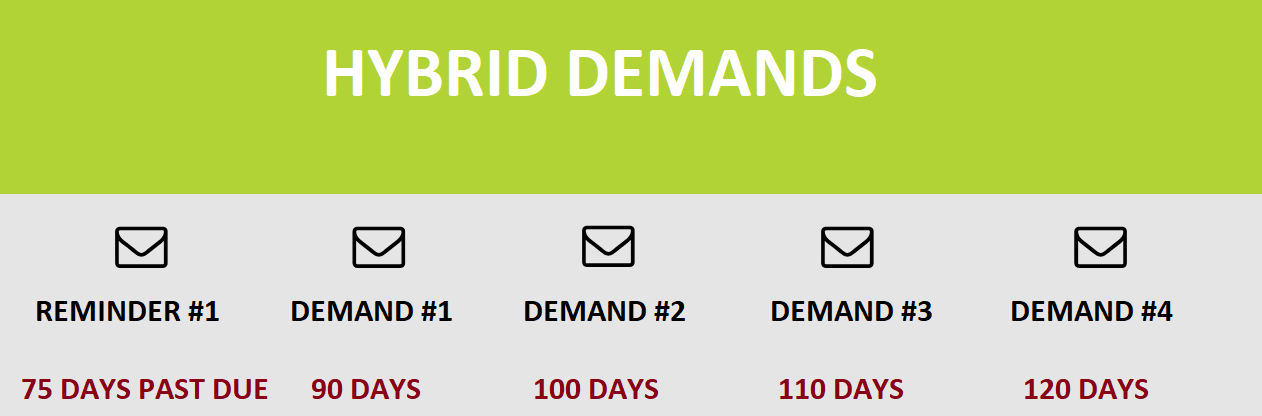
Step 1 – First-Party Reminder Service – $15 per account
We act as an extension of your team using your branding tone.

  • Gentle, professional reminders

  • Ideal for newer accounts before relationships sour

  • Helps your staff stretch further without hiring more people

Step 2 – Third-Party Demands – $15 per account
Now our name and process step in more visibly.

  • Firm, compliant letters and contacts

  • Often enough to move “stuck” accounts to resolution

  • Most clients start with Step 2, then move the remaining balance to Step 3

Step 3 – Contingency Recovery – 40% fee
You only pay when we collect.

  • No upfront cost on these accounts

  • Ideal for older, tougher balances

  • Designed to maximize recovery while respecting patients and customers

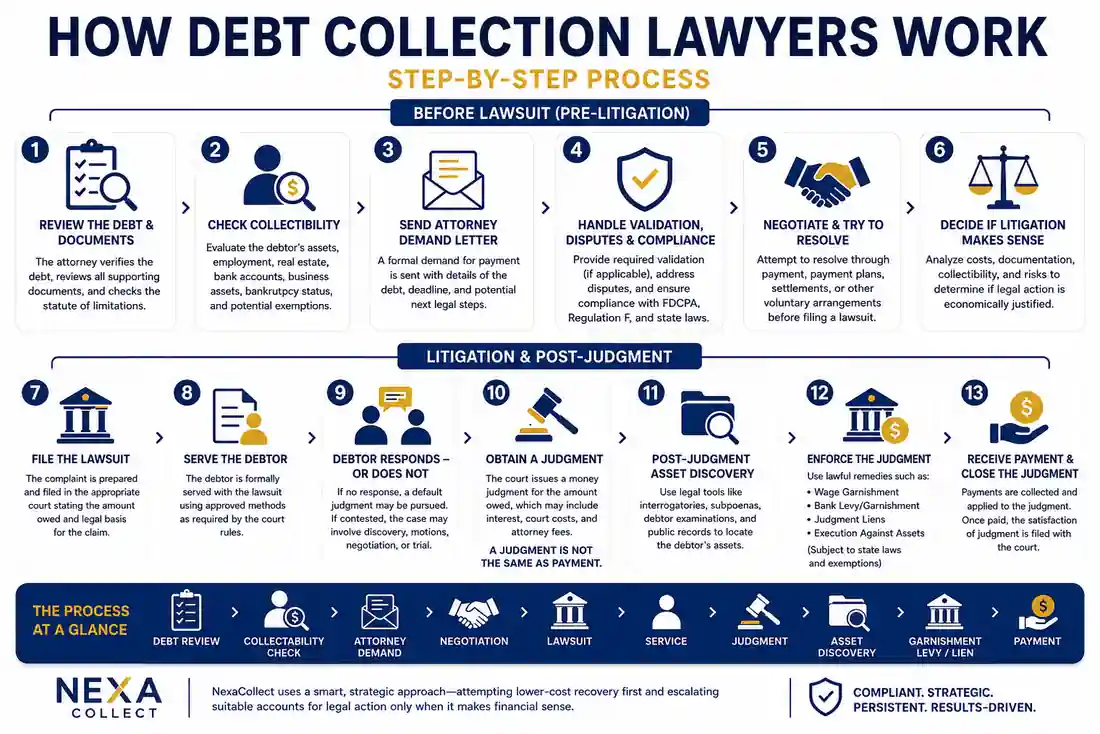
Step 4 – Legal Path – 50% fee
For select accounts where legal action makes sense.

  • Attorney review and, where appropriate, litigation

  • Used carefully and strategically, not by default

At every step, we run free bankruptcy and litigious checks so you don’t waste time throwing good money after bad.

We work across all 50 states, so if your Toledo customers move to Michigan, Florida, or anywhere else, your recovery strategy doesn’t fall apart.


Why This Model Works So Well in Toledo

Toledo’s mix of healthcare systems, industrial suppliers, small retailers, professional offices, and service businesses means you may be:

  • Dealing with high-volume, lower-balance invoices

  • Serving patients or customers who still leave reviews even when they’re past due

  • Working with people who often face real financial stress

Our approach helps you:

  • Keep legal and regulatory risk low while still pushing for payment

  • Protect your Google and online reputation by using respectful, compliant communication

  • Free up internal staff from repetitive chasing so they can focus on live patients, guests, or customers

  • Use fixed-fee Steps 1 & 2 for cost control, and contingency Steps 3 & 4 where risk is higher

Don’t let your cash flow crawl like traffic on I-75 over the Maumee—it should move as smoothly as a clear run across the Veterans’ Glass City Skyway.


Quick Snapshot: Ohio Debt-Collection Rules (Plain English)

We work within federal and Ohio rules so you don’t have to worry about hidden compliance landmines:

  • No harassment or deception – The federal Fair Debt Collection Practices Act (FDCPA) bans abusive, unfair, or misleading tactics.

  • Ohio Consumer Sales Practices Act (CSPA) – Adds state-level protections against unfair or unconscionable practices in consumer transactions, including certain collection behaviors.

  • Time limits to sue (statute of limitations) – For most consumer debts in Ohio, the window to file a lawsuit is about six years from when the debt became overdue or from the last payment, depending on the contract type.

  • Wage garnishment limits – In many cases, only up to 25% of disposable wages can be garnished, and only after a court judgment.

We keep your program aligned with these rules so you can recover more without stepping into regulatory trouble.


Who We Help in and Around Toledo

We support a wide range of organizations in Toledo, Lucas County, and nearby communities:

  • Healthcare & dental practices (including hospital-affiliated clinics and specialty groups)

  • Optometry, therapy, and allied health providers

  • Small and mid-sized manufacturers and distributors

  • Property managers & housing providers

  • Professional services – law, accounting, IT, marketing

  • Trade schools, private education, and training centers

Whether you’re near Franklin Park Mall, downtown, or on the edge of the metro, our process is built to fit both high-volume and boutique operations.


Our Pricing at a Glance (Toledo-Friendly, Transparent)

  • Step 1 – First-Party: $15 per account

  • Step 2 – Third-Party Demands: $15 per account

  • Step 3 – Contingency: 40% (you pay only when we collect)

  • Step 4 – Legal: 50% (for approved cases)

Most Toledo clients get the best balance of cost and results by using Step 2 followed by Step 3.
You can mix and match based on:

  • Age and size of the account

  • Sensitivity of the relationship

  • Your internal staffing and goals


FAQ: Toledo, OH Recovery – Straight Answers

Q1. Do you only work with Toledo businesses, or can you handle out-of-state debtors too?

We’re based online and can recover accounts in all 50 states, not just Ohio. If your Toledo-based customers move, your strategy keeps working.


Q2. We’ve had bad experiences with aggressive agencies. How are you different?

We focus on firm, respectful, and compliant communication. The goal is to get you paid while keeping unnecessary complaints and reputation damage out of the picture, especially important for healthcare and local service businesses.


Q3. Can we start with just a small batch of accounts?

Yes. Many clients begin with a pilot group of older or problem accounts, see how our 4-step system performs, then roll in more volume.


Q4. What kinds of debts do you handle?

We handle a wide range of consumer and commercial past-due accounts, including medical, dental, tuition, utilities, memberships, professional service invoices, and more. If it’s a legitimate, documented balance, we can usually structure a plan around it.


Q5. Will you keep us updated on individual accounts?

Yes. You get clear status visibility—which accounts are in Step 1 or Step 2, which moved to contingency, which are closed or paid, and which are not worth pursuing further.


Q6. Can you help us before accounts even go past due?

Absolutely. Many clients use Step 1 as a structured reminder program to reduce how many accounts ever become “collections-grade” problems.


Q7. Are your methods compliant with federal and Ohio rules?

Yes. Our process is built around FDCPA standards and Ohio consumer-protection and collection requirements, so that your recovery efforts don’t create regulatory or legal headaches.


Q8. How fast can we see results?

Every portfolio is different, but many businesses start seeing responses shortly after Step 2 notices begin. The main benefit is that your team can stop chasing and start managing a clear, structured recovery process.


Ready to Stop Letting Past-Due Accounts Run Your Day?

If your receivables feel like they’re stuck on a permanent backup on I-475, it’s time to switch to a more efficient system.

Contact us today to review your Toledo A/R and design a Step 1–4 plan that fits your risk, your patients or customers, and your growth goals:

Filed Under: Debt Recovery

A Good Medical Collection Agency: Licensed in all 50 States

Are you trying to find a good medical collection agency that is fully licensed in your state with high recovery rates? A collection agency with a license to collect in all 50 states.

Choosing the right medical collection agency is crucial to ensure your accounts receivable are managed effectively and ethically.

Hire the best medical debt collection agency: Contact Us

Here are some steps and considerations to help you select the best medical collection agency for your needs:

1. Care for Your Reputation:

Medical debt is very sensitive and can easily ruin a doctor’s reputation if a debt collector is rude, deceptive, or uses intensive tactics to recover patient bills. A good debt collector will recover your medical bills diplomatically and amicably, preserving your reputation. How do you find out? ( check their online reviews).

2. Online reviews:

Check for their Google Reviews. These days, not just the client (creditors) but even debtors/patients leave online reviews about collection agencies.

This reflects how well or how badly they were treated during the collections call. Select a collection agency with an online rating of 4.5 or more, and check if some of the reviews were left by debtors too. Negative reviews are common for collection agencies due to the nature of work, but they should be no more than 10% of the total online reviews.

3. Adherence to laws:

If a Collection Agency HIPAA Compliant? Do they follow FDCPA and local state laws? Do they do credit reporting? Once the medical debt is paid off do they remove it from the patient’s credit history? One very important law that no one talks about is – GLBA law. GLBA law ensures that your data is kept secure and limits who can access patient’s data. Data theft is common in today’s digital age, and GLBA compliance ensures that your and your patient’s data is kept safe by following the highest security standards.

4. Type of Services:

Do they offer both Fixed Fee and Contingency services? This includes pre-collection, early-out services, insurance resolution, collection demands, collection calls, and even legal suits if needed. Carefully review the contract terms, including the length of the contract, the services provided, the fee structure, and any other obligations.

5. Licensed in your State and Other States too:

Collection agencies should be licensed and insured in your state. If they have a license to collect in all 50 states, then you don’t have to worry if your patients move to a different state after the treatment.

6. Multilingual:

A Collection agency’s ability to talk to patients in both English and Spanish is a huge advantage. Some collection agencies will also have individuals who can speak Mandarin, Tagalog, Hindi, and Punjabi.

7. References:

Select an agency with experience in medical collections, as they will better understand this sector’s unique regulations and challenges. They should be able to provide references of other medical practices they serve in your state,

8. Accreditation:

Look for agencies with memberships in reputable industry associations such as the American Collectors Association (ACA) or the Healthcare Financial Management Association (HFMA).

9. Online Portal:

Look for agencies that utilize modern technology for tracking and collecting debts and provide you with real-time access to account information. Discuss how performance metrics are tracked and reported.

10: Customer Service:

Ensure you feel comfortable with the level of communication and professionalism the agency demonstrates. The agency will be interacting with your patients, so they must provide respectful and professional customer service.


Filed Under: Debt Recovery

  • « Go to Previous Page
  • Page 1
  • Interim pages omitted …
  • Page 10
  • Page 11
  • Page 12
  • Page 13
  • Page 14
  • Interim pages omitted …
  • Page 53
  • Go to Next Page »

Primary Sidebar


accounts receivable

Need a Collection Agency?
Kindly fill this form.
We’ll get in touch with you

    Please prove you are human by selecting the house.

    Recent Posts

    • When Pearland Businesses Stop Getting Paid, the Clock Starts Ticking
    • In Columbia, Unpaid Invoices Don’t Age Gracefully – Neither Should Your Recovery Strategy
    • Norman Debt Collection Services | Professional Revenue Recovery OK
    • Collection Agency in Sterling Heights | Compliant & Effective
    • Round Rock Revenue Recovery: The Diplomacy of Dollars
    • Debt Collection Lewisville TX | $15 Fixed-Fee Revenue Recovery
    • Collection Agency in Fargo, ND | Compliant & Effective
    • Collection Agency in Dayton, OH | Compliant & Effective

    Featured Posts

    • GLBA Compliance: The Crisis for Small Collection Agencies
    • Recovering Unpaid Payments from American Businesses: International Collections
    • Calculating and Improving Accounts Receivable Turnover Ratio

    Copyright © 2026 NEXACOLLECT.COM | All information on this website is for general information only and is not an experts advice. We do not own any responsibility for correctness or authenticity of the information, or any loss or injury resulting from it.

    X
    Need a Collection Agency?
    Contact Us