Restoration contractors shouldn’t have to finance an insurance claim after the work is already finished. You may have paid the crews, equipment and material costs weeks ago while an unpaid deductible, homeowner-held insurance check, mortgage endorsement, supplement dispute or final reconstruction invoice remains stuck for 60, 90 or even 120 days.
Nexa helps water, fire, mold and reconstruction companies recover these restoration-specific receivables using Xactimate and AOB-aware collection strategies, skip tracing, reputation-safe communication and timely escalation before valuable lien rights or recovery opportunities disappear. Fresher accounts can start with low-cost fixed-fee recovery, while older or disputed balances can move to contingency collections.
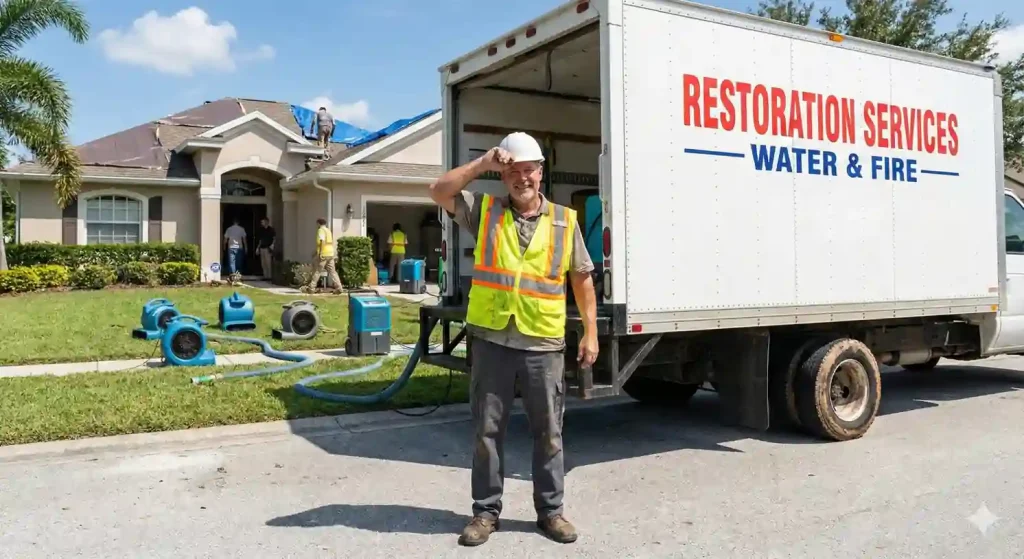
Key Strength: We address core property restoration pain points directly—such as delayed insurance checks, mortgage company endorsement delays, deductible collection friction, and AOB/claim coverage disputes.
The Restoration Industry’s Built-In Cash Flow Problem
Restoration is the only trade where the job finishes before the money question is even settled. You mobilize crews and equipment on a call at 2 a.m., dry out a structure over the next 72 hours, and then wait — sometimes 60, 90, or 120 days — for a claims process you don’t control to release funds you already spent to earn.
The “Float” Between Mitigation and Payment
Unlike most service businesses, restoration contractors front the cost of the job before the payer — an insurance carrier, an adjuster, or a homeowner — has even finished evaluating the claim. That gap is where bad debt is born: not from bad customers, necessarily, but from a payment chain with too many hands in it.
When the Insurance Check Never Makes It to You
The single most damaging failure point in restoration billing is the co-payable insurance check. Carriers frequently mail the settlement directly to the policyholder rather than the contractor, and industry data suggests that over 30% of restoration bad debt stems from homeowners simply keeping that money instead of forwarding it. Nexa treats this scenario differently than a standard past-due invoice: it is framed and pursued as misappropriation of funds paid for a specific purpose, which carries more legal weight — and more urgency for the homeowner to resolve — than an ordinary unpaid bill.
Practical Example: The Check That Took a Detour
Consider a composite scenario typical of the industry: a Class 3 water loss at a single-family home results in a $22,000 mitigation and drying invoice. The carrier approves the claim and issues a check made out jointly to the homeowner and their mortgage servicer. Instead of endorsing it over to the contractor, the homeowner deposits it toward an unrelated renovation and stops responding. Ninety days pass. In a case like this, the leverage isn’t a polite reminder — it’s making clear, in writing, that the funds were designated for a specific repair and that retaining them changes the nature of the dispute entirely.
Serving Restoration Companies NationwideNeed a Debt Collection Agency? Contact UsHigher Recovery Rates : Restoration collection experts! |
Why Restoration Contractors Partner With Nexa
Generic collection agencies treat every account the same way: a name, a balance, a form letter. Restoration receivables need a collector who already understands the paperwork before the file lands on their desk.
We Read Xactimate Estimates and AOB Contracts Like Native Speakers
A demand letter that references “Class 1” versus “Class 4” water categories, or that correctly cites an Assignment of Benefits (AOB) agreement, lands very differently with a debtor than a generic notice. Nexa’s collectors are trained on restoration-specific documentation so the paper trail proving your debt is valid gets used effectively from the first contact.
We Untangle Mortgage Endorsement Delays
One of the most common — and most avoidable — delays in restoration payment is a check that requires a mortgage company’s endorsement before it can be cashed or forwarded. Nexa helps push that process along so funds already approved by the carrier don’t sit idle in a drawer for months.
We Protect the Reputation You Built in Your Own Backyard
Your restoration customer is frequently a neighbor, a referral source, or someone whose friends are your next lead. Recovery has to be firm enough to get paid and professional enough that your name in the local market stays intact. That balance is the whole job.
The Restoration Receivables We Recover
Unpaid Deductibles
The $500–$2,500 gap that homeowners are contractually responsible for but frequently try to avoid, often assuming the contractor will absorb it rather than chase a small balance.
Ghosted Insurance Checks
Funds a carrier already released — and a homeowner already cashed — that never made it to the contractor who did the work.
Emergency Mitigation Invoices
Water extraction, board-ups, tarping, and other first-24-hours work performed under emergency conditions, often before a signed contract was even possible.
Reconstruction Final Payments
The back-end balance due once a rebuild is complete and the homeowner has moved back in — and has far less urgency to settle the last invoice.
Supplement Disputes
Cases where the carrier approves additional work beyond the original scope, but the homeowner keeps the supplemental payment instead of passing it to the contractor who performed it.
Our Process: Beating the Mechanic’s Lien Clock
A mechanic’s lien deadline is a hard stop. Filing one protects your right to payment, but it also means legal fees, paperwork, and a slower path to cash than most contractors want. Nexa’s process is built to resolve the account before that deadline forces your hand.
Step 1 — Verification & Skip Tracing
Before any contact is made, Nexa confirms whether the insurance carrier has actually issued payment on the claim. If the homeowner has relocated — common after a major fire or flood displaces a family — skip-tracing tools are used to locate current contact information quickly.
Step 2 — Strategic Demand & Credit Bureau Reporting
Outreach happens across multiple channels, and eligible accounts can be reported to major credit bureaus. A negative mark on a credit file is a strong motivator for a homeowner who is mid-refinance or preparing to sell the property that was just restored.
Step 3 — Negotiation & Certificate of Satisfaction Mediation
Disputes over “dry logs,” moisture readings, or a homeowner refusing to sign a Certificate of Satisfaction are common late-stage sticking points. Nexa’s specialists mediate these directly to move the account to resolution rather than letting it stall indefinitely.
Trust, Security & Compliance
FDCPA & FCRA Alignment
Every account is worked in alignment with the Fair Debt Collection Practices Act and Fair Credit Reporting Act, so recovery efforts stay within federal consumer protection boundaries — protecting both the homeowner’s rights and your business’s legal standing.
HIPAA & BAA Coverage for Healthcare-Facility Restoration Jobs
Restoration work isn’t limited to private homes — clinics, dental offices, and senior living facilities call for emergency mitigation too, and those jobs can involve documentation that touches protected health information. For those accounts, Nexa maintains HIPAA-aligned handling procedures and executes a Business Associate Agreement (BAA) where the engagement requires one, so a clinic or facility restoration receivable is handled with the same data safeguards as a medical billing account.
SOC 2 Type II & PCI-DSS Data Security
Nexa’s data handling is SOC 2 Type II certified, meaning security and privacy controls have been independently audited rather than self-reported. Payment processing runs at PCI-DSS Level 1, the highest available tier of card data encryption.
Secure Client Portal for Documentation & Account Tracking
Xactimate estimates, AOB agreements, dry logs, and photos are exactly the kind of sensitive project documentation you don’t want sitting in an email thread. Nexa’s secure client portal lets you upload that documentation, track account status, and monitor recovery progress without exposing client or project data to unnecessary risk.
Transparent, Restoration-Friendly Pricing
Restoration receivables don’t all look the same, so the fee model shouldn’t either.
Fixed-Fee Recovery ($15/account)
Best suited to early-stage receivables — invoices where the debtor relationship is still fresh and a firm, professional nudge is likely enough. Debtors pay 100% directly to you. There are no commissions taken from what’s recovered.
Contingency Service (20%–40%)
Built for older, disputed, or “ghosted” accounts that need sustained investigation, skip tracing, and negotiation. No Recovery, No Fee — Nexa is paid only when the account is successfully collected.

See the full breakdown on the collection agency fee schedule page.
Frequently Asked Questions
Can you collect if I never got a signed contract?
It’s harder, but far from impossible. Text messages, emails, before/after photos, and dry logs showing the homeowner allowed the work to proceed can support an “unjust enrichment” claim even without a signature.
Do you charge upfront fees?
Only under the fixed-fee option, which is a flat $15 per account regardless of outcome. Under the contingency option, there’s no upfront cost at all — payment is a percentage of what’s actually recovered, and nothing is owed if nothing is collected.
Can you help with small deductible balances?
Yes. Restoration companies often write off sub-$1,000 balances because chasing them individually doesn’t feel worth the effort — but ten of those add up to real money fast, and a dedicated low-balance process is exactly where volume recovery pays off.
What happens when the insurance check was made out jointly to the homeowner and their mortgage company?
This is one of the most common restoration payment delays. Nexa works to move the endorsement process along so funds the carrier already approved aren’t stuck indefinitely because of a missing signature.
Will pursuing collection damage my relationship with the insurance carrier?
No — the dispute here is almost always with the homeowner who received or withheld funds, not with the carrier who already paid the claim. The carrier’s involvement in the claim is typically already finished by the time collection begins.
How fast do I need to act before a mechanic’s lien deadline?
Lien deadlines vary by state and project type, so timing matters. The sooner an account is placed, the more room there is to resolve it through collection before a lien filing becomes the only remaining option.
Stop Financing Your Customers
Your crews restore homes. They shouldn’t also be financing the insurance payouts that pay for it. Let Nexa handle the recovery so cash flow doesn’t depend on how quickly a homeowner decides to forward a check.