A Pennsylvania medical debt collection agency helps hospitals, clinics, dental practices and other healthcare providers recover unpaid patient balances while navigating the state’s stricter collection environment. Because Pennsylvania generally restricts wage garnishment for medical debt, effective recovery relies more heavily on patient-friendly negotiation, compliant payment arrangements and appropriate legal remedies when necessary. Choose an agency experienced with HIPAA, FDCPA and Pennsylvania collection requirements, secure data handling, reputation protection and healthcare-specific accounts.
How to Recover Revenue When Two of the Usual Tactics Don’t Exist
Most collection strategies rest on two levers: garnish the wages, or wreck the credit score. In Pennsylvania, for medical debt, neither one is actually available right now, and an agency that doesn’t know that isn’t just ineffective, it’s selling your practice a strategy built on threats it legally can’t make good on.
Lever one, wage garnishment, doesn’t exist here.
Pennsylvania law (42 Pa.C.S.A. § 8127) broadly prohibits wage garnishment for consumer debt, including medical bills. This isn’t a loophole or a technicality, it’s one of the strongest debtor protections in the country, and Pennsylvania is one of only a handful of states with it. The only exceptions are child support, taxes, federal student loans, and unpaid rent, none of which apply to a medical balance. A debtor who’s done any research knows this, so a collector who threatens garnishment anyway doesn’t just fail, they lose credibility for everything they say after.
Lever two, credit reporting as a nationwide federal ban, also isn’t currently active.
A federal rule that would have broadly restricted medical debt on credit reports was finalized in early 2025, then vacated by a federal court in July 2025. There’s no nationwide ban in effect right now. Some protection still exists at the margins, the major credit bureaus voluntarily exclude paid debt and balances under $500 as their own policy, but “the CFPB banned this” is not an accurate description of where things currently stand, and leaning on it as leverage is a second empty threat stacked on the first.
What’s Actually In the Toolbox
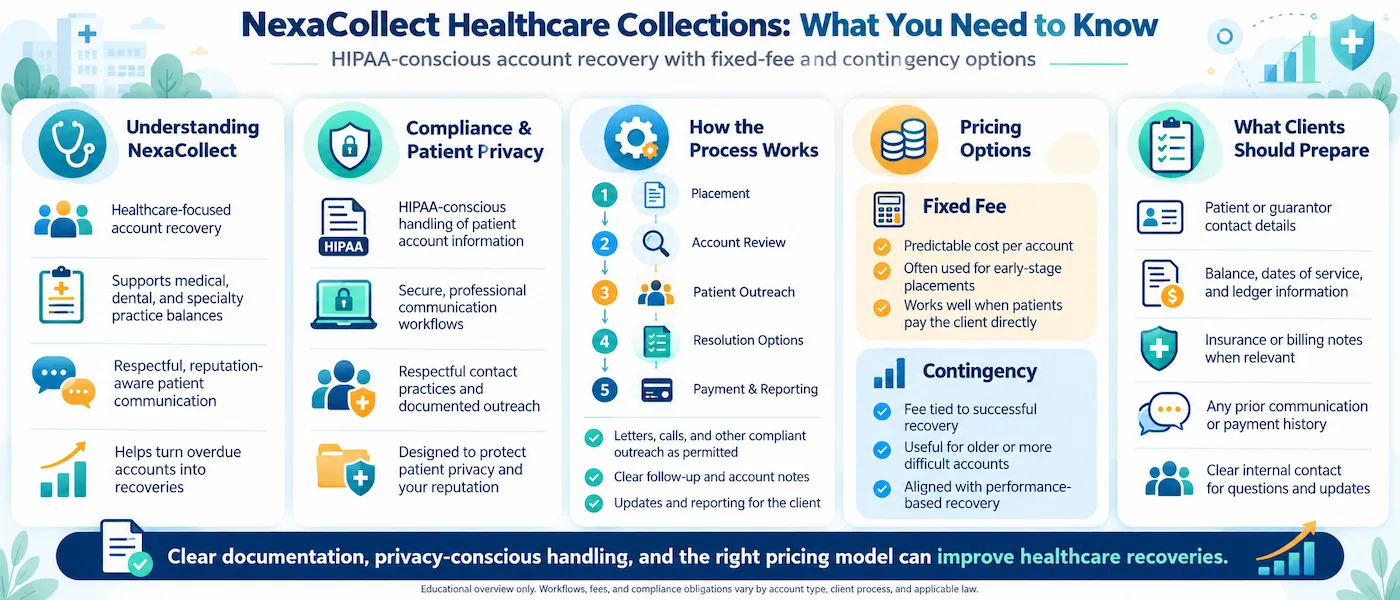
Once you take those two off the table, three things remain, and they’re genuinely effective when used correctly.
Voluntary payment, collected early.
With no legal hammer waiting in the background, getting a patient to pay before an account ages is disproportionately valuable here. A courteous, clearly-worded notice, sent while the balance is still fresh, resolves a meaningful share of accounts that would otherwise sit and age with no real remedy behind them.
Negotiated resolution.
Since threats don’t move the needle, the actual skill is finding real, voluntary liquidity, a tax refund, savings, family assistance, and structuring a settlement around it. This is a different skill than sending a form letter, and it’s the difference between an agency that talks tough and one that actually collects.
Bank levies and property liens, after judgment.
Wages can’t be touched, but a bank account can be levied once a court judgment is obtained, though Pennsylvania exempts $300 from that levy, so the remaining balance is what’s actually reachable. A judgment also becomes a lien against real property in the county where it was entered, which can complicate a future sale or refinance until it’s satisfied. Neither requires garnishment to work.
Does Pennsylvania really ban wage garnishment for all medical debt, with no exceptions?
The ban is broad but not absolute. Wages are protected from garnishment for medical debt and other ordinary consumer debt with only four narrow exceptions: child support, taxes, federal student loans, and unpaid rent. A medical balance itself doesn’t fall into any of those categories, so for practical purposes, garnishment isn’t a real option for recovering it.
If the CFPB’s credit-reporting ban isn’t currently active, can medical debt still show up on a patient’s credit report?
In limited cases, yes. The federal rule that would have banned it broadly was vacated in court, so there’s no nationwide ban right now. The credit bureaus’ own separate voluntary policy still excludes paid balances and amounts under $500, but a larger, unpaid, older balance can still legally appear, this is a narrower, less certain form of leverage than “the government banned this,” which is the inaccurate version some agencies still use.
Stop relying on empty threats. Start using a strategy that works in Pennsylvania.
Click here to Request a Quote & Audit
The Rest of the Landscape
Pennsylvania’s Act 6 sets a default legal interest rate of 6% on debts where no specific contract states a different rate, worth checking before an agency assumes a higher rate applies. The statute of limitations for most medical debt is 4 years from the date of the last payment or missed payment; past that window, the debt is time-barred, and pursuing it anyway risks a countersuit rather than a recovery.
Patients across Pennsylvania’s major health systems, Allegheny Health Network in Pittsburgh, Penn Medicine in Philadelphia, and others, are frequently confused by complex EOBs. Outreach that helps a patient actually understand what insurance didn’t cover tends to resolve balances faster than outreach that skips straight to a demand.
Pricing
See the full pricing breakdown for how these compare across account types.
Flat-Fee Notices (Steps 1-2, ~$15/account).
Courteous, clearly-worded notices sent as an extension of your billing office. Best for accounts where voluntary payment is the realistic outcome. You keep 100% of what’s recovered.
Negotiated Resolution (Step 3, 40% contingency).
For non-responsive accounts, structured settlement negotiation aimed at real liquidity rather than empty threats.
Judgment & Asset Execution (Step 4, 50% contingency).
Bank levies and property liens, pursued only where the balance and circumstances justify legal escalation, with client approval.

Nexa provides reputation-safe, equipped with all 50-state collections license, offering free credit reporting, free litigious debtor check, free bankruptcy scrub, and zero onboarding fees. Secure – SOC 2 Type II & HIPAA compliant. Over 2,000 online reviews rate us 4.85 out of 5.
Need a Medical Collection Agency? Contact us