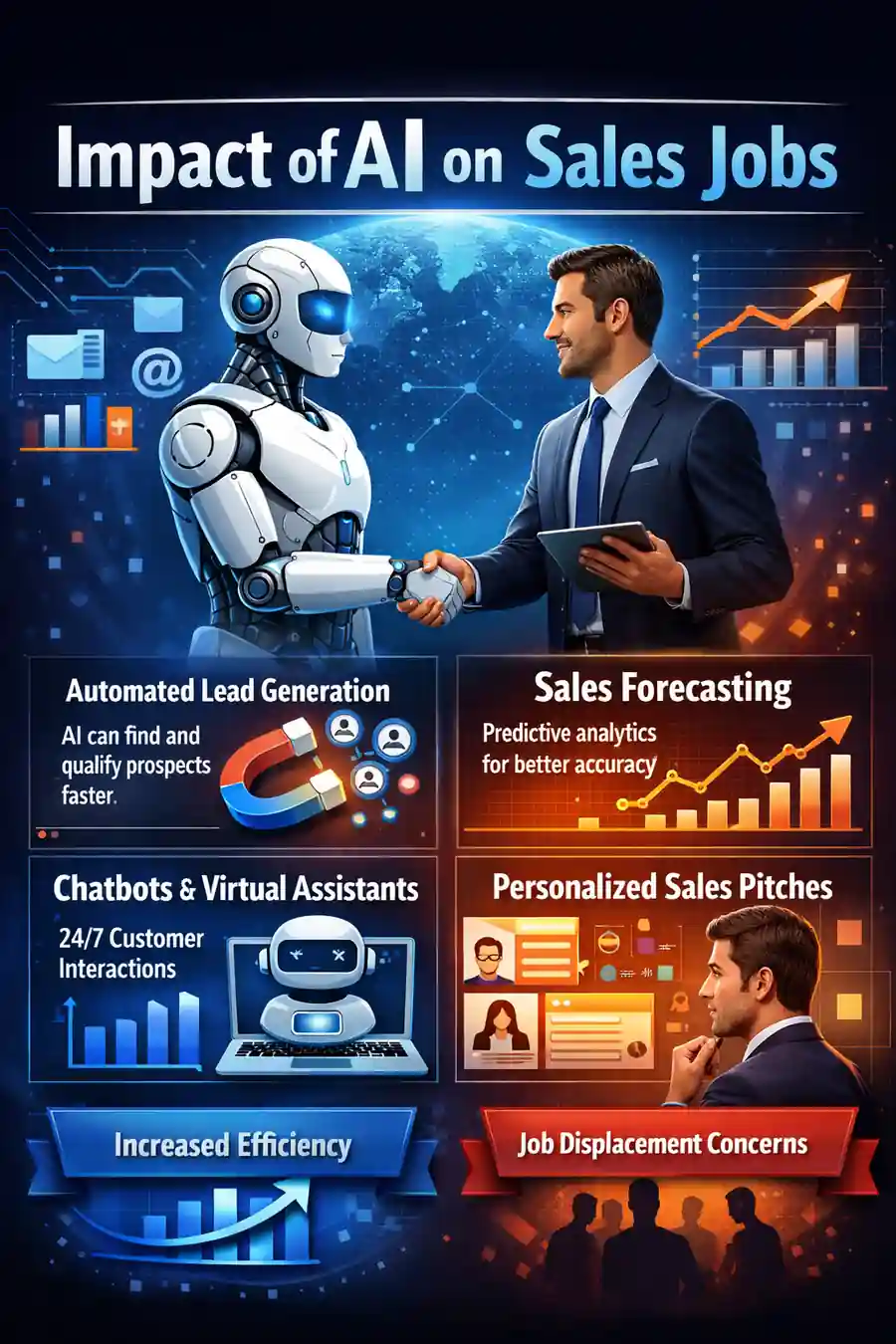
The conversation around AI in sales has shifted from “Will AI replace me?” to “How quickly can I learn to use AI to beat my competition?”
For sales professionals, AI isn’t a replacement—it’s a force multiplier. While AI can automate tasks, it cannot replicate the human trust, empathy, and complex negotiation required to close a deal. Here is how to move from being “worried” to being “augmented.”
1. The Salesperson’s AI Toolbelt
To stay ahead of your peers, you need to move beyond standard CRMs. These tools handle the “grunt work” so you can focus on the “human work.”
-
For High-Impact Writing: Lavender or Grammarly Go. These tools don’t just fix typos; they analyze the sentiment of your emails and suggest changes to make them more likely to get a response.
-
For Meeting Intelligence: Gong or Chorus. These record your calls and use AI to tell you exactly when you talked too much, which objections were raised most often, and what top performers are doing differently.
-
For Lead Intelligence: Apollo.ai or LinkedIn Sales Navigator. Use these to find “intent signals”—knowing exactly when a prospect is looking for a solution like yours before they even reach out.
-
For Content Synthesis: Claude or ChatGPT. Use these to summarize 50-page annual reports of a prospect’s company in seconds, identifying their “Top 3 Business Risks” so you can mention them on your next call.
2. Real-World Scenarios: Solving Sales Hurdles with AI
Situation A: The “Cold Outreach” Block
-
Old Way: Sending the same “Checking in” email to 100 people and getting a 1% response rate.
-
The AI Solution: Use AI to scan a prospect’s recent LinkedIn activity.
-
Practical Example: “I noticed you just posted about the challenges of medical debt recovery in Florida. Based on your comment about HIPAA compliance, I thought this specific case study might help.”
-
Result: Highly personalized outreach at scale.
Situation B: The “Tough Objection” in a Live Call
-
Old Way: Fumbling for an answer when a client says, “Your competitor is 20% cheaper.”
-
The AI Solution: Use AI-driven call coaching to review past successful rebuttals.
-
Practical Example: AI identifies that when you pivot to “Total Cost of Ownership” rather than “Price,” your closing rate increases by 40%. You enter the next meeting with a data-backed script ready to go.
Situation C: The Post-Meeting “Admin Drag”
-
Old Way: Spending 30 minutes after every call writing a summary and updating the CRM.
-
The AI Solution: Use an AI Notetaker (like Otter.ai or Fireflies).
-
Practical Example: The AI generates a bulleted list of action items and syncs them directly to your CRM. You spend that 30 minutes making three more prospecting calls instead.
3. How to Streamline Your Sales Process
AI allows you to move from a “linear” process to a “high-velocity” process.
-
Lead Scoring: Let AI rank your leads. Stop calling everyone. Call the people who the data says are “Ready to Buy.”
-
Automated Follow-ups: Use “Sequences” that pause automatically when a human responds. This ensures no lead ever falls through the cracks.
-
Predictive Forecasting: Use AI to look at your pipeline and tell you which deals are “At Risk” based on communication frequency. This allows you to jump in and save a deal before it’s lost.
4. The Human Advantage
In a world full of AI-generated noise, human authenticity becomes a premium service. AI cannot take a prospect out to lunch, it cannot understand the subtle political nuances of a board room, and it cannot care about a client’s success. Use AI to handle the data, the research, and the admin, so you can spend 100% of your time building the relationships that actually close deals.